In early March, a few days after the start of the American-Israeli offensive against Iran, Hezbollah joined the campaign and began launching missiles and drones at northern Israeli communities. The move was not forced on the organization by Iran. It was an initiative designed to return the initiative to Hezbollah inside Lebanon and vis-a-vis Israel, and to fundamentally change the rules of the game in southern Lebanon that Israel had dictated to it at the end of the previous round of fighting with it in November 2024.
At the time, it will be recalled, Israel made clear that it reserved the right to act against Hezbollah whenever it identified a threat to its security. As a result, despite the ceasefire, it continued to strike in Lebanon and even eliminated hundreds of the organization's terrorists, while Hezbollah refrained from responding.
Many in Israel saw this as proof of the severe blow Hezbollah had suffered and of Israel's upper hand. In practice, however, the Israeli strikes were pinpoint and lacked force, while Hezbollah made a conscious and calculated decision not to be dragged into a confrontation with us so that it could rehabilitate and rebuild its strength. And that is exactly what it did.
When the war with Iran broke out, Hezbollah therefore moved quickly to exploit the opportunity that had presented itself and began attacking in order to force new rules of the game on us: that every Israeli strike would be met with a strike of its own, and that the continued presence of the Israel Defense Forces on Lebanese territory would lead to a guerrilla war by the organization against our forces.
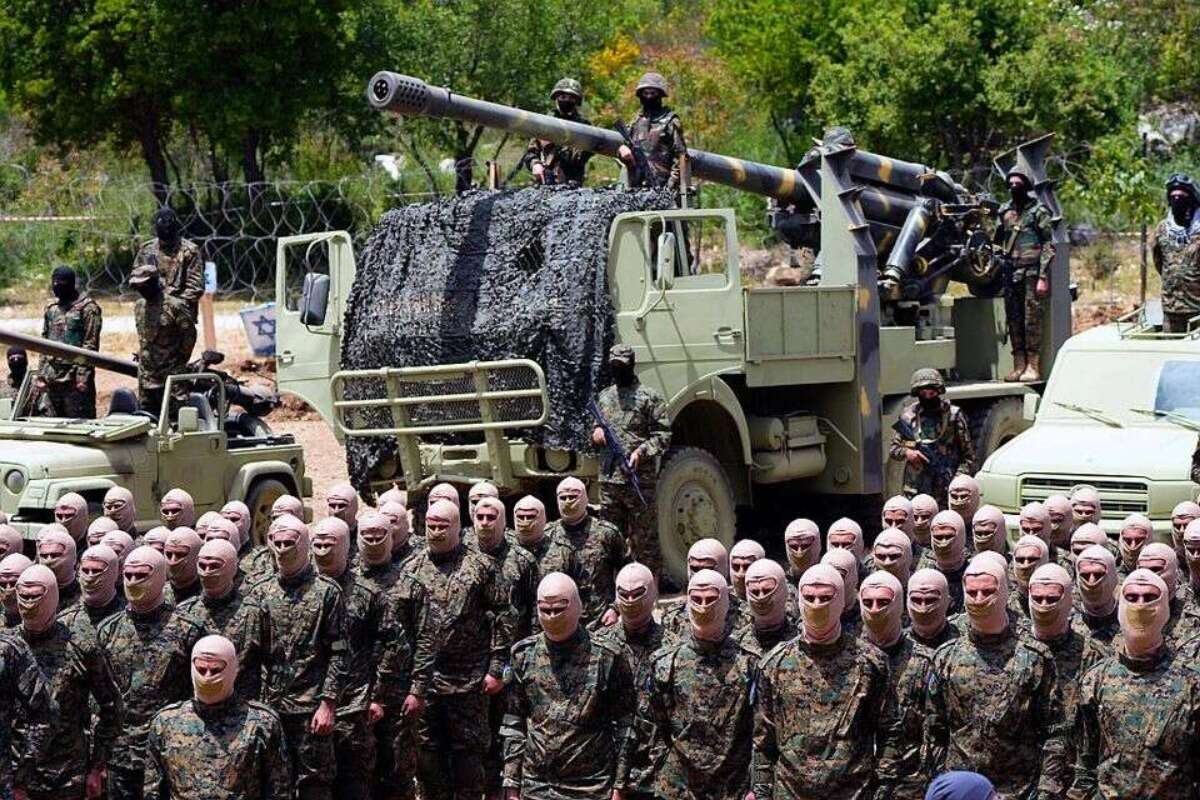
Israel's response to Hezbollah's challenge was, unfortunately, partial and hesitant. Instead of exploiting the opportunity we had been given to act forcefully, with American backing, in order to fundamentally change the reality in Lebanon, Israel made do with establishing a narrow buffer zone along the border, intended to keep Hezbollah terrorists away from Israeli communities in the northern Galilee.
The Israeli move, which was designed to achieve tactical goals, sank us into a strategic predicament because it enabled Hezbollah to wage a guerrilla and attrition war against IDF soldiers inside Lebanese territory, and even inside Israel. This came while, because of American pressure, we were prevented from acting forcefully against the organization's headquarters and infrastructure deep inside Lebanon and in Beirut's Dahiyeh, even when orders were issued to attack our soldiers.
Experience shows that a war of attrition in which we pay a heavy daily price in casualties and wounded, and in the disruption of life in northern communities, serves no Israeli interest. In such a war, Hezbollah will have the upper hand as long as we do not act against it forcefully and effectively. Needless to say, the killing of a few dozen of its operatives or the destruction of Shiite villages in southern Lebanon does not disturb Naim Qassem, who believes, as Yahya Sinwar did in his day, that the destruction he has brought upon his own people actually serves the organization, reduces the criticism directed at it within the Shiite community and even brings it support and new recruits, while the IDF is the one shedding blood.
To this must be added the fact that an agreement between Iran and the US could lead to a complete ceasefire on the Lebanese front as well, and to a full withdrawal of IDF forces from southern Lebanon, before we have achieved even part of our objectives.
Israel should therefore formulate and implement a strategic plan of action whose aim is to damage Hezbollah's military capabilities and exact a heavy price from the organization and its supporters, including, and especially, north of the Litani River.
If that is not our goal, but rather another pinpoint maneuver a few kilometers inside Lebanese territory, at the end of which we will continue playing a game of cat and mouse with Hezbollah terrorists who attack us, then we should consider withdrawing from the security zone we have established, since our presence there is not advancing us toward our goals. Instead, we should base the defense of the north, as we did in the past, on the deployment of forces along the border and on deterrence. At the same time, we should try to make as much progress as possible in the Israeli-Lebanese negotiation channel, where we can achieve tactical gains, even if not a solution to the problem, since the Lebanese government and Israel share an interest in weakening Hezbollah.