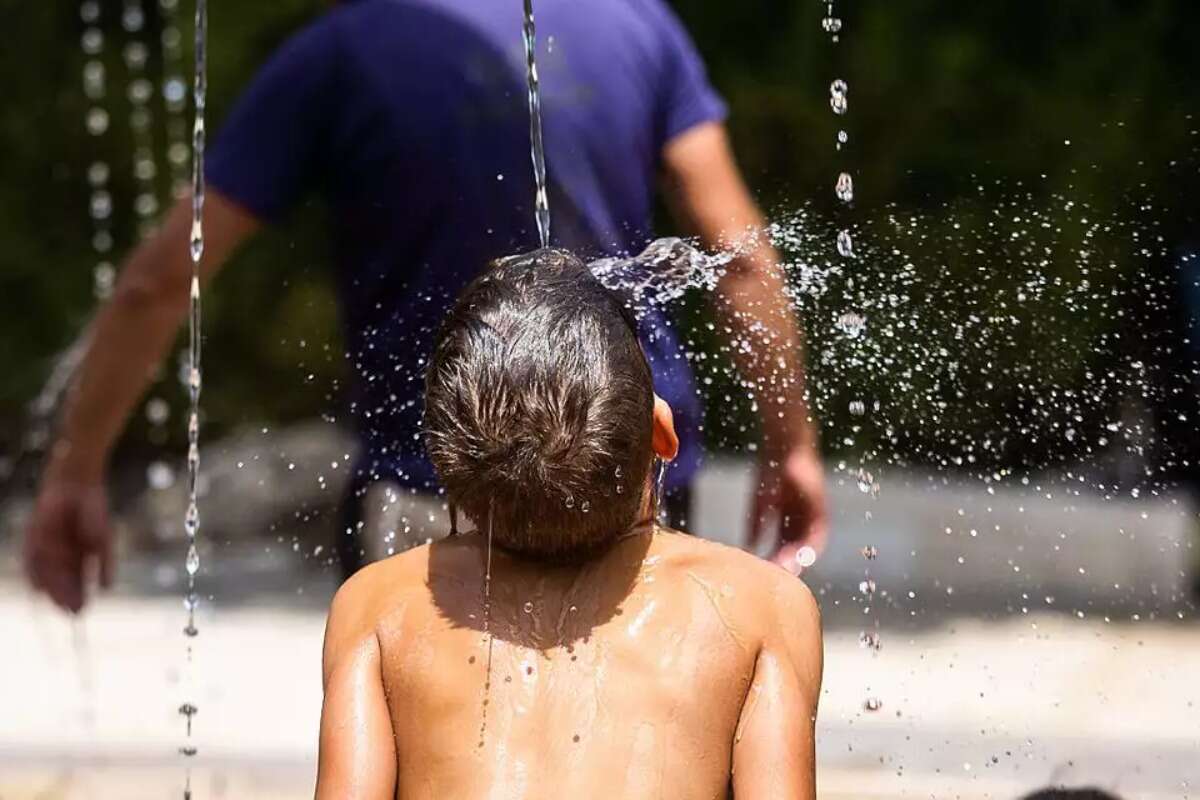
As July ends, summer camps wrap up, leaving hundreds of thousands of elementary school students without a structured educational routine for August. While July often offers municipal day camps or "Big Vacation School" programs, August leaves families with no official framework, making the transition especially challenging. Public discussion will inevitably focus on the long days ahead and how parents will manage childcare until school starts. However, an equally critical question remains largely ignored: what happens to all the knowledge and skills these kids built throughout the school year?
"Summer Learning Loss" or the "Summer Slide" is a well-documented phenomenon in educational research, describing the erosion of academic skills over the summer break. While estimates vary, researchers broadly agree that math skills suffer the most from prolonged breaks. Studies also show that the achievement gap between students from different socioeconomic backgrounds widens during the summer. Throughout the school year, schools act as equalizers by offering similar learning opportunities to all students. During the summer, however, skill retention depends heavily on family resources. Children from affluent households often attend specialized camps, take enrichment classes, and have access to books and educational activities, whereas kids from lower-income backgrounds have fewer opportunities. This prolonged disconnect from cognitive challenges leads to learning regression, compounding year after year and deepening educational inequality.
The impact extends far beyond the classroom. An OECD study by economists Eric Hanushek and Ludger Woessmann revealed that unaddressed learning loss can reduce a student's lifetime earnings by roughly 3%. On a national scale, sustained drops in academic achievement can drag down annual GDP by up to 1.5% over the long term.
The solution is not to eliminate summer break. Children need time to rest, play, travel, get bored, and spend time with family so they can return to school recharged in September. The mistake lies in assuming that rest requires shutting down brain activity entirely. Nor do we need to turn August into summer school.
We can turn play itself into learning. Recent research supports the idea that play is not just a way to pass the time; it is an effective learning tool. A comprehensive review published in the journal Education Sciences in 2024 analyzed 32 studies focusing on elementary school students. The researchers found that non-digital games, including board games, card games, puzzles, and other thinking games, improve mathematical understanding, strengthen reasoning and problem-solving skills, and increase students' motivation, engagement, and enjoyment of learning. Board games such as chess, Sudoku, and the popular Israeli tile game Rummikub help develop logical thinking, strategic planning, memory, and spatial reasoning. Simple card games can become opportunities to practice addition, subtraction, probability, and decision-making. LEGO bricks, Kapla blocks, and jigsaw puzzles strengthen geometric thinking and planning skills.
Public spaces can also serve as open-air classrooms. Hopscotch with mental math challenges, chalk tracks incorporating geometric shapes, park scavenger hunts built on math riddles, or strategy games using pebbles all combine movement, fun, and critical thinking without making kids feel like they are studying.
These low-cost, screen-free activities preserve the habit of thinking without requiring traditional workbooks. Moreover, the responsibility should not rest solely on parents. Local municipalities can paint strategy games on sidewalks and park paths; local community centers, known as Matnasim, alongside public libraries can play a central role in providing these neighborhood spaces and activities; schools can provide math game ideas before break starts; and community centers can host interactive brain-game corners in public areas.
It is time to stop debating whether summer break should be shortened and start asking how to turn the remaining weeks before September 1st, just ahead of the High Holidays, into a real opportunity. Kids are going to play in August anyway; our goal is to ensure their brains stay in the game too.
The author is the Founder and CEO of Vedicly, an innovative platform for experiential math and cognitive skills development.