Our public discourse suffers from an unwise use of basic concepts. A war is not the same as a battle or a round of fighting within a war. Victory in a war is not the same as a military decision in a round of fighting. In the proper sense of the strategic concept of victory, Israel has won only two wars: the war with the Palestinians, before the establishment of the state, in the fall and spring of 1947-1948 under David Ben-Gurion's leadership, and the much longer war against Egypt's pan-Arab imperialism from 1952 to 1979, under the leadership of Ben-Gurion, Levi Eshkol, Golda Meir, Yitzhak Rabin and Menachem Begin.
Israel denied the Palestinians, Gamal Abdel Nasser and his successors the ability to fulfill their destructive ambitions for the foreseeable future. That is the valid meaning of the term victory. The Palestinians were defeated militarily and diplomatically in 1948. The Egyptians were defeated when they were forced to sign a separate peace treaty with Israel in 1979, in contradiction to their refusal until then.
True, victory in its valid sense does not mean the defeated side will be unable to renew the war forever. The Egyptians could revert to their old ways, and there are worrying signs of this; and the historic struggle with the Palestinians over the land of Israel will not end until they are deprived of all hope of uprooting the Jewish state. But it is permissible to conclude that Egypt's destructive ambitions have so far been thwarted for decades, and those of the Palestinians were thwarted until the Oslo Accords and the disengagement.
By contrast, while Israel militarily defeated the countries that invaded it in 1948, it did not deny them the ability to continue acting to realize their hostile ambitions. Israel also militarily defeated Egypt in 1956, but Nasser recovered quickly, diplomatically and militarily, and continued threatening Israel. The war between Israel and the Arab states did not end in 1948, 1956, 1967 or even with the impressive military decision of 1973, but only when Egypt was forced by military and diplomatic pressure to leave the circle of war and renounce its ambition to organize the Arab states for the conquest of Israel. Neither Egypt nor the other Arab states repented of their hostility. They simply lost the ability to realize it.
This, and only this, can be considered a strategic victory. What is called the Six-Day War, supposedly Israel's great "victory," was nothing more than a military decision, albeit a highly impressive one, in one of the rounds of the Egypt-Israel war. The proof is that a very short time after the Six-Day War, the round known as the War of Attrition broke out and lasted until 1970, followed about three years later by another round. Therefore, one must understand: a military decision is not the same as victory, and a round in itself, whether it ends in victory or defeat, is not a war but a stage or part of a war.
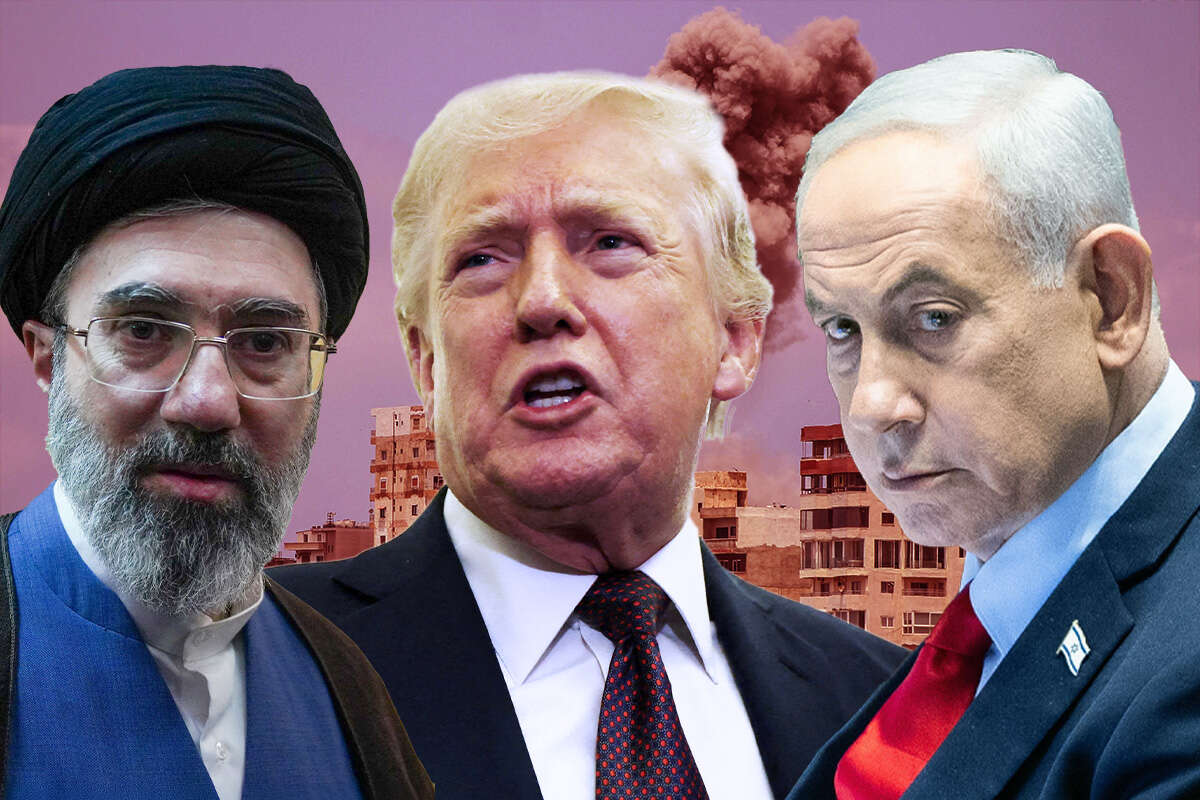
The thinking becomes clearer when this conceptual framework is applied to the war with Iran. First, it began in 1979, when Iran placed Islamist imperialism and genocide against Israel at the center of its self-definition. Second, the war will end, and not in Israel's defeat, God forbid, only when the Islamist regime falls or is forced to renounce this identity through the dismantling of its nuclear and missile project. Third, the operations With a Lion and Roaring Lion did postpone threats of destruction, apparently by several years, but Iran was not even militarily defeated in them, and certainly did not suffer defeat.

The US, even under the most pro-Israel administration, made clear that it would not forcibly topple the Iranian regime, and its toppling through subversion by the Mossad and the CIA would be a welcome surprise, but not an expected one. Will the US succeed in forcing an identity change on the Iranian regime, expressed by relinquishing its mass-destruction project? The US has failed at this since it halted Operation Roaring Lion, and it is unlikely to succeed after the siege on the regime is lifted, and perhaps also after money is channeled for its use.
Therefore, the war is not over. The next government will have to deal with it, albeit under improved conditions. The question is who will lead us in that confrontation. It must not be those who did everything they could to make us stop before Rafah, Lebanon, Syria and the two bombing campaigns in Iran.