The newly-appointed head of the Atomic Energy Organization of Iran, Mohammad Eslami, made a significant announcement on Oct. 10.
Follow Israel Hayom on Facebook and Twitter
Iran enriched more than 120 kilograms of uranium to the 20% level, he said – a major jump from the 84 kilograms that Iran had previously enriched a month earlier, according to the United Nation's nuclear watchdog, the International Atomic Energy Agency.
The 120-kilogram milestone is more significant than meets the eye. While Eslami said the figure represented an objective set by the Iranian parliament, the number holds a far wider significance.
This quantity of enriched uranium, if further enriched to 90%, is almost what is required to build a single nuclear bomb.
The fact that Iran is also openly enriching other, albeit smaller quantities of uranium to the 60% level, as its previous announcements demonstrate, means Iran has essentially abandoned any pretense of a civilian cover for its nuclear program. No non-nuclear states need to enrich uranium to 60%.
All told, this means that Iran is at its most advanced stage ever in its nuclear program, both in the amount of uranium enriched and particularly the 60% level to which some of that uranium has been enriched.
These developments signify a broader problem, namely the twilight "no-man's-land" state of Iran's nuclear program. On the one hand, no new or old nuclear deal has been reached since the Trump administration unilaterally exited the original 2015 nuclear deal in 2018. On the other hand, the "maximum pressure" campaign that the former American administration waged on Iran is not in place either.
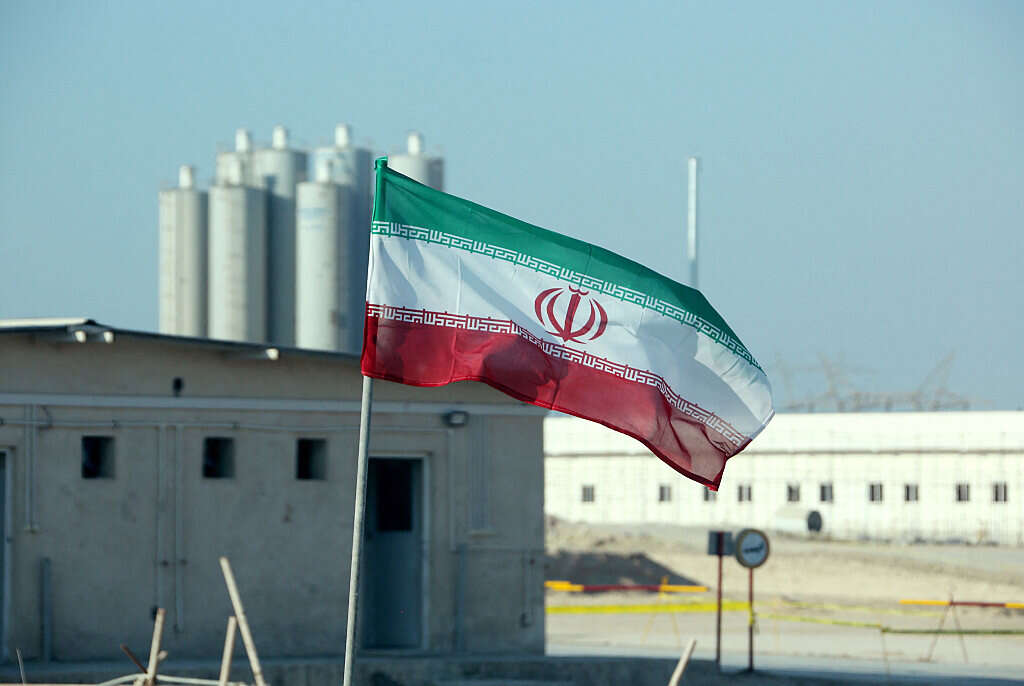
Although the Biden administration has not lifted sanctions on Iran, the level of enforcement has noticeably decreased, and so, too, has the discipline by members of the international deal. China is striking crude-oil deals with Iran that it didn't make a year ago.
Without maximum pressure and absent a deal, Iran is enjoying all of the benefits as it enriches a growing quantity of uranium.
The longer this status quo persists, the worse the situation will become for global, regional and Israeli security.
In the meantime, Iran has increasingly limited the IAEA's supervision capabilities. Iran is delaying its return to the nuclear talks; the last round of negotiations in Vienna was in June.
In several months, if no change occurs, the threshold for Israeli military action might be triggered.
All told, Iran is approximately a year-and-a-half away from having a nuclear weapon. While it is making major progress on developing fissile material, it has not surged on other components of the program, such as preparing an underground nuclear test, as doing so would make it obvious to the entire world that a military nuclear program is breaking through to the bomb.
This would likely create a strong backlash – a development that the Iranian regime is keen to avoid. Instead, Iran retains all of the technological knowledge and personnel needed to break through, and "puts them on ice," waiting for different timing.
Economic, diplomatic and military deterrence
Looking ahead, there appear to be three potential plans in the work to deal with this situation.
The first, "Plan A," is the Biden administration's intention to return to the 2015 nuclear deal – the Joint Comprehensive Plan of Action.
While Washington appears intent on this plan, it is almost pointless in terms of meaningfully stopping Iran's nuclear program due to all the nuclear progress Iran has made in the past 18 months.
"Plan B" would involve applying real international pressure to bring Iran back to negotiations in an authentic manner in order to strike a longer, stronger nuclear agreement. This would involve employing diplomacy, mixed with a credible military threat by both the United States and Israel.
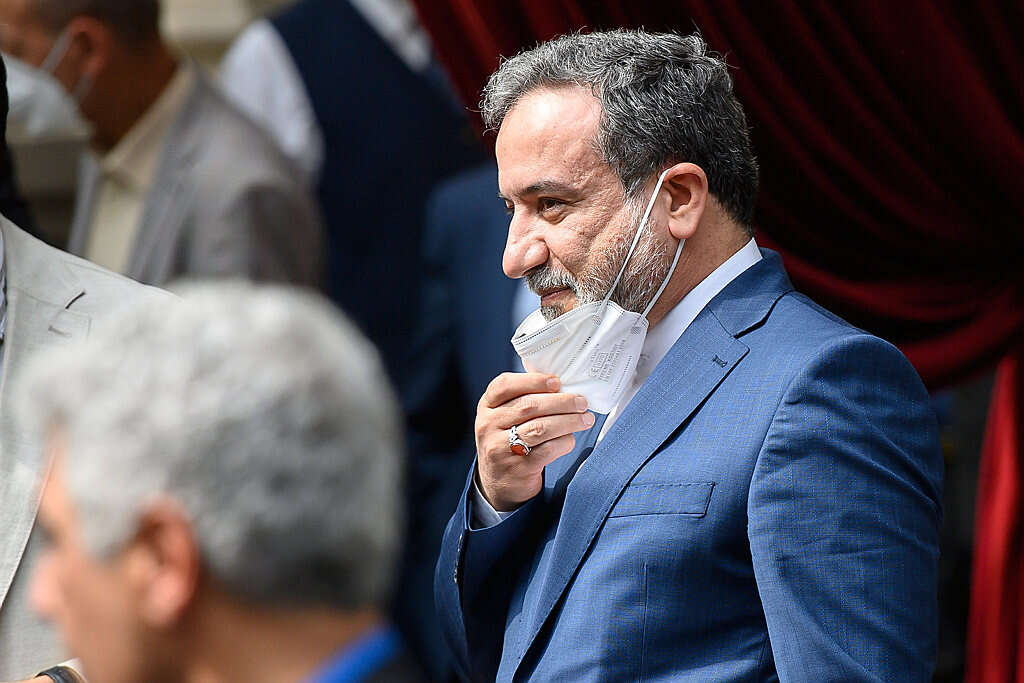
It seems reasonable to assume that Israeli officials visiting Washington have been promoting such an approach. A better, stronger agreement would keep Iran away from nuclear weapons for decades – not just several years as the current JCPOA and its short-term sunset clauses would.
A better deal would also see Iran not only giving up its fissile material but disassembling its nuclear infrastructure, and the IAEA receiving stronger supervision abilities able to respond to suspicious activity as revealed in the Iranian archive, which the Mossad retrieved from Tehran in 2018 in a daring operation.
The international community has already proven its ability to unite and press Iran to the negotiations table in 2015, and it could in theory repeat this. A combination of economic, diplomatic and military deterrence and pressure would be needed to achieve this.
A strike could trigger a wider war
In the event that the two plans fail, the question of military action becomes relevant.
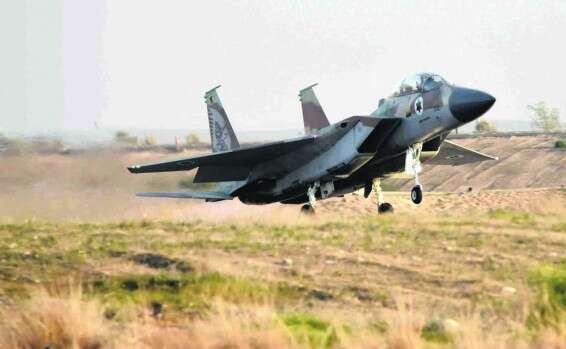
The IDF has been working to build updated military options to prevent Iran from breaking through to a bomb.
If diplomacy continues to stall, Iran will need reminders that military options exist.
From Israel's perspective, a nuclear Iran would form an intolerable, existential threat – and not only because of a direct nuclear menace. Iran's regional activity and network of proxies would receive a nuclear umbrella, meaning that Iran's risky, destabilizing activity in the region would amplify exponentially. It would trigger a nuclear arms race with Sunni states, such as Saudi Arabia, launching their own bids to arm themselves with atomic bombs in the coming decades. Such a regional future represents an unacceptably dangerous and unstable scenario to be avoided at all costs.
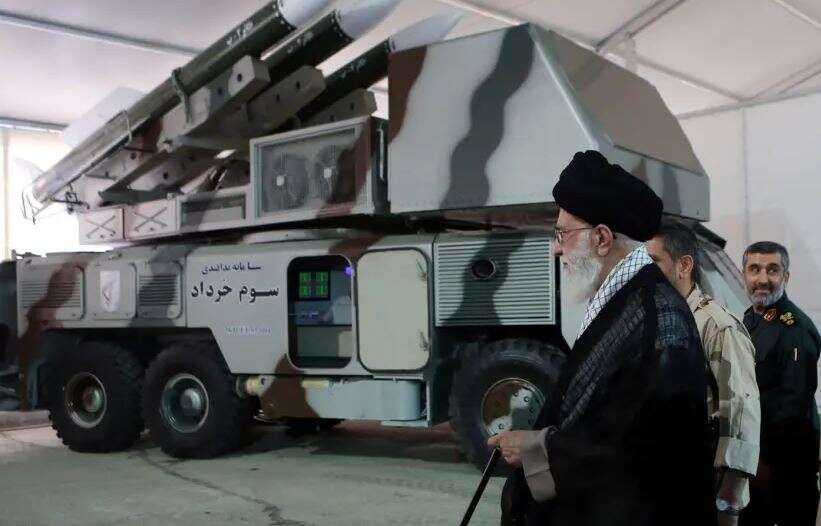
Despite its bravado, Iran has no interest in entering into direct state-on-state wars. It has demonstrated this repeatedly in the past 20 years. In 2003, with the US military in Afghanistan and Iraq around it, the Islamic republic froze its military nuclear program, dubbed "Amad." More recently, Iran has invested plenty of efforts and resources in protecting its nuclear infrastructure by placing parts of it underground and surrounding its sites with air defense systems – showing just how seriously Tehran takes the threat of military action.
Should diplomacy fail, "Plan C" would be the last resort. It is a scenario that the Israeli defense establishment must prepare intensively for. A strike on Iran's nuclear program would likely trigger a wider regional war, though not necessarily.
Subscribe to Israel Hayom's daily newsletter and never miss our top stories!
Multiple scenarios, including the activation of Hezbollah in Lebanon, which is 20 times more powerful than it was during the 2006 Second Lebanon War, coupled with Iran's proxies in Syria and Iraq, must be factored into the planning.
This will contribute to the credibility of Israel's military deterrence. Currently, it appears as if Iran's supreme leader, Ayatollah Khamenei, does not believe there is an imminent military threat to his country, and he is acting on the basis of that assessment.
Should he be convinced otherwise, particularly with the assistance of the United States, Khamenei is likely to change course for he fears what a direct war could do to his Islamic revolution.
Israel began developing its military capabilities for stopping Iran's nuclear program in 2004, and it hasn't stopped. As time goes by, the chances of Israel needing to deploy these capabilities appear to have increased. Now, with Tehran accelerating its nuclear program, Jerusalem is accelerating its own military strike capability in parallel.
2022 will prove to be a critical junction.
Reprinted with permission from JNS.org.