Israel Hayom is a media organization founded on the belief that the Israeli public deserves better journalism—more balanced, more accurate, and more reliable. Journalism that speaks rather than shouts. Journalism that is trustworthy, objective, and matter-of-fact. A different kind of journalism, offered free of charge. The first print edition was published on July 30, 2007, and in 2010 Israel Hayom became the Israeli newspaper with the highest weekday readership. The newspaper’s publisher is Dr. Miriam Adelson. Its Editor-in-Chief is Omar Lachmanovitch, and its founding editor is Amos Regev. Israel Hayom’s Hebrew and English websites, as well as its Android and iOS applications, provide around-the-clock news coverage, exclusive content, breaking news and updates, analysis and commentary, video, podcasts, and live broadcasts. The digital platforms of Israel Hayom include news and opinion channels covering culture and entertainment, lifestyle, technology, sports, business and consumer affairs, health, military affairs, food, Judaism, tourism, and automobiles. In 2021, a new Hebrew-language website and mobile application were launched to provide users with a fast, up-to-date, secure, and convenient experience. The content of the newspaper’s print edition is also available online through a daily digital edition and can be received via newsletter. “The Israel Hayom Clique,” the publication’s exclusive benefits club, offers website users discounts and special promotions on products and services. Israel Hayom welcomes feedback, criticism, and suggestions for improvement from its readers. You can contact the organization by email at hayom@israelhayom.co.il

Wednesday Jul 1, 2026
NEWSLETTER
www.israelhayom.com
  • Home
  • News
    • Israel
    • Israel at War
    • Middle East
    • United States
  • Opinions
  • Jewish World
    • Archaeology
    • Antisemitism
  • Lifestyle
    • Food
    • Travel
    • Fashion
    • Culture
  • Magazine
    • Feature
    • Analysis
    • Explainer
  • In Memoriam
www.israelhayom.com
  • Home
  • News
    • Israel
    • Israel at War
    • Middle East
    • United States
  • Opinions
  • Jewish World
    • Archaeology
    • Antisemitism
  • Lifestyle
    • Food
    • Travel
    • Fashion
    • Culture
  • Magazine
    • Feature
    • Analysis
    • Explainer
  • In Memoriam
www.israelhayom.com
Home Analysis

Fear and loathing in Sinai: Is Egypt a threat to Israel?

It's true that in any future conflict with Egypt, if one were ever to erupt, the IDF will have to contend with a massive army equipped with modern, sophisticated weapons. At the current juncture, however, the clear and present dangers to Israel are from the north, not the south.

by  Oded Granot
Published on  10-24-2021 14:50
Last modified: 10-24-2021 14:50
Egyptian military consolidates grip on northern SinaiAFP via STR

Egyptian soldiers in the area of the Rafah Crossing border between Egypt and the Gaza Strip, May 21, 2013 | Archives: AFP via STR

Share on FacebookShare on Twitter

In a few months, Egypt will mark 40 years since receiving the Sinai Peninsula back from Israel under the auspices of their peace treaty. Even then, similar to today, some in Israel occasionally argue that ceding the Sinai was a mistake that will cost us dearly one day when Egyptian army divisions cross the Suez Canal into the Sinai and attack Israel along the internationally recognized border.

Follow Israel Hayom on Facebook and Twitter

The Yom Kippur War taught us that we cannot disregard any warning signs, but the accumulated experience of the past 40 years hasn't justified this concern: The border with Egypt, similar to the border with Jordan, has become tranquil from a security perspective, which has allowed the IDF to deploy very sparse forces to man those lines.

Forty years ago, Hosni Mubarak, who died last year, told me as a senior army officer at the time and the commander of the Egyptian air force during the Yom Kippur War, that he was more aware than most about the price of war, and therefore swore: "There will never be another war between us." He reiterated that oath to me several times throughout the years.

And he kept his promise. The cold peace between us and Egypt throughout his 30-year time in power also held firm in the face of crises and harsh conflicts between Israel and its ill-wishers in the Arab world. The Egyptian army never entered the Sinai and the demilitarization agreement has been fastidiously upheld.

A series of threats

However, it was at the twilight of Mubarak's rule, accelerating immensely following his removal 10 years ago, that new threats against Israel began sprouting from the south. One of these threats was linked to the growth and entrenchment of terrorist cells in northern Sinai. These cells are a lethal combination of organizations such as al-Qaida and the Islamic State group and local Bedouin youths frustrated and angry after decades of neglect from the central government in Cairo.
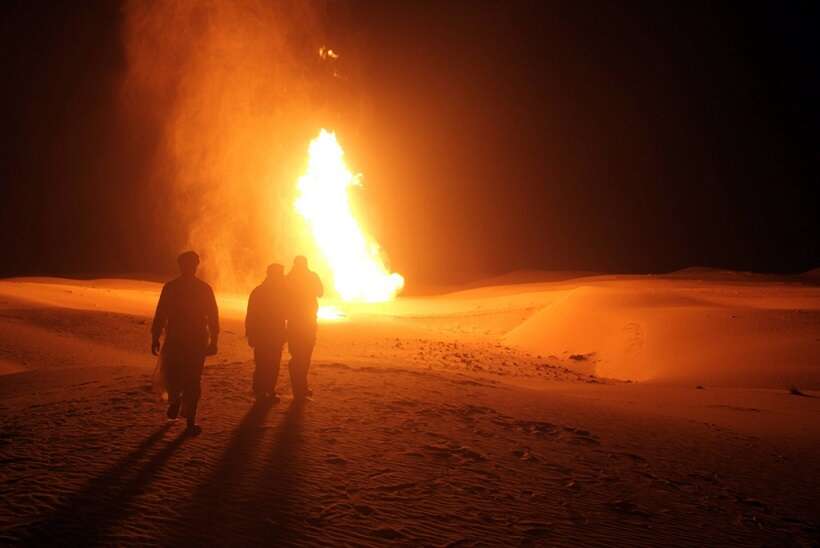
Flames rise from a pipeline that delivers gas to Israel after it was hit by terrorists in the northern Sinai Peninsula (AFP | Archive)

Although the majority of the attacks carried out by these terrorist groups have targeted the Egyptian army – in the Sinai and in Egypt proper as well – Israel, too, has been hit with shootings and missile attacks at Eilat, alongside frequent attacks on gas pipelines. Meanwhile, weapons, equipment, explosives and military knowledge has flowed unimpeded between Egypt and Gaza in the underground tunnels connecting them.

The other threat to rise against Israel from the south in the wake of Mubarak's ouster was the ascent of the Muslim Brotherhood to power and the election of Mohammad Morsi as president. The friendly and ideological ties between Morsi and his camp and the Hamas echelon in Gaza, and the mutual visits between them, sparked considerable concern in Israel. These concerns were amplified even further when Morsi declared his intention to "re-examine" the military addendum to the peace treaty and deploy the Egyptian army to the Sinai.

Both these threats against Israel were erased by General Abdel Fattah el-Sissi, the youngest member of the Supreme Council of the Armed Forces, which had managed Egypt post-Mubarak. In the summer of 2013, el-Sissi kicked Morsi out of the presidential palace and outlawed the Muslim Brotherhood. The sigh of relief emanating from Jerusalem could be heard far and wide.

Simultaneously, el-Sissi launched a campaign, which lasted for several years, to wipe out the jihadist cells in northern Sinai responsible for killing hundreds of Egyptian soldiers and wounding thousands more. According to reports, Israel not only aided this campaign with intelligence information and other means, it even allowed Egypt to deploy dozens of battalions to fight the terrorists.
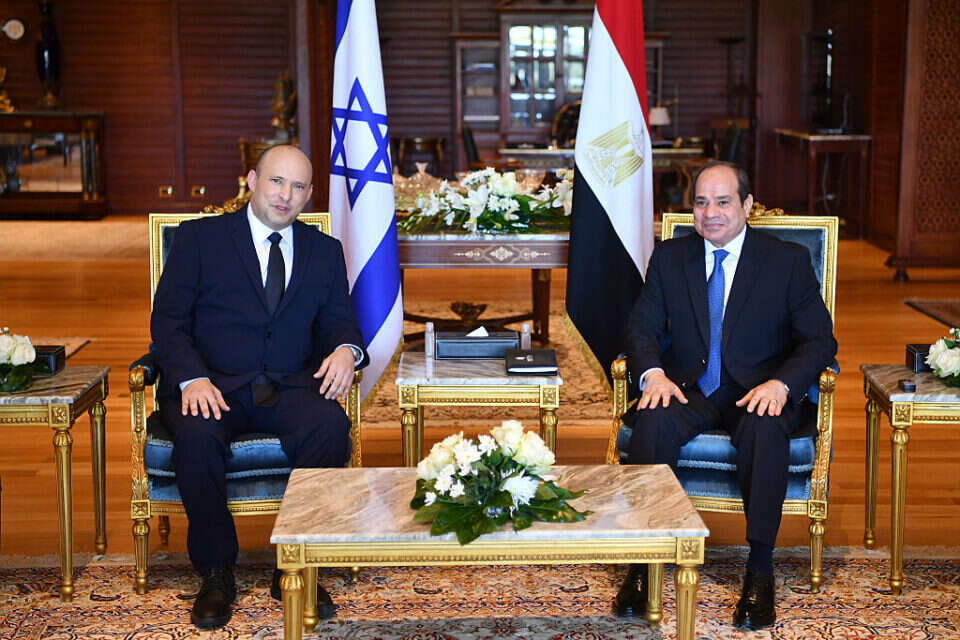
Egyptian President Abdel Fattah El-Sissi (R) meets with Prime Minister Naftali Bennett in Sharm El-Sheikh, Egypt, Sept. 13, 2021 (EPA)

Within the framework of this military cooperation, el-Sissi almost immediately tasked two battalions with preventing rocket and missile fire at Eilat. At the same time, he took action to debilitate most of the tunnels linking Gaza and the Sinai. The result: the terror was eliminated, even if not yet completely eradicated. The security coordination between Israel and Egypt became stronger.

Out of the north the evil will be unleashed

The skeptics will say this cooperation was merely interest-based and temporary, and can easily be stopped with a decision from high up. They will also argue, justifiably, that we cannot ignore the astounding armament rate of the Egyptian army, which has procured the very best offensive weaponry from the West in recent years. Submarines, warplanes and much more, while also building new bases and developing its military infrastructure. "One day, all of it will be turned against us," they say.

Additionally, there is no apparent explanation for this armament aside, perhaps, from Egypt's desire to preserve its status as a strong and significant player in the Middle East and to prepare for future threats in the Mediterranean Sea from powers such as Turkey, which could try appropriating the still undrilled gas reservoirs in the area.

When assessing a military threat, however, it isn't enough to point only at capability. One must also point at intent. And the Egyptian president is not only bolstering security cooperation with Israel, he has also taken several cautious steps recently – perhaps influenced by Israel's peace treaties with the Gulf states – to normalize other aspects of the relationship. He publicly met Prime Minister Naftali Bennett in Cairo, an Egyptair flight landed in Israel, and surprisingly, he publicly called on other Arab states to follow in the footsteps of Anwar Sadat and make peace with Israel.

It's true that in any future conflict with Egypt, if one were ever to erupt, the IDF will have to contend with a massive army equipped with modern, sophisticated weapons. At this current juncture, however, the clear and present dangers to Israel are from the north, not the south.

Subscribe to Israel Hayom's daily newsletter and never miss our top stories!
Tags: al-QaidaEgyptGazaHamasIsraelSinaiterror

Related Posts

Something deep is changing on the Haredi street. The real conflagration lies ahead

Something deep is changing on the Haredi street. The real conflagration lies ahead

by Yaakov Hershkowitz

The draft crisis is pushing the integration of Haredi Israelis into broader Israeli society further away and radicalizing the discourse....

The Gulf states have moved on, leaving Israel behind

The Gulf states have moved on, leaving Israel behind

by Yoel Guzansky

The signing of the memorandum of understanding between Washington and Tehran marks the beginning of a new regional order. While...

The Iran deal is an American failure that endangers Israel

The Iran deal is an American failure that endangers Israel

by Danny Zaken

The senior American official distorted the truth in a briefing to reporters: The centrifuges will remain, the enriched uranium will...

Menu

Analysis 

Archaeology

Blogpost

Business & Finance

Culture

Exclusive

Explainer

Environment


Features

Health

In Brief

Jewish World

Judea and Samaria

Lifestyle

Cyber & Internet

Sports


Diplomacy 

Iran & The Gulf

Gaza Strip

Politics

Shopping

Terms of use

Privacy Policy

Submissions

Contact Us

About Us

The first issue of Israel Hayom appeared on July 30, 2007. Israel Hayom was founded on the belief that the Israeli public deserves better, more balanced and more accurate journalism. Journalism that speaks, not shouts. Journalism of a different kind. And free of charge.

All rights reserved to Israel Hayom

Hosted by sPD.co.il

  • Home
  • News
    • Israel at War
    • Israel
    • United States
    • Middle East
    • Sports
  • Opinions
  • Jewish World
    • Archaeology
    • Antisemitism
  • Lifestyle
    • Food
    • Travel
    • Fashion
    • Culture
  • Magazine
    • Feature
    • Analysis
    • Explainer
    • Environment & Wildlife
    • Health & Wellness
  • In Memoriam
  • Subscribe to Newsletter
  • Submit your opinion
  • Terms and conditions

All rights reserved to Israel Hayom

Hosted by sPD.co.il

Newsletter

[contact-form-7 id=”508379″ html_id=”isrh_form_Newsletter_en” title=”newsletter_subscribe”]

  • Home
  • News
    • Israel at War
    • Israel
    • United States
    • Middle East
    • Sports
  • Opinions
  • Jewish World
    • Archaeology
    • Antisemitism
  • Lifestyle
    • Food
    • Travel
    • Fashion
    • Culture
  • Magazine
    • Feature
    • Analysis
    • Explainer
    • Environment & Wildlife
    • Health & Wellness
  • In Memoriam
  • Subscribe to Newsletter
  • Submit your opinion
  • Terms and conditions

All rights reserved to Israel Hayom

Hosted by sPD.co.il