Everyone involved in the Iran nuclear talks in Vienna is "releasing promos" ahead of an impending formal declaration, which will apparently entail a return to a watered-down, worse version of the original 2015 agreement despite it being clear to all that turning back the clock to the old deal isn't even possible.
Follow Israel Hayom on Facebook, Twitter, and Instagram
Despite all the warnings, it appears the American delegation headed by Robert Malley – following the resignation of three of his senior colleagues, chief among them Richard Nephew, over the extent of US concessions to the Iranians' demands – has swayed global powers to consent to an exceedingly problematic deal that will pave a certain path for Iran to acquire a nuclear bomb in the coming years.
Within the framework of the emerging deal, which will partially be based on the 2015 agreement, several fundamental problems, which Israel has highlighted on multiple occasions, have not been resolved. It lacks any mechanisms that will force the Iranians to engage in additional negotiations over a "longer-term, stronger" deal before the new deal expires, as US President Joe Biden promised would be inserted. A short-term deal in which all restrictions imposed on Iran's nuclear program will soon expire as per the original deal's outline, which was solely predicated on reciprocity, and without any clear stipulation agreed upon by all sides about what will happen if a new deal isn't reached, isn't worth the paper on which it is written.
The deal does not block all the avenues that can lead to a nuclear weapon, doesn't address the holes that were identified in the previous agreement, and doesn't even give global powers any actual ability to activate the snapback mechanism that allowed them at the time to reimpose sanctions (according to the original deal, this mechanism is set to expire in 2025).
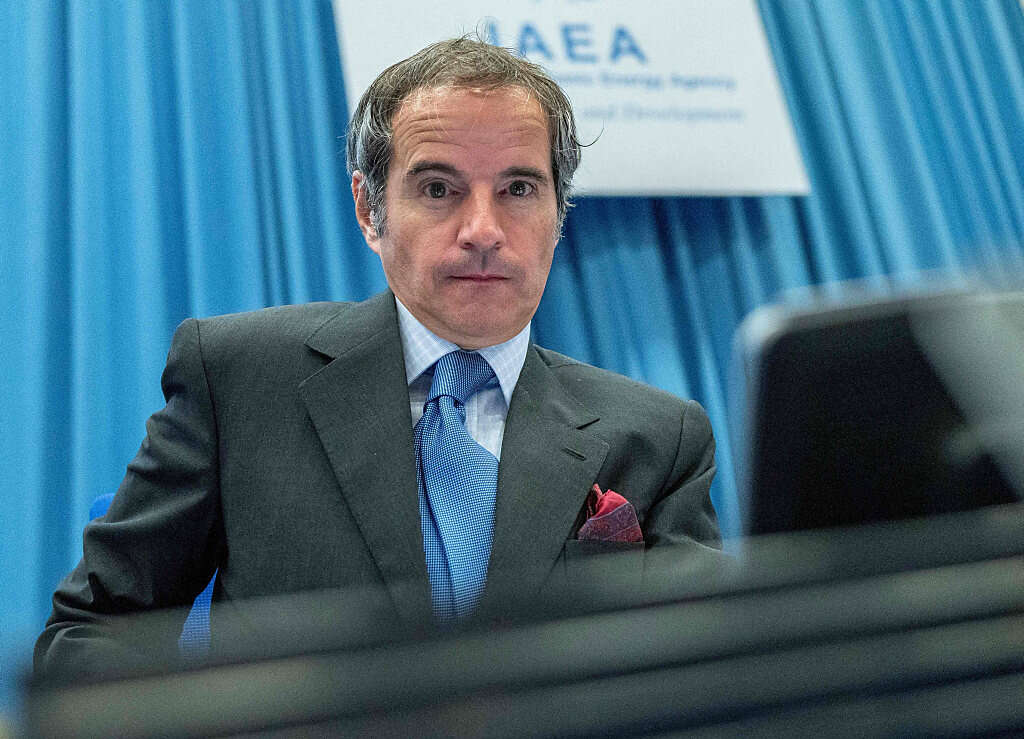
The last point of contention that seemingly may or may not be addressed in the new deal is the future of the International Atomic Agency's ongoing investigations. Some of these investigations were made possible by the original deal's invasive oversight mechanisms, and some pertain to the open questions from the investigation into the possible military dimensions of Iran's nuclear program, which was mistakenly closed in the past and exposed by Israel's revelation of Iran's nuclear archives. Deficient attention to this important issue will diminish the IAEA's already lowly status even further and put into question the very need for its existence. It appears the sides are on the verge of closing the uranium investigation and perhaps will also formulate a clever conclusion to the other matters, or simply just concede altogether on those as well.
It's important to recall how the late former director-general of the IAEA, Yukiya Amano, responded when asked about his agency's enforcement of "Section T," the part of the original deal that pertained to monitoring activities related to the development of weapons systems. It was clear by his statements that behind the scenes the Russians and Americans had agreed in advance that there was no intention or ability to enforce this section and that the IAEA was also incapable. It's certainly possible that secret deals of this sort are in the works this time, too.
A foolish attempt to predicate the stability of the new deal on the re-imposition of full oversight, without promising to pursue and exhaust the findings of the previous oversight regime, would simply be ridiculous.
It's also clear that despite the Iranian regime's efforts during the current negotiations to intensify attacks on US forces in Iraq and its allies in the Persian Gulf region, nothing was done to confront this aggression, including against the launch of long-range ballistic missiles with warheads weighing upward of 500 kilograms (some 1,100 pounds) for the first time in decades and in contravention of all international oversight mechanisms.
It seems that American lawmakers are unwilling to let Biden and his envoys sign this deal without warning them and mainly the Iranians of its future consequences. Two hundred Republican members of Congress published a scathing letter saying that in 2024, after the next presidential election, a Republican administration will not honor the deal and re-impose all the sanctions currently being lifted. This letter is supposed to send a message to the world that returning to business-as-usual with Iran is a precarious prospect.
What transpires in the short term, however, remains the problem. Reinstating the original deal will "whitewash" all of Iran's violations and the progress it has made with its nuclear program, and at the same time grant it hundreds of billions of dollars, allow it to rehabilitate its economy, and continue funding its terrorist proxies.
A book that was published this week, co-authored by this writer and Dr. Jonathan Schanzer of the Foundation for Defense of Democracies about Israel's conflict in Gaza in 2021, details why the nuclear deal is dangerous and how the Iranians are behind almost every terrorist event in the Middle East and around the world.
It appears the voices and pressures that were applied this week, including from the important Israeli delegation that flew to Vienna to explain how the emerging deal is problematic for all sides involved in the talks, failed to stop the Americans' mad dash to reach a deal at all costs. The "weak" Europeans are again kowtowing to American pressure and the Russians and Chinese are wringing their hands gleefully.
Instead of re-imposing maximum economic pressure and building a credible military threat, the Americans are about to sign a "deal of surrender." In any case, it's important not to take the foot off the gas even after the deal is signed, and urge that a plan be formulated for the "day after" that will exact a clear and painful price from Iran if it doesn't swiftly move toward a "stronger, longer-term" deal, which will maybe block its path to a nuclear weapon that will change the world around us.
Brig. Gen. (Res.) Professor Jacob Nagel is a former national security adviser to the prime minister and a senior fellow at the Foundation for Defense of Democracies.
Subscribe to Israel Hayom's daily newsletter and never miss our top stories!