Israel Hayom is a media organization founded on the belief that the Israeli public deserves better journalism—more balanced, more accurate, and more reliable. Journalism that speaks rather than shouts. Journalism that is trustworthy, objective, and matter-of-fact. A different kind of journalism, offered free of charge. The first print edition was published on July 30, 2007, and in 2010 Israel Hayom became the Israeli newspaper with the highest weekday readership. The newspaper’s publisher is Dr. Miriam Adelson. Its Editor-in-Chief is Omar Lachmanovitch, and its founding editor is Amos Regev. Israel Hayom’s Hebrew and English websites, as well as its Android and iOS applications, provide around-the-clock news coverage, exclusive content, breaking news and updates, analysis and commentary, video, podcasts, and live broadcasts. The digital platforms of Israel Hayom include news and opinion channels covering culture and entertainment, lifestyle, technology, sports, business and consumer affairs, health, military affairs, food, Judaism, tourism, and automobiles. In 2021, a new Hebrew-language website and mobile application were launched to provide users with a fast, up-to-date, secure, and convenient experience. The content of the newspaper’s print edition is also available online through a daily digital edition and can be received via newsletter. “The Israel Hayom Clique,” the publication’s exclusive benefits club, offers website users discounts and special promotions on products and services. Israel Hayom welcomes feedback, criticism, and suggestions for improvement from its readers. You can contact the organization by email at hayom@israelhayom.co.il

Sunday Jul 19, 2026
NEWSLETTER
www.israelhayom.com
  • Home
  • News
    • Israel
    • Israel at War
    • Middle East
    • United States
  • Opinions
  • Jewish World
    • Archaeology
    • Antisemitism
  • Lifestyle
    • Food
    • Travel
    • Fashion
    • Culture
  • Magazine
    • Feature
    • Analysis
    • Explainer
  • In Memoriam
www.israelhayom.com
  • Home
  • News
    • Israel
    • Israel at War
    • Middle East
    • United States
  • Opinions
  • Jewish World
    • Archaeology
    • Antisemitism
  • Lifestyle
    • Food
    • Travel
    • Fashion
    • Culture
  • Magazine
    • Feature
    • Analysis
    • Explainer
  • In Memoriam
www.israelhayom.com
Home Analysis

Rafah operation must take place – even in defiance of the US

The deadlock in negotiations for the release of the hostages, coupled with American accusations against Hamas, has paved the way for Israel to launch the Rafah offensive. The IDF's starting position is better than those at the beginning of the campaign in northern Gaza or the Khan Younis area. The enemy will now be entering combat with a command echelon that has been depleted.

by  Meir Ben Shabbat
Published on  04-28-2024 16:57
Last modified: 04-30-2024 14:40
Rafah operation must take place – even in defiance of the USAriel Hermoni / Defense Ministry

Defense Minister Yoav Gallant with officials on April 7, 2024 | Photo: Ariel Hermoni / Defense Ministry

Share on FacebookShare on Twitter

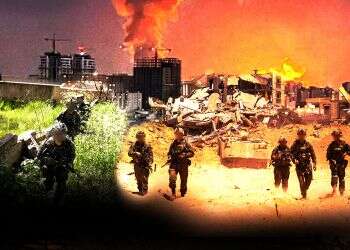
As signs of an imminent IDF operation in Rafah intensify, there is growing concern that Israel will unnecessarily exercise self-imposed restraint by acting with insufficient force, so as not to upset the Biden administration, the Egyptians, or the ICC prosecutor at The Hague.

Meanwhile, Hamas is presumably exploiting the prolonged waiting period and preparing well for the ground operation in this sector, which will undoubtedly pose complex operational challenges for the IDF. Despite the political pressures, Israel's decision-makers must make it a top priority to attain the objectives with minimal risk to the security of our forces.

The deadlock in negotiations for the release of Israeli captives held by Hamas, coupled with American accusations against the group, has paved the way for Israel to launch the Rafah offensive. The recent de-escalation with Iran allows Israel to shift its focus, without forfeiting political gains made, while continuing the fight against Hezbollah and dismantling terrorist networks in the West Bank.

In this operation, the security establishment will be required to achieve five objectives: Dismantling Hamas' regional brigade, with its four battalions: eliminating or arresting its commanders and most of its personnel, seizing or destroying its command centers, strategic assets, weapons, and production facilities – both above or below ground. Eliminating or arresting senior members of Hamas or the Palestinian Islamic Jihad who fled from other areas to Rafah and found refuge there.
Ending Hamas' civilian control in this area: striking Hamas' governing mechanisms, including police and internal security forces, prisons, and courts, as well as "civilian" committees for managing emergency affairs.

Taking control of smuggling routes and shaping a new security reality along the border strip, preventing smuggling from Sinai to the Gaza Strip.
Advancing the release of the captives– either by seizing opportunities during the fighting or through negotiations following increased pressure on Hamas.
The IDF and Hamas: Starting Conditions

The IDF's starting position for this operation is better than those at the beginning of the campaign in the northern Gaza Strip or the Khan Younis area. The enemy will now be entering combat with a command echelon that has been depleted, with many fighters dead, injured, or arrested. Second, its stockpile of weapons and ammunition has dwindled. Third, the ability to strike the Israeli home front with rocket fire is rather limited. And fourth, the IDF will have already replenished its forces, updated its intelligence, and improved its fighters' operational combatworthiness through lessons learned from previous stages of the fighting.

However, from the enemy's perspective, the overall picture also has some bright spots. Their force deployment in the combat zone has not only remained intact but has also been reinforced with operatives from other areas. Their logistical preparedness has improved thanks to humanitarian aid entering the Strip, and they are equipped with fuel and food that allow prolonged survival in tunnels.

Additionally, they draw encouragement from the pressures exerted on Israel to minimize casualties and benefit from the involvement of Iran and its proxies, as well as the political support of Turkey and other countries. Above all, they are emboldened by their demonstrated ability to survive the IDF onslaught so far and the fact that even after 200 days of fighting, Hamas continues to be the central power in the Gaza Strip.

A formidable task

Alongside its offensive capabilities, the IDF will also need to strengthen its defense against various forms of attacks on its forces or on the home front that exploit proximity to borders or the use of tunnels. The same applies to the possibility that Hamas may carry out provocations in the border fence area and towards Sinai, aiming to create tensions between Israel and Egypt. Hints of this could be found in a statement issued this week by the "Palestinian factions." The IDF's well-oiled war machine has proved itself, and there is no doubt as to its ability to successfully handle this challenge as well. On the political level, maximum support and freedom of action are required to allow the IDF to employ intense firepower that will reduce the risk to our soldiers and bring about the swiftest possible defeat of the enemy.

Meanwhile, the IDF will need to continuously examine how the combat situation can be leveraged to advance the release of the captured individuals.
The Rafah operation will not complete the task of decisively defeating Hamas. Even after it is over, much more work, and a deeper impact, will be needed inside the territory before Hamas' remaining capabilities are destroyed and a new reality emerges. This was also the case following Operation Defensive Shield, which began exactly 22 years ago. It will not be quick and easy, but it is necessary and possible.

Meir Ben Shabbat is head of the Misgav Institute for National Security & Zionist Strategy, in Jerusalem. He served as Israel's national security advisor and head of the National Security Council between 2017 and 2021, and prior to that for 30 years in the General Security Service (the Shin Bet security agency or "Shabak").

Tags: AntisemitismBenjamin NetanyahuGazaGaza WarHamasIDFIsraelMiddle EastPalestiniansRafahTerrorismTurkeyUnited StatesUS

Related Posts

Hamas signals openness to Gaza disarmamentEPA

Hamas is marketing the Hezbollah model, and not for the first time

by Shachar Kleiman

The terrorist organization is not truly prepared to give up power as long as it refuses to disarm. The proposed...

Something deep is changing on the Haredi street. The real conflagration lies ahead

Something deep is changing on the Haredi street. The real conflagration lies ahead

by Yaakov Hershkowitz

The draft crisis is pushing the integration of Haredi Israelis into broader Israeli society further away and radicalizing the discourse....

The Gulf states have moved on, leaving Israel behind

The Gulf states have moved on, leaving Israel behind

by Yoel Guzansky

The signing of the memorandum of understanding between Washington and Tehran marks the beginning of a new regional order. While...

Menu

Analysis 

Archaeology

Blogpost

Business & Finance

Culture

Exclusive

Explainer

Environment


Features

Health

In Brief

Jewish World

Judea and Samaria

Lifestyle

Cyber & Internet

Sports


Diplomacy 

Iran & The Gulf

Gaza Strip

Politics

Shopping

Terms of use

Privacy Policy

Submissions

Contact Us

About Us

The first issue of Israel Hayom appeared on July 30, 2007. Israel Hayom was founded on the belief that the Israeli public deserves better, more balanced and more accurate journalism. Journalism that speaks, not shouts. Journalism of a different kind. And free of charge.

All rights reserved to Israel Hayom

Hosted by sPD.co.il

  • Home
  • News
    • Israel at War
    • Israel
    • United States
    • Middle East
    • Sports
  • Opinions
  • Jewish World
    • Archaeology
    • Antisemitism
  • Lifestyle
    • Food
    • Travel
    • Fashion
    • Culture
  • Magazine
    • Feature
    • Analysis
    • Explainer
    • Environment & Wildlife
    • Health & Wellness
  • In Memoriam
  • Subscribe to Newsletter
  • Submit your opinion
  • Terms and conditions

All rights reserved to Israel Hayom

Hosted by sPD.co.il

Newsletter

[contact-form-7 id=”508379″ html_id=”isrh_form_Newsletter_en” title=”newsletter_subscribe”]

  • Home
  • News
    • Israel at War
    • Israel
    • United States
    • Middle East
    • Sports
  • Opinions
  • Jewish World
    • Archaeology
    • Antisemitism
  • Lifestyle
    • Food
    • Travel
    • Fashion
    • Culture
  • Magazine
    • Feature
    • Analysis
    • Explainer
    • Environment & Wildlife
    • Health & Wellness
  • In Memoriam
  • Subscribe to Newsletter
  • Submit your opinion
  • Terms and conditions

All rights reserved to Israel Hayom

Hosted by sPD.co.il