Israel Hayom is a media organization founded on the belief that the Israeli public deserves better journalism—more balanced, more accurate, and more reliable. Journalism that speaks rather than shouts. Journalism that is trustworthy, objective, and matter-of-fact. A different kind of journalism, offered free of charge. The first print edition was published on July 30, 2007, and in 2010 Israel Hayom became the Israeli newspaper with the highest weekday readership. The newspaper’s publisher is Dr. Miriam Adelson. Its Editor-in-Chief is Omar Lachmanovitch, and its founding editor is Amos Regev. Israel Hayom’s Hebrew and English websites, as well as its Android and iOS applications, provide around-the-clock news coverage, exclusive content, breaking news and updates, analysis and commentary, video, podcasts, and live broadcasts. The digital platforms of Israel Hayom include news and opinion channels covering culture and entertainment, lifestyle, technology, sports, business and consumer affairs, health, military affairs, food, Judaism, tourism, and automobiles. In 2021, a new Hebrew-language website and mobile application were launched to provide users with a fast, up-to-date, secure, and convenient experience. The content of the newspaper’s print edition is also available online through a daily digital edition and can be received via newsletter. “The Israel Hayom Clique,” the publication’s exclusive benefits club, offers website users discounts and special promotions on products and services. Israel Hayom welcomes feedback, criticism, and suggestions for improvement from its readers. You can contact the organization by email at hayom@israelhayom.co.il

Wednesday Aug 19, 2026
NEWSLETTER
www.israelhayom.com
  • Home
  • News
    • Israel
    • Israel at War
    • Middle East
    • United States
  • Opinions
  • Jewish World
    • Archaeology
    • Antisemitism
  • Lifestyle
    • Food
    • Travel
    • Fashion
    • Culture
  • Magazine
    • Feature
    • Analysis
    • Explainer
  • In Memoriam
www.israelhayom.com
  • Home
  • News
    • Israel
    • Israel at War
    • Middle East
    • United States
  • Opinions
  • Jewish World
    • Archaeology
    • Antisemitism
  • Lifestyle
    • Food
    • Travel
    • Fashion
    • Culture
  • Magazine
    • Feature
    • Analysis
    • Explainer
  • In Memoriam
www.israelhayom.com
Home Commentary

Dismantling Hamas; uniting Israel: A deal now aligns with war objectives

A hostage deal now carries lower strategic costs, as it won't impede military progress already achieved. It may slow the erosion of Hamas' remaining capabilities, but will allow Israel to pursue all war objectives simultaneously.

by  Micah Goodman
Published on  09-02-2024 07:20
Last modified: 01-20-2025 10:27
Dismantling Hamas; uniting Israel: A deal now aligns with war objectives

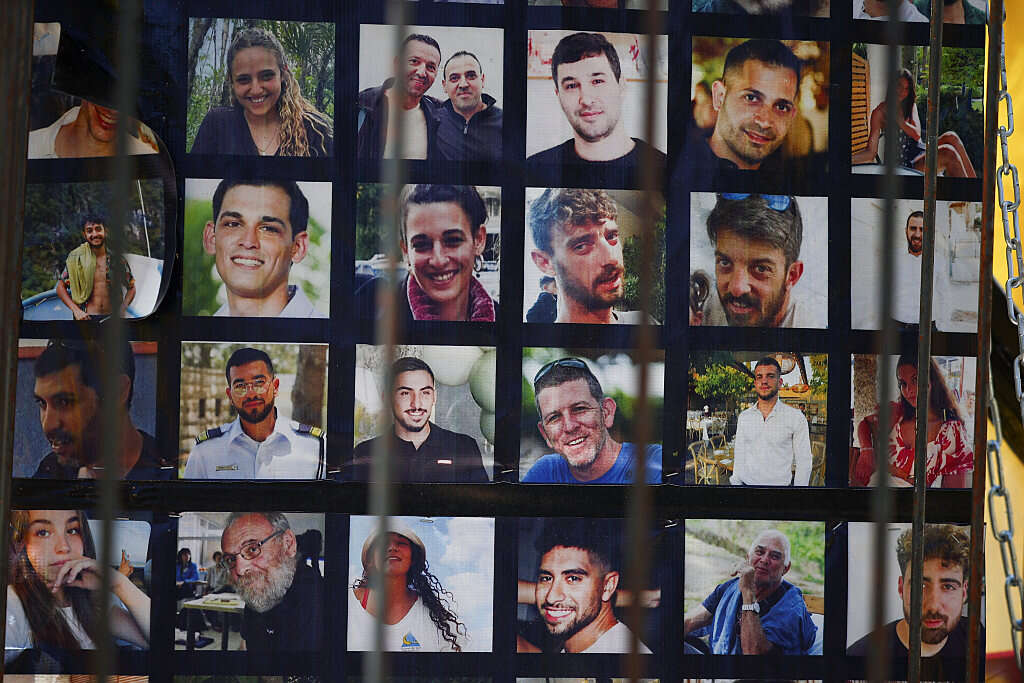
A view of pictures of hostages who were kidnapped during the deadly Oct. 7 massacre (Reuters/Florion Goga) | Photo:

Share on FacebookShare on Twitter

Oct. 7 altered Israeli society's expectations of its military's performance fundamentally. Prior to the massacre, the measure of success for any round of fighting between Israel and terrorist organizations was the quality and duration of the ensuing quiet. If the calm was prolonged and substantial, the operation was deemed successful. If not, it was considered a failure.

Post-Oct. 7, the metric has shifted. A violent engagement is no longer gauged by the peace it generates but by the initiative it enables. A successful military operation is one that enhances the IDF's freedom of action and allows for more effective engagement with the enemy.

The IDF's massive ground operation didn't eradicate Hamas, but it did fracture the terror organization. It transformed a hierarchical, coordinated, and organized army into a collection of uncoordinated and disorganized terrorist cells. As a result, the Gaza Strip hasn't become a Hamas-free zone but rather an area accessible to the IDF.

Israeli forces in the Gaza Strip (IDF Spokesperson's Unit) IDF Spokesperson's Unit

The model for Operation Iron Swords mirrors the successful model of Operation Defensive Shield from about 20 years ago: boldly maneuvering into the terrorist organizations' centers of gravity, destabilizing their equilibrium, and gaining operational freedom throughout the entire area. Subsequently, in the second phase, this operational freedom is used to repeatedly raid the territory, damage the enemy's capabilities, and ultimately lead to its attrition, dilution, and neutralization. The first phase is inherently more massive but shorter, while the second phase requires fewer forces but extends over a longer period. Unlike the maneuver that broke Hamas's army and took about a year, the hunt for its cells will continue for many more years.

Had a hostage deal been achieved before the entry into Khan Younis or before the maneuver in Rafah, it could have jeopardized the completion of phase one, preventing the transformation of the entire Gaza Strip into an accessible area for the military. At that time, a large-scale deal could have led to the realization of one war objective – freeing the hostages – at the expense of another - defeating Hamas. However, today, when a deal would not halt the maneuver, as it has already been completed, the strategic cost of the deal is much lower. The price is a slowdown and delay in the long and difficult phase of eroding and diluting the remaining capabilities. At this juncture, a deal allows for the achievement of all war objectives.

The path to healing

The war has an additional goal, not recorded in the Cabinet decision protocols, but etched in the hearts of reserve soldiers, bereaved families, and wounded IDF personnel: to heal the rifts tearing Israeli society apart from within. The path to healing is long and difficult, but it cannot be embarked upon without the knowledge that the State of Israel has done everything to bring its sons and daughters back from Hamas's hell.

If the collective memory is tainted by the knowledge that our brothers and sisters did not return home due to Israeli refusal, we will not be able to rebuild trust and promote internal reconciliation in society.

The two war objectives can be translated into two moral and Jewish aspirations: to dismantle Hamas and to unite Israel. Without the maneuver, we would not have succeeded in shattering Hamas into isolated cells, but without a deal and the return of the hostages, we will not be able to reconnect the painful pieces that make up Israeli society.

Tags: bring them home nowGaza WarHamashostagesOctober 7

Related Posts

Trump’s Iran dilemma

Iran's growing incentive to escalate leaves Trump with no easy way out

by Danny Citrinowicz

Deliberations in Tehran over a shift to an “offensive approach” reflect a change in Iranian thinking: The greater the economic...

Hezbollah moves to undermine Lebanon-Israel framework agreement

New Lebanon strategy: Israeli pullback in exchange for action against Hezbollah

by Zvika Haimovich

Following the attack on Israeli troops using an explosive-drone and Hezbollah's rebuilding after Operation Roaring Lion, the assessment is that...

Hamas stonewalls on disarmament while piling on demandsAP

Israelis no longer accept diplomatic deals that leave the enemy standing

by Meir Ben Shabbat

Israel must not relinquish its aspirations for peace, but those aspirations must not cause Israel to abandon its better judgment.

Menu

Analysis 

Archaeology

Blogpost

Business & Finance

Culture

Exclusive

Explainer

Environment


Features

Health

In Brief

Jewish World

Judea and Samaria

Lifestyle

Cyber & Internet

Sports


Diplomacy 

Iran & The Gulf

Gaza Strip

Politics

Shopping

Terms of use

Privacy Policy

Submissions

Contact Us

About Us

The first issue of Israel Hayom appeared on July 30, 2007. Israel Hayom was founded on the belief that the Israeli public deserves better, more balanced and more accurate journalism. Journalism that speaks, not shouts. Journalism of a different kind. And free of charge.

All rights reserved to Israel Hayom

Hosted by sPD.co.il

  • Home
  • News
    • Israel at War
    • Israel
    • United States
    • Middle East
    • Sports
  • Opinions
  • Jewish World
    • Archaeology
    • Antisemitism
  • Lifestyle
    • Food
    • Travel
    • Fashion
    • Culture
  • Magazine
    • Feature
    • Analysis
    • Explainer
    • Environment & Wildlife
    • Health & Wellness
  • In Memoriam
  • Subscribe to Newsletter
  • Submit your opinion
  • Terms and conditions

All rights reserved to Israel Hayom

Hosted by sPD.co.il

Newsletter

[contact-form-7 id=”508379″ html_id=”isrh_form_Newsletter_en” title=”newsletter_subscribe”]

  • Home
  • News
    • Israel at War
    • Israel
    • United States
    • Middle East
    • Sports
  • Opinions
  • Jewish World
    • Archaeology
    • Antisemitism
  • Lifestyle
    • Food
    • Travel
    • Fashion
    • Culture
  • Magazine
    • Feature
    • Analysis
    • Explainer
    • Environment & Wildlife
    • Health & Wellness
  • In Memoriam
  • Subscribe to Newsletter
  • Submit your opinion
  • Terms and conditions

All rights reserved to Israel Hayom

Hosted by sPD.co.il