Israel Hayom is a media organization founded on the belief that the Israeli public deserves better journalism—more balanced, more accurate, and more reliable. Journalism that speaks rather than shouts. Journalism that is trustworthy, objective, and matter-of-fact. A different kind of journalism, offered free of charge. The first print edition was published on July 30, 2007, and in 2010 Israel Hayom became the Israeli newspaper with the highest weekday readership. The newspaper’s publisher is Dr. Miriam Adelson. Its Editor-in-Chief is Omar Lachmanovitch, and its founding editor is Amos Regev. Israel Hayom’s Hebrew and English websites, as well as its Android and iOS applications, provide around-the-clock news coverage, exclusive content, breaking news and updates, analysis and commentary, video, podcasts, and live broadcasts. The digital platforms of Israel Hayom include news and opinion channels covering culture and entertainment, lifestyle, technology, sports, business and consumer affairs, health, military affairs, food, Judaism, tourism, and automobiles. In 2021, a new Hebrew-language website and mobile application were launched to provide users with a fast, up-to-date, secure, and convenient experience. The content of the newspaper’s print edition is also available online through a daily digital edition and can be received via newsletter. “The Israel Hayom Clique,” the publication’s exclusive benefits club, offers website users discounts and special promotions on products and services. Israel Hayom welcomes feedback, criticism, and suggestions for improvement from its readers. You can contact the organization by email at hayom@israelhayom.co.il

Sunday Jul 19, 2026
NEWSLETTER
www.israelhayom.com
  • Home
  • News
    • Israel
    • Israel at War
    • Middle East
    • United States
  • Opinions
  • Jewish World
    • Archaeology
    • Antisemitism
  • Lifestyle
    • Food
    • Travel
    • Fashion
    • Culture
  • Magazine
    • Feature
    • Analysis
    • Explainer
  • In Memoriam
www.israelhayom.com
  • Home
  • News
    • Israel
    • Israel at War
    • Middle East
    • United States
  • Opinions
  • Jewish World
    • Archaeology
    • Antisemitism
  • Lifestyle
    • Food
    • Travel
    • Fashion
    • Culture
  • Magazine
    • Feature
    • Analysis
    • Explainer
  • In Memoriam
www.israelhayom.com
Home Analysis

Trump's China policy 2.0: Balancing hawks and economic interests

The incoming administration faces conflicting priorities between punitive trade measures and fostering business ties with China.

by  Ofir Dayan
Published on  12-10-2024 09:01
Last modified: 12-10-2024 14:30
Trump's China policy 2.0: Balancing hawks and economic interestsReuters/Kevin Lamarque

Then-US President Donald Trump attends a bilateral meeting with China's President Xi Jinping during the G20 leaders summit in Osaka, Japan, June 29, 2019 | Photo: Reuters/Kevin Lamarque

Share on FacebookShare on Twitter

On Jan. 20, 2025, President-elect Donald Trump will be inaugurated amidst a great-power competition shaping US foreign policy. Trump recently announced his cabinet nominees, including figures known for their hawkish stances on China and others with significant commercial ties to the nation. This duality mirrors Trump's own ambivalence – on one hand, his campaign to "make China pay" for what he deems unfair trade practices, and on the other, his open admiration for Chinese President Xi Jinping. As in previous administrations, Taiwan and economic issues are likely to dominate Sino-American relations. However, this time, the cabinet room will include a broader spectrum of opinions and interests regarding China.

Trump's rhetoric during the campaign underscores his primary focus on economic concerns in US-China relations. In a televised debate with Vice President Kamala Harris, the Democratic presidential candidate, he mentioned China twice, both times in economic contexts, advocating for steep tariffs on Chinese imports. Similarly, in a three-hour interview on Joe Rogan's popular podcast, Trump referred to China 11 times, with four mentions tied to proposals such as imposing 100–200% tariffs on Chinese electric vehicles.

One notable nominee is Howard Lutnick, selected as Secretary of Commerce. Lutnick shares Trump's commitment to addressing the loss of American jobs to China, supporting proposals like 60% tariffs on Chinese goods. However, Lutnick's connections to China complicate his hawkish stance. His financial services firm, Cantor Fitzgerald, operates a branch in Hong Kong and partners with a Chinese government-controlled enterprise. This partnership has facilitated listings of Chinese companies on US exchanges, and Cantor's partner maintains ties with Huawei, raising concerns among US intelligence agencies. Despite these business interests, Lutnick has accused China of facilitating fentanyl trafficking into the US and is expected to support Trump's plan to impose 10% tariffs on Chinese goods until the drug trade ceases.
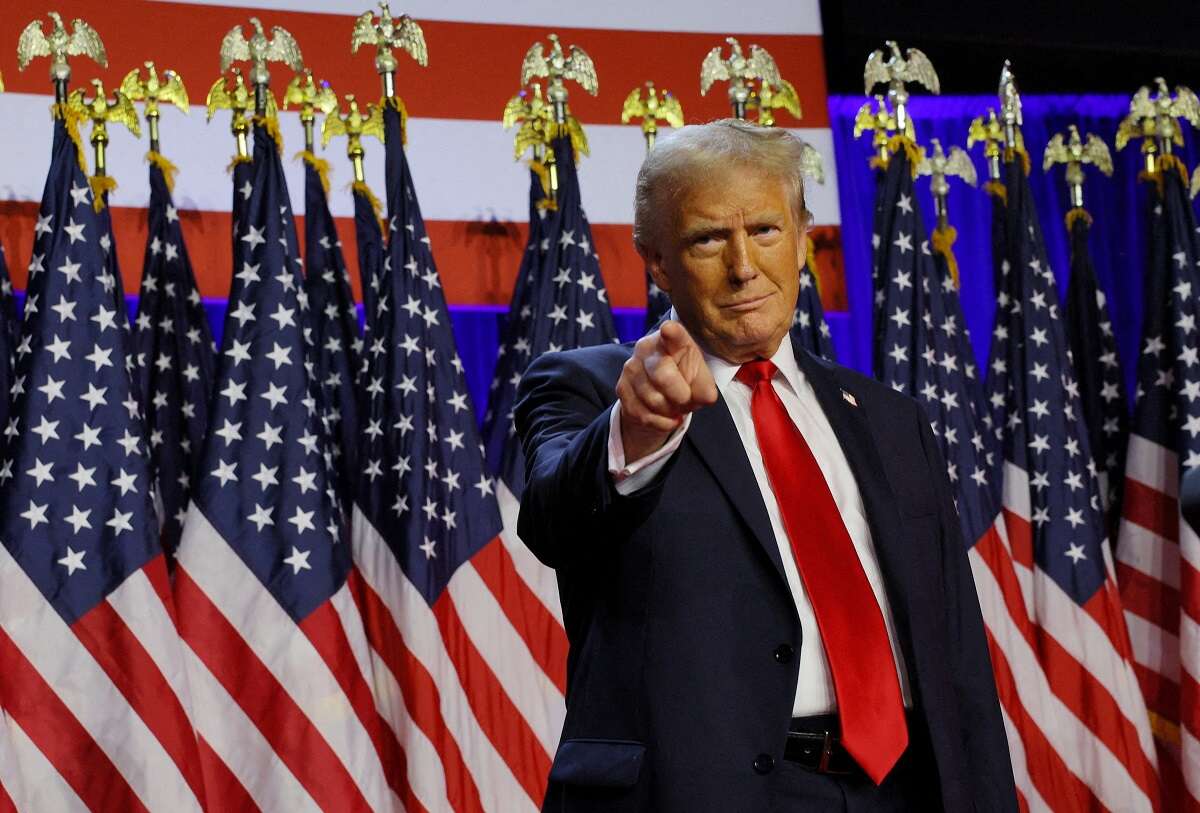
President-elect Donald Trump (Reuters/Brian Snyder) Reuters/Brian Snyder

Another influential figure is Elon Musk, the billionaire owner of Tesla. While Musk's extensive operations in China, including a major factory in Shanghai, make him reliant on Chinese goodwill, his role in Trump's administration could foster reduced tensions between the two nations. Musk's economic ties to China could position him as a bridge for dialogue, especially given his personal rapport with President Xi and recognition from the Chinese government. However, his dependence on the Chinese market may also limit his ability to support broader trade restrictions.

Conversely, some of Trump's cabinet picks signal a hardline approach. Senator Marco Rubio, nominated for Secretary of State, is a vocal critic of China's human rights record, having spearheaded sanctions against officials involved in Hong Kong crackdowns and forced labor in Xinjiang. Rubio's views extend beyond economic rivalry, framing China as a strategic threat akin to the Soviet Union. Similarly, incoming National Security Advisor Mike Waltz emphasizes reducing US dependence on Chinese minerals and reviving the Monroe Doctrine to counter Beijing's influence in Latin America. Pete Hegseth, Trump's pick for Secretary of Defense, perceives China's military buildup as an existential threat aimed at supplanting the US globally.

Taiwan remains a focal point in US-China relations. Trump's campaign highlighted rising tensions over Taiwan, blaming President Biden for perceived weaknesses. While Trump has expressed a desire to avoid new wars, he also demands greater financial contributions from Taiwan for its defense. This stance reflects his broader "America First" approach, reminiscent of his NATO policies during his first term.

The economic rivalry with China is expected to dominate Trump's second term, with particular emphasis on critical sectors like electric vehicles, renewable energy, and advanced technologies. While Taiwan's strategic importance will persist, Trump's transactional approach may lead to demands for reciprocity. Unlike his first term, where there was broad consensus on China policy, this administration faces internal tensions between isolationist impulses and economic interests favoring engagement.

Ofir Dayan is a research associate in the Israel-China Policy Center at the Institute for National Security Studies.


Related Posts

Hamas signals openness to Gaza disarmamentEPA

Hamas is marketing the Hezbollah model, and not for the first time

by Shachar Kleiman

The terrorist organization is not truly prepared to give up power as long as it refuses to disarm. The proposed...

Something deep is changing on the Haredi street. The real conflagration lies ahead

Something deep is changing on the Haredi street. The real conflagration lies ahead

by Yaakov Hershkowitz

The draft crisis is pushing the integration of Haredi Israelis into broader Israeli society further away and radicalizing the discourse....

The Gulf states have moved on, leaving Israel behind

The Gulf states have moved on, leaving Israel behind

by Yoel Guzansky

The signing of the memorandum of understanding between Washington and Tehran marks the beginning of a new regional order. While...

Menu

Analysis 

Archaeology

Blogpost

Business & Finance

Culture

Exclusive

Explainer

Environment


Features

Health

In Brief

Jewish World

Judea and Samaria

Lifestyle

Cyber & Internet

Sports


Diplomacy 

Iran & The Gulf

Gaza Strip

Politics

Shopping

Terms of use

Privacy Policy

Submissions

Contact Us

About Us

The first issue of Israel Hayom appeared on July 30, 2007. Israel Hayom was founded on the belief that the Israeli public deserves better, more balanced and more accurate journalism. Journalism that speaks, not shouts. Journalism of a different kind. And free of charge.

All rights reserved to Israel Hayom

Hosted by sPD.co.il

  • Home
  • News
    • Israel at War
    • Israel
    • United States
    • Middle East
    • Sports
  • Opinions
  • Jewish World
    • Archaeology
    • Antisemitism
  • Lifestyle
    • Food
    • Travel
    • Fashion
    • Culture
  • Magazine
    • Feature
    • Analysis
    • Explainer
    • Environment & Wildlife
    • Health & Wellness
  • In Memoriam
  • Subscribe to Newsletter
  • Submit your opinion
  • Terms and conditions

All rights reserved to Israel Hayom

Hosted by sPD.co.il

Newsletter

[contact-form-7 id=”508379″ html_id=”isrh_form_Newsletter_en” title=”newsletter_subscribe”]

  • Home
  • News
    • Israel at War
    • Israel
    • United States
    • Middle East
    • Sports
  • Opinions
  • Jewish World
    • Archaeology
    • Antisemitism
  • Lifestyle
    • Food
    • Travel
    • Fashion
    • Culture
  • Magazine
    • Feature
    • Analysis
    • Explainer
    • Environment & Wildlife
    • Health & Wellness
  • In Memoriam
  • Subscribe to Newsletter
  • Submit your opinion
  • Terms and conditions

All rights reserved to Israel Hayom

Hosted by sPD.co.il