Israel Hayom is a media organization founded on the belief that the Israeli public deserves better journalism—more balanced, more accurate, and more reliable. Journalism that speaks rather than shouts. Journalism that is trustworthy, objective, and matter-of-fact. A different kind of journalism, offered free of charge. The first print edition was published on July 30, 2007, and in 2010 Israel Hayom became the Israeli newspaper with the highest weekday readership. The newspaper’s publisher is Dr. Miriam Adelson. Its Editor-in-Chief is Omar Lachmanovitch, and its founding editor is Amos Regev. Israel Hayom’s Hebrew and English websites, as well as its Android and iOS applications, provide around-the-clock news coverage, exclusive content, breaking news and updates, analysis and commentary, video, podcasts, and live broadcasts. The digital platforms of Israel Hayom include news and opinion channels covering culture and entertainment, lifestyle, technology, sports, business and consumer affairs, health, military affairs, food, Judaism, tourism, and automobiles. In 2021, a new Hebrew-language website and mobile application were launched to provide users with a fast, up-to-date, secure, and convenient experience. The content of the newspaper’s print edition is also available online through a daily digital edition and can be received via newsletter. “The Israel Hayom Clique,” the publication’s exclusive benefits club, offers website users discounts and special promotions on products and services. Israel Hayom welcomes feedback, criticism, and suggestions for improvement from its readers. You can contact the organization by email at hayom@israelhayom.co.il

Sunday Jul 19, 2026
NEWSLETTER
www.israelhayom.com
  • Home
  • News
    • Israel
    • Israel at War
    • Middle East
    • United States
  • Opinions
  • Jewish World
    • Archaeology
    • Antisemitism
  • Lifestyle
    • Food
    • Travel
    • Fashion
    • Culture
  • Magazine
    • Feature
    • Analysis
    • Explainer
  • In Memoriam
www.israelhayom.com
  • Home
  • News
    • Israel
    • Israel at War
    • Middle East
    • United States
  • Opinions
  • Jewish World
    • Archaeology
    • Antisemitism
  • Lifestyle
    • Food
    • Travel
    • Fashion
    • Culture
  • Magazine
    • Feature
    • Analysis
    • Explainer
  • In Memoriam
www.israelhayom.com
Home Commentary

Middle East burns but oil prices remain steady, who's benefiting?

Despite war in the Middle East, oil prices lazily hover around $65-70 per barrel. Behind this phenomenon stands a triangle of forces reshaping the energy market in a completely different way than we've known before.

by  Nitzan David Fuchs/Makor Rishon
Published on  04-03-2025 06:00
Last modified: 04-03-2025 10:58
Middle East burns but oil prices remain steady, who's benefiting?Reuters/David Ryder

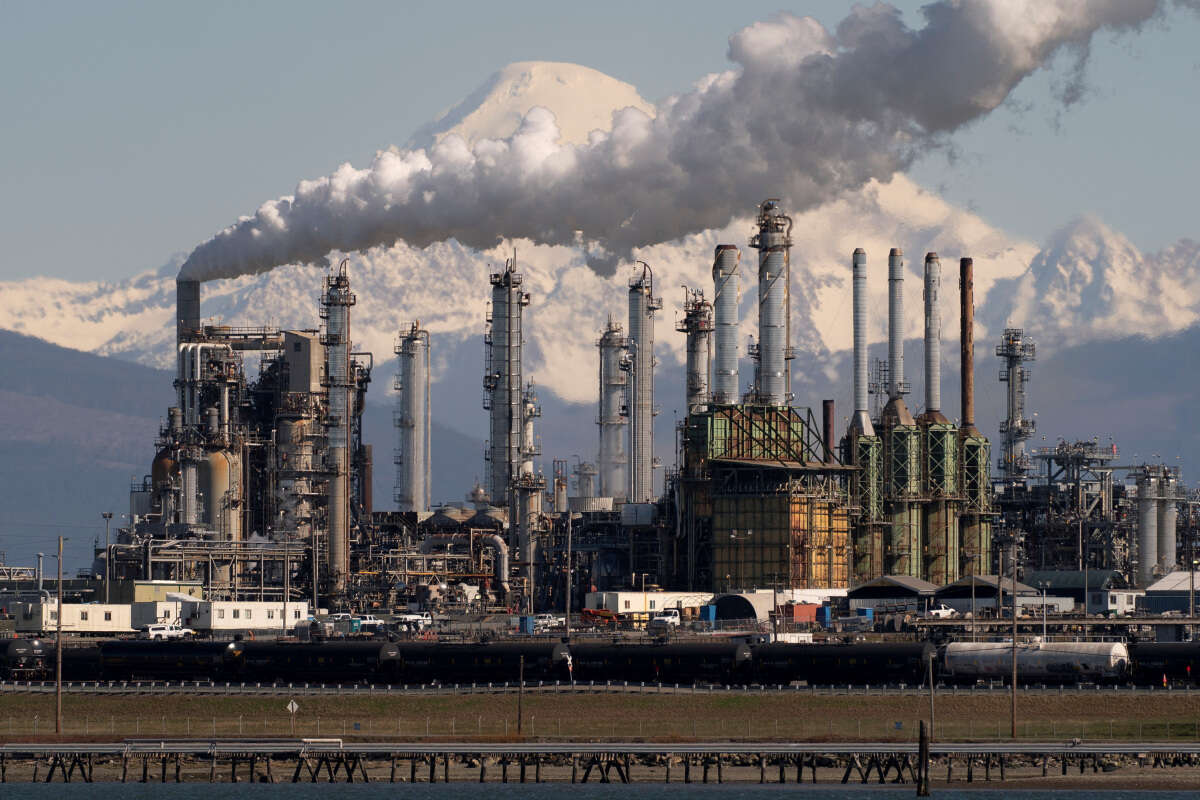
A general view shows Marathon Petroleum's oil refinery in Anacortes, Washington, March 9, 2022 | Photo: Reuters/David Ryder

Share on FacebookShare on Twitter

Here's something strange – despite all the drama in the Middle East, oil prices haven't crossed the $90 per barrel threshold.

Strange, isn't it? Logically, when the region supplying about a third of global oil is in turmoil, prices should surge. Yet here we are in early 2025, with oil prices lazily hovering around $65-70 per barrel. Behind this phenomenon stands a triangle of forces reshaping the energy market in a completely different way than we've known before.

At the first vertex is Saudi Arabia. The kingdom that ruled the global oil market with an iron hand for decades finds itself in a complex position. The economic data isn't good – the budget deficit reached 3% of GDP in 2024 (about $30.8 billion), following a 1.2% deficit in 2023 (and after an exceptional budget surplus of 2.5% in 2022 – a year of particularly high oil prices). Expectations for the next decade are that the deficit will remain around the same level, about 3% annually.

The chronic deficit isn't accidental. Saudi Arabia is in the midst of Mohammed bin Salman's ambitious Vision 2030, designed to reduce the kingdom's dependence on oil. But the many projects included in the vision require high oil prices to finance themselves. All the innovative cities and real estate ventures require funding in the hundreds of billions of dollars. According to International Monetary Fund estimates, the Saudis need to sell their oil at a price of $80-88 per barrel to balance their budget – some estimates are even higher, up to $96.2 per barrel. The Saudis would be happy to raise the price. But they have a problem – the redhead in the White House.
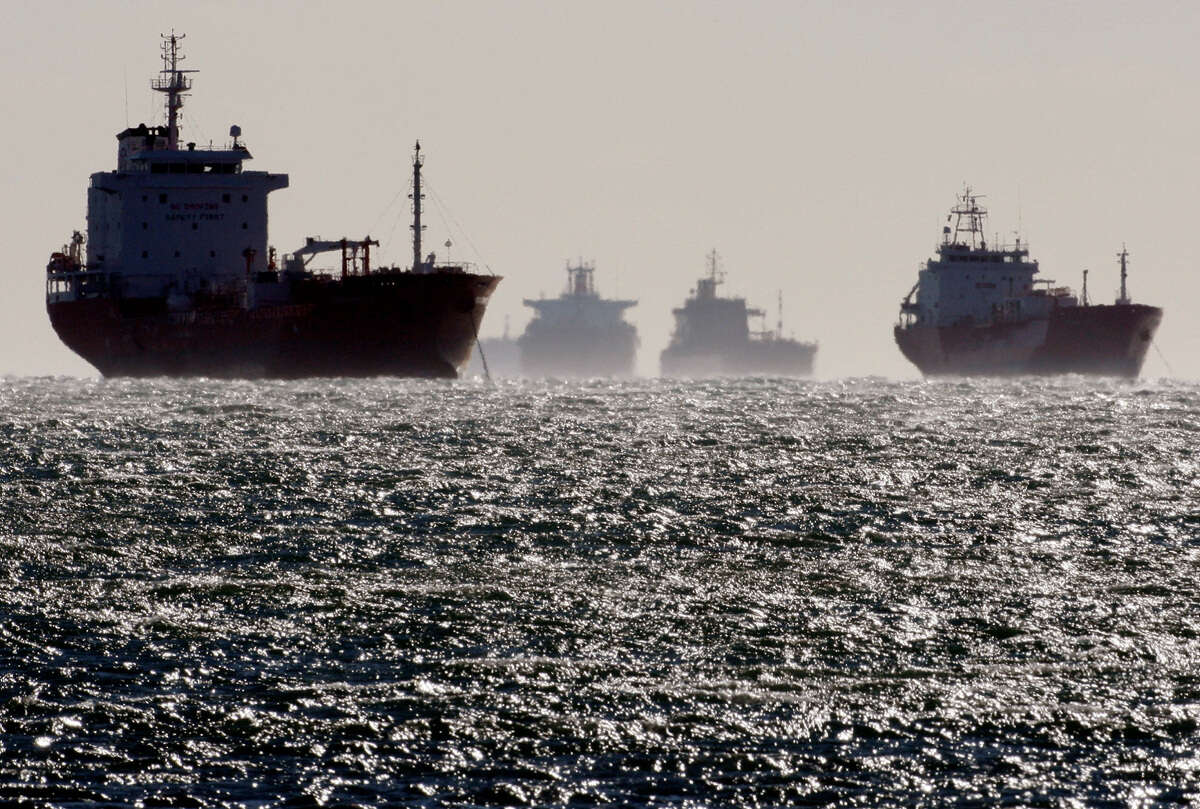
Oil and gas tankers sit anchored off the Fos-Lavera oil hub near Marseille, France, December 12, 2008 (Photo: Reuters/Jean-Paul Pelissier) REUTERS

At the second vertex stands the United States under Donald Trump's leadership. American policy is clear – "America First" in energy, with aspirations for global dominance in the field. But a deeper look reveals an interesting paradox. On one hand, Trump declares support for the American energy industry, but on the other hand, he consistently works to lower oil prices – for example by pressuring OPEC to increase production.

Energy Secretary Chris Wright has articulated the approach well – "More energy at lower prices." However, the American industry, particularly shale producers, needs prices higher than $60 per barrel to operate profitably. Below $50, production is expected to shrink sharply. The administration is also taking steps that further challenge the industry – 25% tariffs on steel imports, which is an essential raw material for drilling, and cuts in federal personnel responsible for approving new drilling.

At the third, most surprising vertex, stands Iran. Despite international sanctions, Iran continues to export oil, mainly to China. It does so at a significant discount of $10-15 per barrel relative to market prices. This is not an ideal compromise for the Iranians – to balance their budget they need a price of $124 per barrel, an imaginary level in the current reality. Nevertheless, this arrangement allows Iran to remain relevant in the market and channel revenue into the state budget.

A gas flare on an oil production platform is seen alongside an Iranian flag in the Gulf July 25, 2005 (Photo: Reuters/Raheb Homavandi) REUTERS

Around the Triangle

The implication of this triangle is the creation of a "cage" for oil prices – they can fall or rise within a relatively limited range, unless there is a dramatic change – for example, an Iranian attack against Saudi Arabia, or a collapse of the shale oil industry in the US. Trump's pressure to lower prices, along with the cheaper Iranian option and a slowdown in Chinese demand growth, offset the geopolitical pressures to raise prices.

On the periphery of the triangle is China, the world's largest energy consumer. China is suffering from an economic slowdown, leading to more moderate energy demand, and lower demand means lower prices. China also leverages its position to pressure its suppliers – it buys Iranian oil at a discount, negotiates with the Saudis, and responds to American tariffs by imposing counter-tariffs on American natural gas.

What does this mean for Israel? As an energy importer that also has gas export potential, Israel is affected by both trends. On one hand, low energy prices hurt the profitability of Israeli gas fields and the viability of export agreements. On the other hand, industry and consumers benefit from energy at a low price. Perhaps it's time for the Israeli government to also invest in a blue-and-white energy industry by removing regulatory barriers?
Tags: ChinaIranoilSaudi Arabia

Related Posts

A reckless gamble on Ahmadinejad demands a state inquiryReuters

A reckless gamble on Ahmadinejad demands a state inquiry

by Danny Citrinowicz

The Mossad fantasy of installing a puppet in Tehran and partnering with Kurdish militias collapsed under geopolitical realities, leaving Israel...

Regime feels economic squeeze as talks to end war stall

Iran's threats against Trump must be taken seriously

by Dr. Yossi Mansharof

Western observers tend to dismiss the new supreme leader’s threats as mere rhetoric. In reality, revenge is an ideological imperative...

Trump expected to announce Turkey's return to F-35 program

Trump's F-35 deal with Erdoğan threatens Israel, but could also strengthen it

by Zvika Haimovich

All signs indicate that the sale of F-35 fighter jets to Turkey will go ahead. While Trump’s move could eventually...

Menu

Analysis 

Archaeology

Blogpost

Business & Finance

Culture

Exclusive

Explainer

Environment


Features

Health

In Brief

Jewish World

Judea and Samaria

Lifestyle

Cyber & Internet

Sports


Diplomacy 

Iran & The Gulf

Gaza Strip

Politics

Shopping

Terms of use

Privacy Policy

Submissions

Contact Us

About Us

The first issue of Israel Hayom appeared on July 30, 2007. Israel Hayom was founded on the belief that the Israeli public deserves better, more balanced and more accurate journalism. Journalism that speaks, not shouts. Journalism of a different kind. And free of charge.

All rights reserved to Israel Hayom

Hosted by sPD.co.il

  • Home
  • News
    • Israel at War
    • Israel
    • United States
    • Middle East
    • Sports
  • Opinions
  • Jewish World
    • Archaeology
    • Antisemitism
  • Lifestyle
    • Food
    • Travel
    • Fashion
    • Culture
  • Magazine
    • Feature
    • Analysis
    • Explainer
    • Environment & Wildlife
    • Health & Wellness
  • In Memoriam
  • Subscribe to Newsletter
  • Submit your opinion
  • Terms and conditions

All rights reserved to Israel Hayom

Hosted by sPD.co.il

Newsletter

[contact-form-7 id=”508379″ html_id=”isrh_form_Newsletter_en” title=”newsletter_subscribe”]

  • Home
  • News
    • Israel at War
    • Israel
    • United States
    • Middle East
    • Sports
  • Opinions
  • Jewish World
    • Archaeology
    • Antisemitism
  • Lifestyle
    • Food
    • Travel
    • Fashion
    • Culture
  • Magazine
    • Feature
    • Analysis
    • Explainer
    • Environment & Wildlife
    • Health & Wellness
  • In Memoriam
  • Subscribe to Newsletter
  • Submit your opinion
  • Terms and conditions

All rights reserved to Israel Hayom

Hosted by sPD.co.il