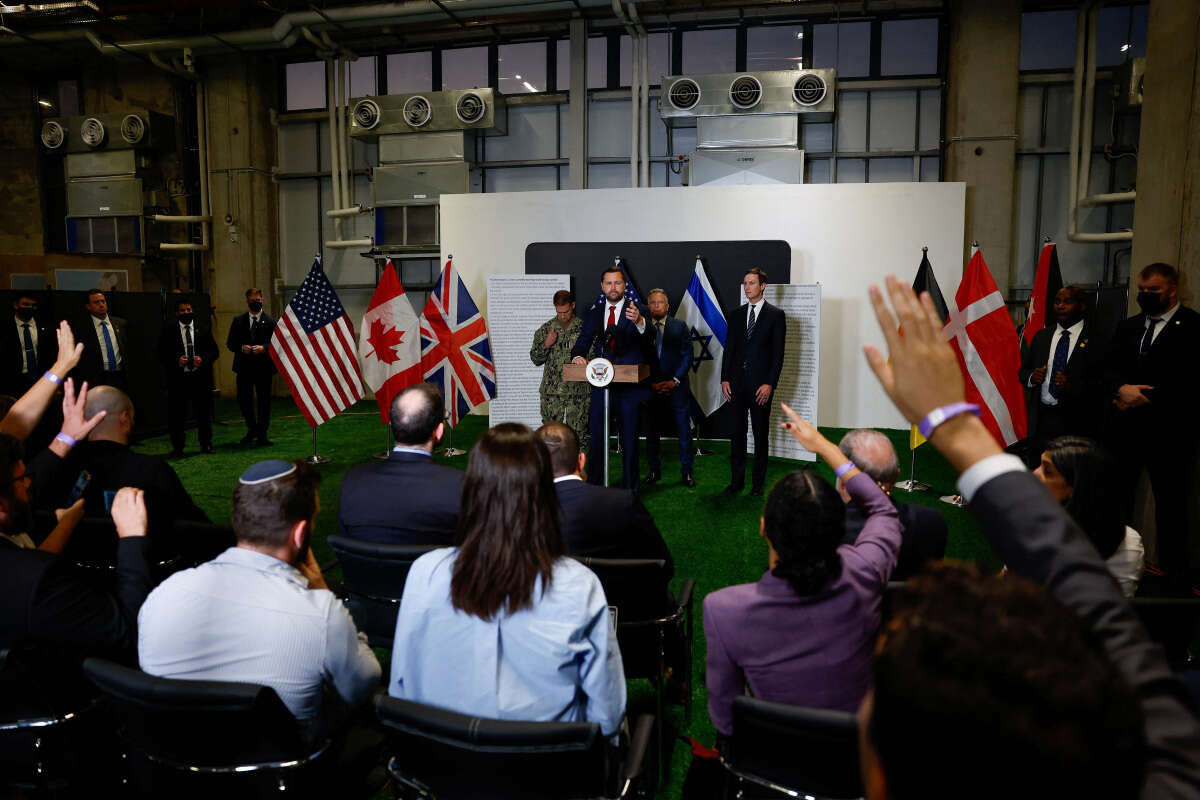
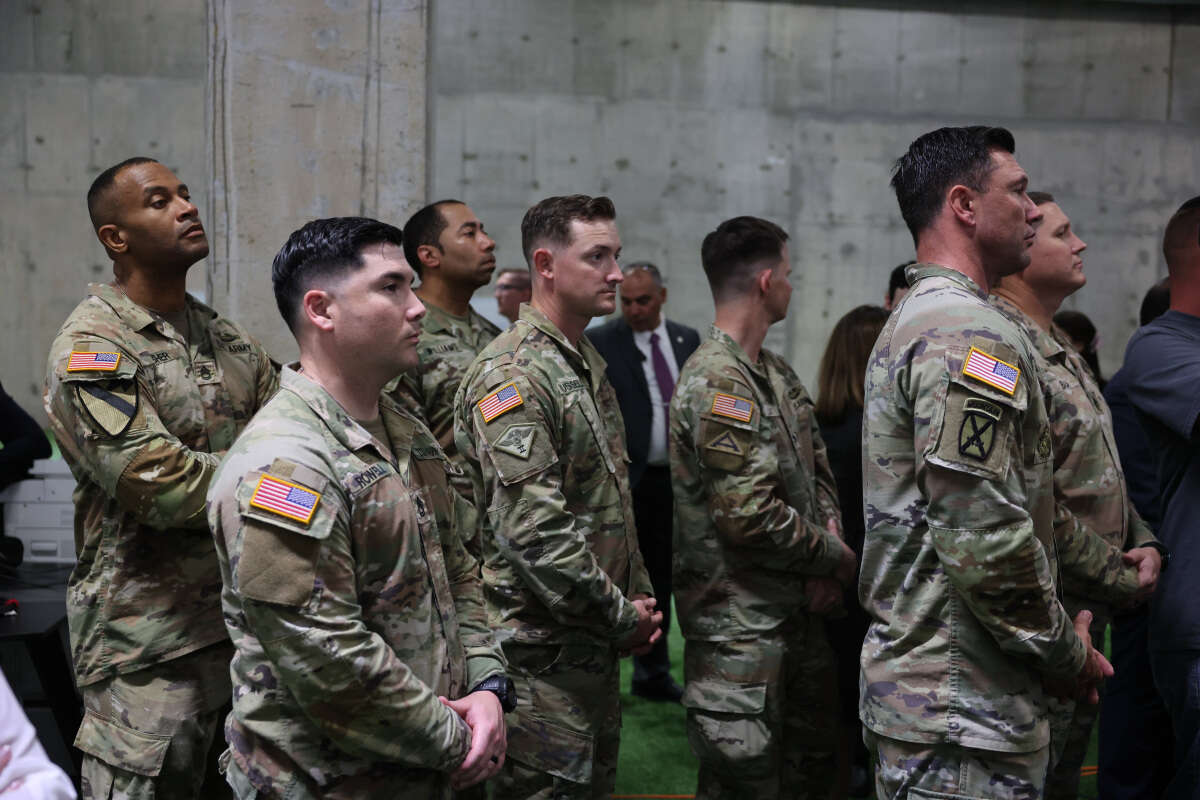
The international command for the Gaza Strip, the – Civil-Military Coordination Center (CMCC) – rapidly established in Kiryat Gat, is becoming a pilgrimage destination for American officials visiting Israel and sparking interest through the diverse composition of nations represented within it. Yet it remains completely unclear how this facility is meant to assist in achieving Israel's primary objectives concerning Gaza.
One can reasonably estimate that its primary preoccupation will involve coordinating civilian aid entry into the Strip and preventing escalations that threaten the ceasefire. In both domains, Israel will probably be the principal address for pressure. Conversely, it's challenging to envision this headquarters accomplishing anything beyond declarations concerning the more crucial areas for Israel: stripping Hamas of weaponry, preventing smuggling operations, and demilitarizing the Strip.
During a weekend interview with Al-Jazeera, Khalil al-Hayya, the Hamas leader, referenced the international forces' role as providing separation and border supervision, along with managing ceasefire monitoring. He indicated his organization seeks elections leading to unified government, and presently doesn't dismiss transferring "administrative control" to a mutually agreed committee and managing the Strip through "a national figure residing in Gaza." One needn't be an expert to comprehend which options this criterion eliminated.
Al-Hayya proceeded to lament Gaza's humanitarian conditions and stressed it requires 6,000 aid trucks each day, plus entry of specific materials Israel currently prohibits. One can anticipate this message will reach mediating nations and every international actor. Winter's approach will likely bring an accompanying "Gaza is freezing to death" campaign.
Hamas refuses to disarm
Concerning Hamas disarmament? Al-Hayya responds diplomatically, "The matter remains under discussion with factions and mediators," and lest we harbor false expectations he clarifies, "Hamas' weapons are connected to occupation and aggression's existence. Should the occupation conclude, the weapons will transfer to the (Palestinian) state."
Similar statements have been audible throughout recent periods from the organization's spokespeople and senior officials. They've consistently emphasized: Our weapons are legitimate, we won't disarm . Admittedly, in formal announcements they carefully stress their commitment to the agreement and avoid provocative declarations that might antagonize President Trump and his administration or mediating nations, but regarding the disarmament provision they leave no ambiguity about their stance.
While the Kiryat Gat headquarters continues taking shape and determining its functions and operational approaches, Hamas in Gaza has regained its footing. It operates efficient command and control systems, is restoring order throughout Gaza's devastated streets, suppressing opposition, deterring and dominating. It allows everyone to debate agreement details' interpretation and drafters' intentions while concentrating on fundamentals: strengthening its position, replenishing forces, securing supplies, planning reconstruction.

It presumes Gaza remains lodged like a bone in Trump's and other regional leaders' throats, who seek to dispose of it as swiftly as possible to advance implementing major regional initiatives. Its expectation is that under these conditions they'll accept a formula offering the semblance of resolution and permit it to capitalize on the "gaps" within it and the exhaustion from interminable debates regarding its interpretations.
Despite the intense desire to advance peace visions, we cannot compromise on critical matters for us in the Gaza Strip. We must eliminate the vagueness concerning headquarters and mediation and coordination entities, and also explain to the public what these will ultimately contribute toward accomplishing Israel's objectives.
The rearming issue under humanitarian aid and reconstruction means' cover demands particular Foreign Affairs and Defense Committee oversight and public reporting, preventing us from burying our heads in the sand and exploiting the secrecy veil typically covering this activity.
MK Amit Halevi's public announcement about intensifying rules of engagement for IDF forces regarding Strip suspects requires IDF response and clarifications. It's completely inappropriate to heighten risks merely from ceasefire collapse fears. Even those concerned about this should recognize that harming our soldiers could similarly cause that, beyond the immediate price paid.
Furthermore, rather than awaiting agreements and mechanisms, we should shape reality. Hamas tunnels should face attack not solely responding to harm against us. If avoiding casualties is desired, we can provide advance warning. We must leverage Hamas' weakened position and all living hostages already being in Israel. Such an approach could enhance Israel's and mediators' negotiating position regarding weapons disarmament.
Concerning the international headquarters for the Gaza Strip, we must acknowledge this mechanism's risks and also that participating in it might constrain the IDF and direct it toward preferring dialogue channels as default over operational activity. We need to establish what Israel gains from this mechanism, and concurrently determine rules now for our conduct within it, in ways that diminish its risks.
Meir Ben Shabbat is head of the Misgav Institute for National Security & Zionist Strategy, in Jerusalem. He served as Israel's national security advisor and head of the National Security Council between 2017 and 2021, and prior to that for 30 years in the General Security Service (the Shin Bet security agency or "Shabak").