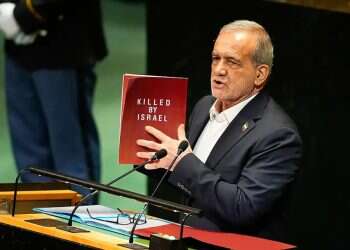
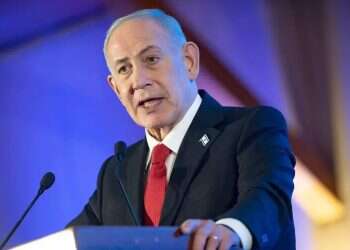
As these words are written, the outcomes and implications of the sixth meeting between the two leaders during Trump's second term as president, held on Monday at the president's Mar-a-Lago estate, have yet to become clear.
Still, the president's remarks at the press conference preceding the meeting were wrapped in a thick layer of honey when it came to his relationship with Prime Minister Benjamin Netanyahu, whom he repeatedly described as a great leader who guided his nation to victory in the face of formidable challenges. His rhetorical question about how a leader of Netanyahu's stature could possibly be denied clemency added yet another drop of olive oil to the cascade of praise and admiration Trump lavished on his guest.
Yet anyone familiar with the habits of the American leader would be overstating the case to take these words at face value. After all, Trump is a shrewd businessman who expects something in return for every gesture, particularly on the issue of a pardon, which is so critical for Netanyahu. Moreover, despite the firm support the president voiced for Israel's fundamental positions on almost all the matters raised at the press conference, it is impossible to ignore several areas of dispute, even if he chose to soften and obscure them.
These could surface during the meeting itself and somewhat cloud the atmosphere of calm harmony and close friendship that characterized the tone of the messages, which were no doubt pleasing to the prime minister's ears.
The Turkish question
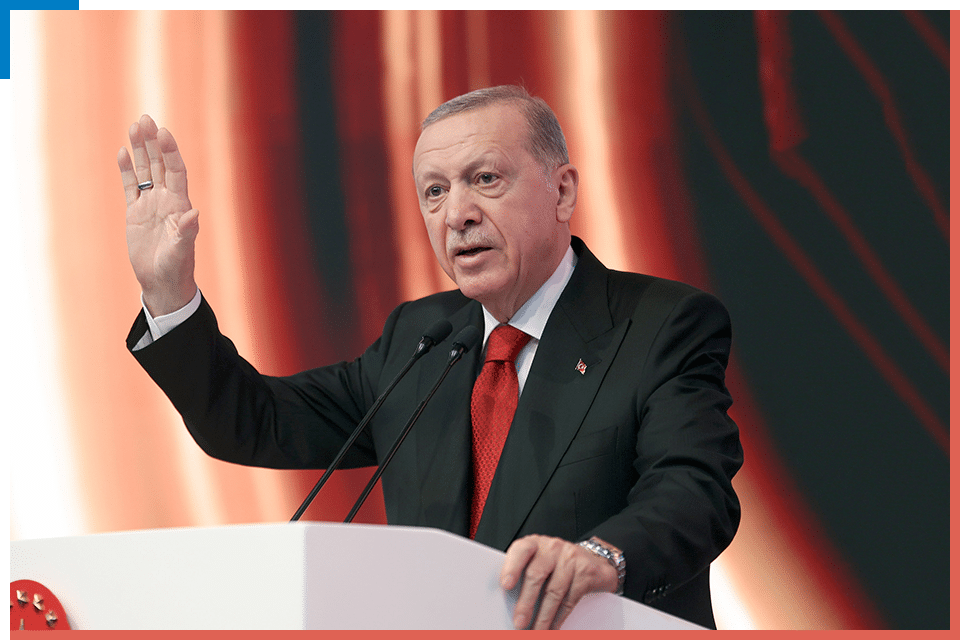
Thus, for example, alongside his commitment to dismantling Hamas' military capabilities as a necessary condition for moving to the implementation of the second phase of his plan, Trump reiterated his desire to advance immediately toward realizing Phase Two of the framework he initiated. At the same time, while he did not openly challenge Netanyahu's staunch opposition to including Turkey in an international stabilization force, he did not categorically rule out such an option and continued to praise the leadership of his friend, Turkish President Recep Tayyip Erdogan.
The same applies to Israel's core demand not to move to Phase Two of the "road map" for an agreement before the return of the last abducted fallen soldier, Ran Guaily, to his homeland. Although the president displayed empathy and understanding for the Israeli condition, which is an integral part of Phase One of his plan, he did not present it as an indispensable prerequisite for advancing to the next stage. Instead, he confined himself to a general statement about his determination to continue to do whatever possible to secure Guaily's return.
On the Iranian issue as well, although Trump was unequivocal in expressing support for Israeli military action against Tehran should it reconstitute its military strength, all the more so if it restores its nuclear capabilities, he has not yet closed the door on a diplomatic track with Iran's leadership. In any event, he does not appear inclined to back the opening of another military round between Israel and Iran in the near future, whether with US backing or with direct American involvement.
After all, his sights are set on shaping a stable regional environment, at the heart of which he sees himself as a skilled broker capable of resolving protracted, violence-saturated conflicts.
Beyond the potential friction points between the two partners that remained in the background during the press conference, it is also important to underscore the differing timelines of the two leaders.
Trump is in a hurry. He wants to move at full speed not only to the second phase of his vision, but also to reach the jewel in his crown: Phase Three, the rehabilitation of the Gaza Strip and its transformation into a flourishing garden. This, he believes, would vividly demonstrate to the entire world the magnitude of his success, alongside the tempting investment opportunities embedded in the massive project.
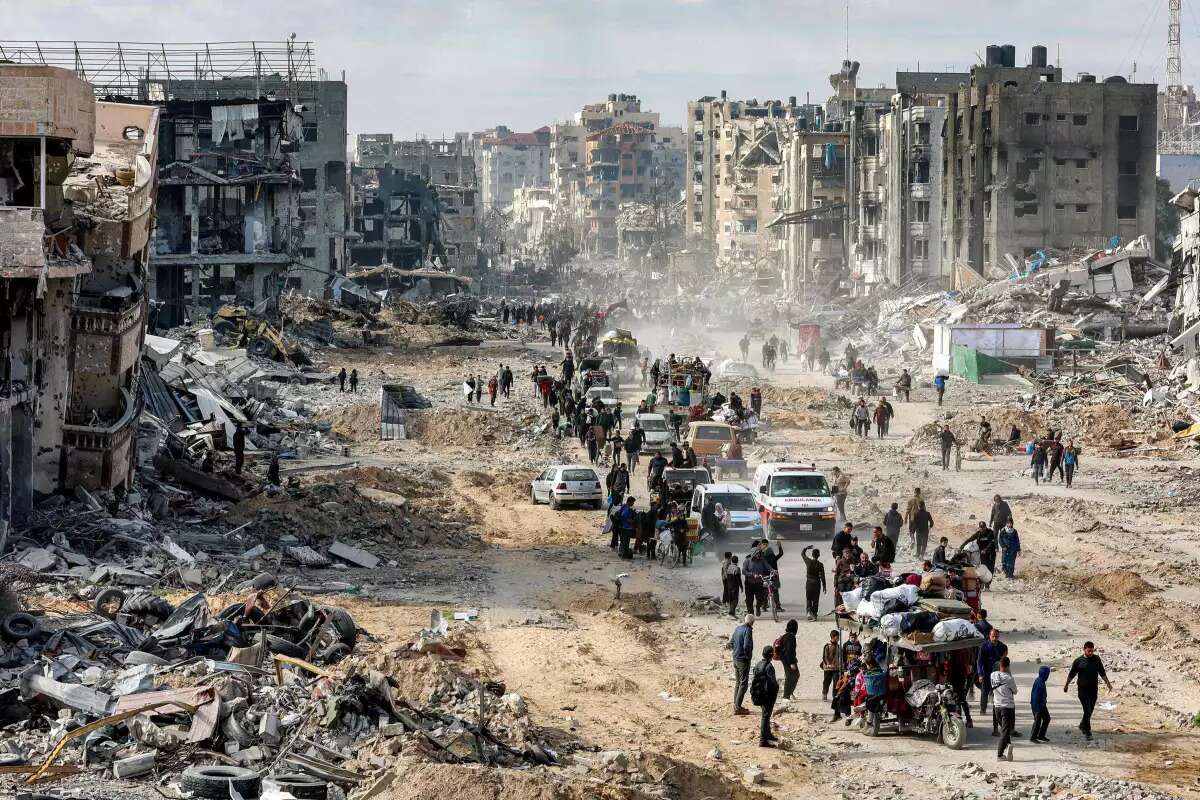
Netanyahu, by contrast, is in no particular rush to advance to the next stage, which could create a rift within his coalition and perhaps even lead to its collapse. This is despite the dangers inherent in continued stagnation, particularly with regard to Hamas' ability to consolidate its standing and grip on the Strip.
The central question, therefore, is whether it is possible to square the circle on the core disputed issues. How can the president be enabled to soon declare success in advancing the process without the US and Israel sliding into a path of confrontation, in which all the real leverage lies with the American patron?
Given the complexity of the questions on the Gaza front, not to mention the Syrian and Lebanese arenas, one creative option may lie in revisiting the legacy of the legendary secretary of state Henry Kissinger. His approach, evident both in US-China relations and in the Egyptian arena after the 1973 Yom Kippur War, was to try to separate contentious issues, postpone the most complex and difficult ones, and focus instead on areas where agreement was achievable.
Breaking down phase two
In the current case, phase two could be broken down into several sub-stages, advancing in a gradual and modular fashion from the less charged and contentious dimensions toward the hard core of the conflict.
Is it possible, for example, to begin the process with agreements on the international stabilization force, thereby allowing the launch of the process while deferring more problematic components to later negotiations?
The coming hours and days will tell.