Calls to take revenge on US President Donald Trump, heard across Iran since the funeral of former Supreme Leader Ali Khamenei, are sometimes viewed in the West as tired rhetoric. For Mojtaba Khamenei, who succeeded his father as Iran's supreme leader, however, carrying out that revenge could become a critical ideological, religious and political test.
The threats appear to be more than a declarative signal intended to show the world that Iran's traditional hostility toward the American "Great Satan" will continue under its new leadership. Revenge is an ideological, religious and operational priority of the highest order.
The younger Khamenei, who inherited the supreme leadership and, according to senior Israeli and American officials, was wounded during the war and is operating from a hiding place, stressed in a message published Saturday that "this revenge is the will of our people, and it must be carried out in full."
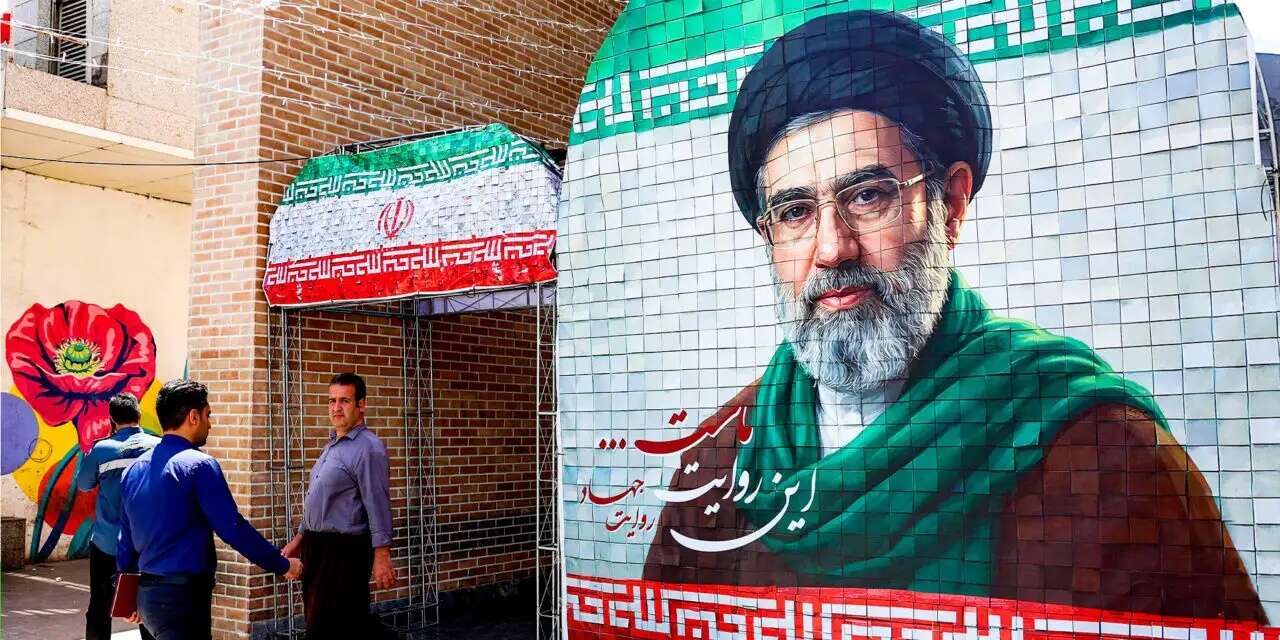
The online daily Seda-ye Iran, published by the supreme leader's office, added in a commentary on his remarks that abandoning revenge would give Iran's enemies a green light to commit "even more horrific crimes."
Mohsen Rezaei, Khamenei's senior security adviser, declared Monday that revenge was a serious matter that must be pursued. Ayatollah Ahmad Alamolhoda, a senior member of Iran's Assembly of Experts, went even further, calling for the establishment of an organized operational mechanism to eliminate the "American dog."
In fact, as previously revealed by Iranian opposition media, Unit 840 of the Islamic Revolutionary Guard Corps' Quds Force already has a branch responsible for directing terrorist activity on US soil.
The branch is headed by Mohsen Bozorgi, and occasional hints of its existence have appeared in statements by senior Iranian officials. As early as January 2021, Quds Force commander Esmail Qaani warned that those responsible for killing Qassem Soleimani should know that they might be repaid in kind "even inside their own homes." Similarly, the Friday prayer leader in Yasuj threatened in March 2022 that Iran had the operational ability to strike Washington directly.
The Quds Force's subversive activity in the US was exposed publicly in 2011, when Iranian American citizen Mansour Arbabsiar was sent to Mexico to arrange the assassination of Saudi Ambassador to Washington Adel al-Jubeir. The plot was coordinated by senior Quds Force official Abdul Reza Shahlai, and Arbabsiar was arrested by the FBI. To carry out a plot of this magnitude, the Quds Force would need only one operation involving a lone assassin to succeed.
The systematic modus operandi of Iran's intelligence and security services, as reflected in an analysis of their activities in different parts of the world, shows that Tehran relies on three main groups to carry out terrorist attacks and assassinations abroad, including in the US: Iranian or Lebanese expatriates with local citizenship, Muslim operatives with an ideological affinity for the regime and, increasingly, the cynical use of local criminal organizations and underworld figures.
A clandestine infrastructure has been built and cultivated in the US in cooperation with Hezbollah since the second half of the 2000s. In practice, persistent and determined FBI counterterrorism operations appear to have prevented Iran and Hezbollah from developing these networks into significant capabilities capable of carrying out mass-casualty attacks.
Statements praising Khamenei made by Shiite clerics at memorial ceremonies in recent days at Islamic centers in New York, Texas, Washington and Illinois could now provide fertile ground for efforts to recruit and activate extremists.
It would be a mistake, however, to become complacent or assume that Tehran's operational failures have weakened its resolve. Statements and publications in Iran before the latest war clearly indicated that the country's intelligence agencies had not abandoned their plans. Instead, they had been working assiduously to improve the technological and operational capabilities of these cells.
Given the regime's current motivation, Tehran is now expected to intensify its efforts to find a breach in America's defensive wall. Beyond ideological and operational considerations, Iran's domestic politics are also driving an escalation in the rhetoric surrounding revenge.
The growing calls for retaliation are partly fueled by an intensifying political struggle between Iran's rival camps. The ultraconservative Paydari faction is challenging the broader conservative establishment, outflanking it from the right by adopting a hawkish and uncompromising position.
As part of this effort, the Paydari camp and its supporters within the regime's social base are demanding an end to negotiations with the Trump administration, arguing that "there can be no dialogue with Khamenei's murderer."
At the opposite end of Iran's political spectrum, the reformist camp, whose influence within the regime is marginal, is warning of devastating consequences if the government moves forward with an attempt to take revenge on Trump.

Trump himself has said that he issued operational instructions outlining what should be done if an attempt on his life succeeds. His statement came after The Wall Street Journal reported that Israel had shared intelligence with the US indicating that Iran was planning to assassinate him.
In this context, recent statements by Iranian members of parliament claiming that Tehran could have assassinated Trump while he attended the NATO summit in Turkey underscore the tangible nature of the threat and demonstrate that the Quds Force's assassination efforts have a global reach.
An Iranian assassination of Trump would constitute an overwhelming victory for Tehran. That possibility highlights the need to confront the radical regime firmly and ensure that Trump receives adequate protection.