A sober reflection on the lessons of Holocaust Remembrance Day, in the shadow of the national trauma Israel has carried since October 7th and the current war, requires internalizing the cultural, social, and psychological gaps between Israel and its enemies. To ensure that the Nukhba terrorists of Hamas, the Radwan Force terrorists of Hezbollah, the Houthis, and the Palestinian terror nests in Judea and Samaria cannot realize their desires to once again mercilessly slaughter Israeli communities, Israel must adopt a policy tailored to these specific threats.
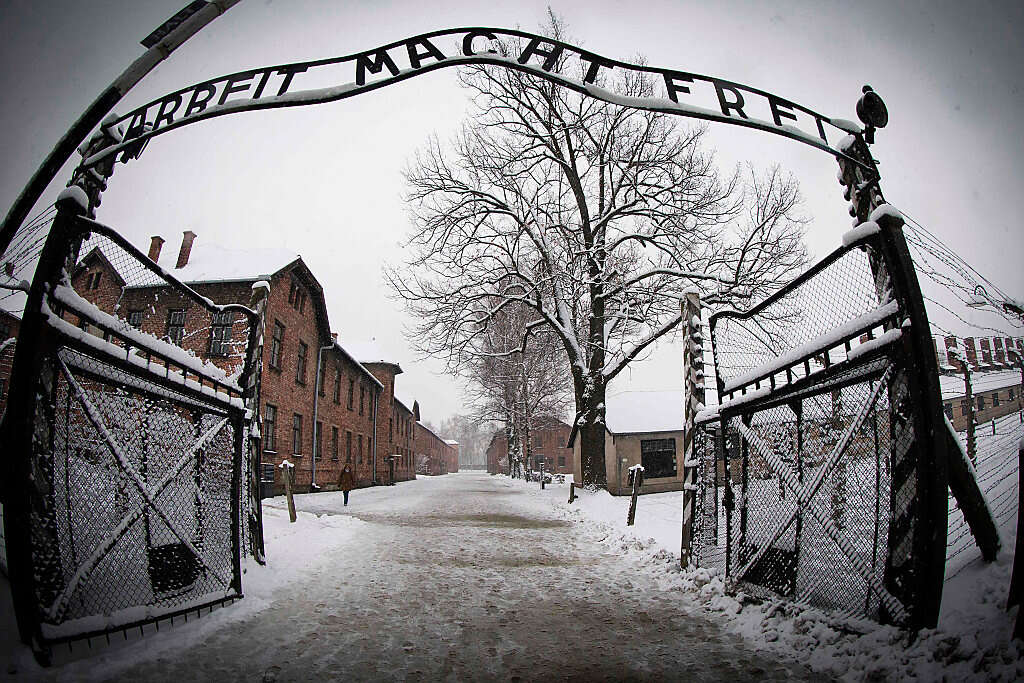
The State of Israel, established after the horrific Holocaust, inscribed the promise of "Never Again" on its banner. However, this promise collapsed during the October 7th attack, primarily because the necessary lessons regarding the gaps between Israel and its surroundings were not internalized, leading to a policy of containment against significant threats. This occurred despite the fact that, unlike in the past, its enemies openly and explicitly declared their intention to destroy it.
The territories Israel has seized in the Gaza Strip under the "Yellow Line," as agreed upon in the hostage deal, allow it for now to focus on more immediate threats from the Iranian regime and Hezbollah. Alongside the threat of Iran's nuclear and missile programs, Israel must keep in sight the vision of Israel's destruction to which the Iranian regime remains committed. This commitment was clearly reflected in the statements of senior officials still in power in Iran during "Quds Day," which Tehran marked on March 13th.
While some in Israeli society still wonder if "the sword shall devour forever," beyond the northern, southern, and eastern borders, as well as throughout Judea and Samaria, the next generation is still taught that there is no compromise with Israel and no retreat from the vision of its destruction. While Israel extends a hand in peace, the countries surrounding it are still ruled by the hand that rejects the outstretched one. It seems that Lebanon's struggle to rise again, which has not borne fruit, reflects the dismal state of peace-seekers in various regions of the Middle East.
In response, one must recognize the unavoidable security necessity of expanding Israel's security margins. A mother in Misgav Am, situated on the Lebanese border, and her counterparts in Be'eri, adjacent to the Gaza Strip, and Bat Ayin in the Judea region, deserve the right to lead peaceful lives as any other citizens would. According to the updated security doctrine outlined by senior defense and political officials after the October 7th massacre, Israel will no longer contain the existence of those seeking its destruction just one kilometer from its borders. Rather, in the first stage, they must be pushed back through military action as far as possible from the distances from which they threaten Israel's border communities. In the second stage, it will be necessary to complement the military effort with a diplomatic one to establish a new, threat-free region.

Alongside expanding security margins, the Houthis must be prevented from realizing their threat to invade through Jordan, and a systematic, significant offensive must be launched against them on their own soil at the appropriate time, rather than waiting for them to choose the time and place of the conflict. Furthermore, relevant forces in the Yemeni front must be assisted to pose a significant challenge to Houthi rule. To prevent Hezbollah from establishing itself on the border again, it must be pushed beyond the Litani region and crushed as much as possible north of the Litani as well. Simultaneously, maximum efforts must be made to block weapon smuggling routes and financial aid from Iran and the "gray zones" in Syria. To prevent Hezbollah from operating south of the Litani, Israel has no choice but to re-establish a security zone, this time devoid of a civilian population. This forward buffer zone, to be established south of the Litani as part of the lessons from the October 7th surprise and Hezbollah's invasion plans, will serve as an area where the IDF operates with a permanent presence to guarantee the safety of northern border communities.
Alongside negotiations with the Lebanese state, one must internalize the reality that the Lebanese Army, the body supposed to implement the decision to disarm Hezbollah, is weak and significantly infiltrated by the organization. Additionally, as reflected by its inability to expel the Iranian ambassador, the Lebanese state remains weak. The components of the plan for Israel's destruction by Iran and the Axis of Resistance, as revealed in statements by senior Iranian commanders and other indicators from Iranian media (which I have analyzed in my research), leave no room for doubt. Tehran now seeks to stand firm in the war and will agree to a ceasefire, but it will initiate a multi-front massacre led by its forces after a period of time dedicated to rehabilitating itself and its proxy network. The comprehensive sponsorship provided by the Iranian regime to advance the vision of Israel's destruction underscores the importance of efforts to topple it.
One of the lessons of October 7th is to look directly at the declarations of the enemy and give them the proper weight. Yahya Sinwar, who promised to strike with a massive missile attack and thousands of his terrorists, Hassan Nasrallah, who declared his belief that he would pray in a "liberated Al-Aqsa Mosque," Ali Khamenei, who declared that Israel would be destroyed by 2040, and the Houthi Chief of Staff Al-Ghamari, were all eliminated by Israel. However, much like those who came before them, the current successors are also opening maps of Israel to plan a multi-front massacre against it. Like their predecessors, they are committed and devoted to their murderous ideology, leaving no doubt as to the vital necessity and justice of Israel's defensive war to ensure that "Never Again" is indeed a reality.
Dr. Yossi Mansharof is a lecturer in the "Politics of the Middle East" MA program within the School of Political Science at the University of Haifa, and a senior researcher at the Misgav Institute for National Security and Zionist Strategy.