Strategic discussions about Iran typically revolve around two main approaches: containing its nuclear program or pursuing regime change. Both, however, focus primarily on leadership while overlooking a deeper and more decisive factor, the structure of the state itself, particularly its degree of centralization. Historical experience suggests that highly centralized states can preserve and even rebuild their strategic capabilities over time, despite significant political upheavals.
Libya under Muammar Gaddafi provides a useful illustration. Following the 1969 coup that overthrew King Idris, Libya transitioned from a weak, decentralized monarchy into a highly centralized regime. Gaddafi consolidated power by eliminating rival centers of authority, nationalizing oil resources, and building loyal security institutions. This centralization enabled Libya to act assertively on the international stage and project influence disproportionate to its size.
During the 1970s and 1980s, Libya became a prominent actor in the use of terrorism as an instrument of state policy, supporting Palestinian organizations, revolutionary movements in Africa, and militant groups in Europe. Despite sustained external pressure, including US airstrikes in 1986, the regime's centralized structure proved resilient and did not immediately alter its behavior.
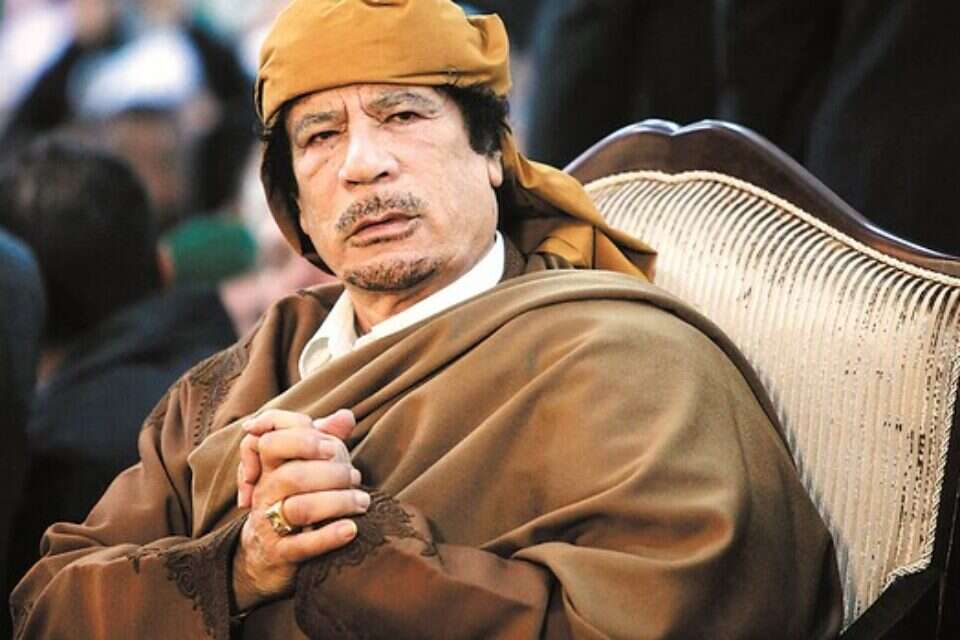
In the early 2000s, Libya shifted course, abandoning its weapons of mass destruction programs and seeking rapprochement with the West. While this improved its international standing, the internal structure of the state remained highly centralized. The decisive turning point came in 2011, when internal uprisings combined with NATO intervention led to the collapse of the regime. Crucially, the centralized system disintegrated without being replaced by a stable alternative, resulting in fragmentation into rival militias and competing centers of power.
The consequences became starkly evident in 2012 with the attack on the US consulate in Benghazi, which symbolized the loss of central authority and the rise of decentralized instability. In classical strategic terms, post-2011 Libya ceased to pose a significant state-based threat: it no longer maintained a nuclear program, coherent foreign policy, or capacity for power projection. However, it became a locus of chronic instability, characterized by militia rule and external interference.
The Libyan case highlights a fundamental strategic dilemma: is it preferable to confront a centralized state capable of posing an existential threat, or to contend with a fragmented environment that lacks unified strategic capabilities but generates persistent, low-level risks? Centralization facilitates the development of advanced capabilities and coordinated power projection, whereas fragmentation constrains these capabilities while producing enduring instability.
Applying this insight to Iran suggests that current debates are incomplete if they focus solely on regime change or nuclear containment. Iran combines strong centralization, ideological motivation, and advanced capabilities, making it a formidable strategic challenge.
Under these circumstances, it may be worth considering whether sustained external pressure could weaken Iran's central authority. Such a process might embolden ethnic and religious minorities to challenge the regime, potentially leading to fragmentation akin to the Libyan case. In such a scenario, Iran could lose its capacity to function as a coherent strategic actor, thereby reducing the scale of the threat it poses. However, this outcome would likely come at the cost of prolonged instability and uncertainty.
Strategic thinking about Iran must therefore move beyond leadership-focused approaches and address the underlying structure of the state. The Libyan example demonstrates that dismantling centralization can eliminate a coherent state threat—but it also creates new, complex, and enduring risks that must be carefully weighed.