Israel Hayom is a media organization founded on the belief that the Israeli public deserves better journalism—more balanced, more accurate, and more reliable. Journalism that speaks rather than shouts. Journalism that is trustworthy, objective, and matter-of-fact. A different kind of journalism, offered free of charge. The first print edition was published on July 30, 2007, and in 2010 Israel Hayom became the Israeli newspaper with the highest weekday readership. The newspaper’s publisher is Dr. Miriam Adelson. Its Editor-in-Chief is Omar Lachmanovitch, and its founding editor is Amos Regev. Israel Hayom’s Hebrew and English websites, as well as its Android and iOS applications, provide around-the-clock news coverage, exclusive content, breaking news and updates, analysis and commentary, video, podcasts, and live broadcasts. The digital platforms of Israel Hayom include news and opinion channels covering culture and entertainment, lifestyle, technology, sports, business and consumer affairs, health, military affairs, food, Judaism, tourism, and automobiles. In 2021, a new Hebrew-language website and mobile application were launched to provide users with a fast, up-to-date, secure, and convenient experience. The content of the newspaper’s print edition is also available online through a daily digital edition and can be received via newsletter. “The Israel Hayom Clique,” the publication’s exclusive benefits club, offers website users discounts and special promotions on products and services. Israel Hayom welcomes feedback, criticism, and suggestions for improvement from its readers. You can contact the organization by email at hayom@israelhayom.co.il

Monday Jul 13, 2026
NEWSLETTER
www.israelhayom.com
  • Home
  • News
    • Israel
    • Israel at War
    • Middle East
    • United States
  • Opinions
  • Jewish World
    • Archaeology
    • Antisemitism
  • Lifestyle
    • Food
    • Travel
    • Fashion
    • Culture
  • Magazine
    • Feature
    • Analysis
    • Explainer
  • In Memoriam
www.israelhayom.com
  • Home
  • News
    • Israel
    • Israel at War
    • Middle East
    • United States
  • Opinions
  • Jewish World
    • Archaeology
    • Antisemitism
  • Lifestyle
    • Food
    • Travel
    • Fashion
    • Culture
  • Magazine
    • Feature
    • Analysis
    • Explainer
  • In Memoriam
www.israelhayom.com
Home News Middle East

Lebanon drops demand for Israeli pullback ahead of next round of talks

The next meeting is expected to take place as early as next week in Washington, with the sides preparing to map out the main issues, led by borders and civilian matters. Lebanon wants to avoid damage to civilian infrastructure, while Israel has made clear it will continue to act against any target that helps Hezbollah. The negotiations are later expected to step up, with the goal of reaching a broader agreement between the two countries.

by  Danny Zaken
Published on  04-16-2026 00:13
Last modified: 04-16-2026 00:13
Israel, Lebanon launch historic direct talks in Washington

Historic meeting between the Israeli ambassador and Lebanon’s ambassador to the US in Washington. Photo: Shmulik Almani, Israel’s Embassy in Washington

Share on FacebookShare on Twitter

The next meeting between Israel and Lebanon will most likely take place as early as next week in Washington, according to Israeli and American diplomatic sources. Under that framework, the second meeting will map out the issues for discussion, chiefly border demarcation and the economic and civilian aspects of a possible agreement.

The issue of Hezbollah and its disarmament is only supposed to come up as a point of reference, but discussion of it is taking place at the highest political level. An announcement on the next step is waiting for a reduction in the intensity of the fighting, which is expected in the coming days.

At the previous meeting, as reported by Israel Hayom, the Americans raised several options for lowering the intensity of the fighting in order to create a positive atmosphere for the talks. The outline currently on the table is a return to the pattern of strikes that existed before the start of the war, in line with the terms of the November 2024 agreement, while continuing operations in southern Lebanon.
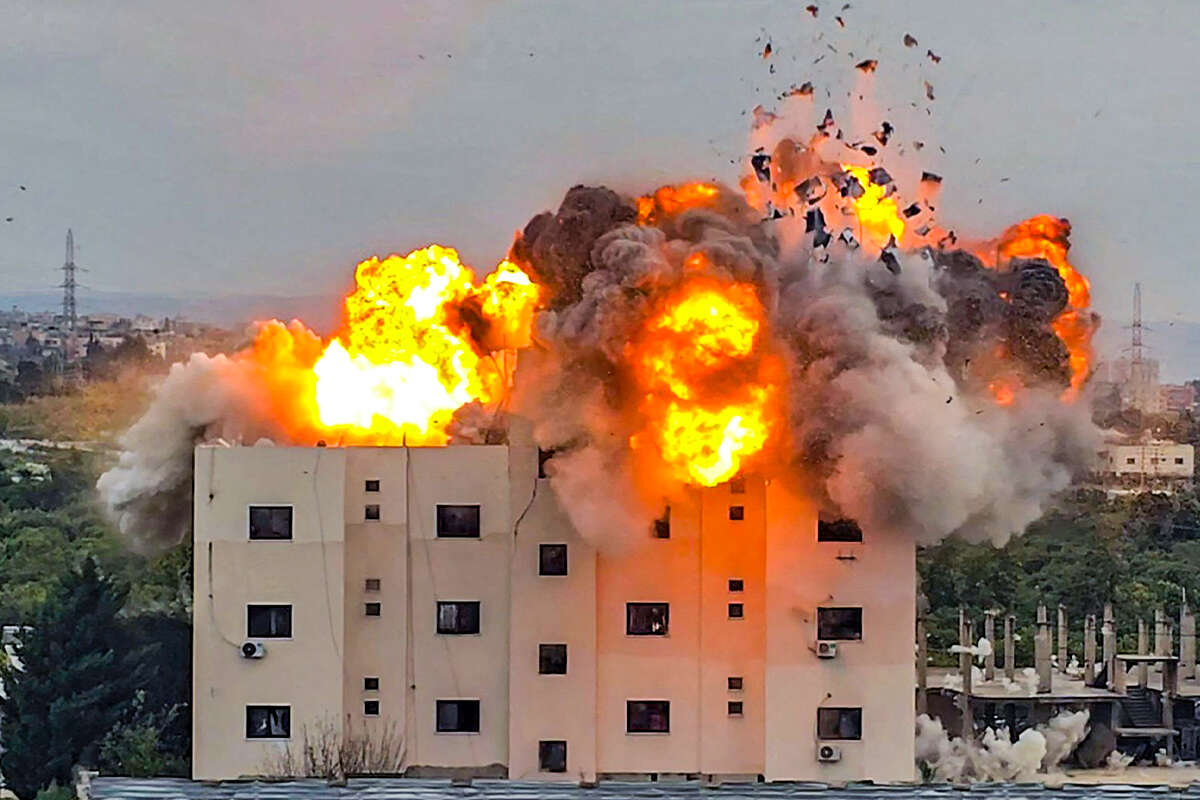
תקיפת צה"ל בדרום לבנון , AFP

The IDF will not withdraw from the area, and notably Lebanon did not demand that, at least not immediately. Israel is linking Hezbollah's disarmament, as set out in the November 2024 agreement, to an Israeli military withdrawal and a full ceasefire. That means the IDF will continue operating against Hezbollah targets that pose an immediate threat, including deep inside Lebanese territory, and will have complete freedom of action in the area south of the Litani River.

Lebanon is, however, asking Israel not to strike civilian infrastructure anywhere in the country, including in southern Lebanon. Israel's response was that the targets being attacked are those that help Hezbollah operate.

Regional framework and economic pressure

According to the diplomatic sources, in the meetings after the next one the level of the talks is expected to rise, with the aim of reaching a full peace agreement between the countries, even if it only comes fully into force after Hezbollah has been dealt with.

There is another aspect as well: Lebanon is in a severe economic crisis that has been worsening for more than 13 years. An agreement with Israel and a dramatic weakening of Hezbollah's power and influence are expected to bring back international investment. Gulf states, led by Saudi Arabia and the United Arab Emirates, support the negotiations and are assisting them behind the scenes, and are expected to take part in rebuilding the country, if and when that happens.

Historic meeting between the Israeli ambassador and Lebanon's ambassador to the US in Washington. Photo: Shmulik Almani, Israel's Embassy in Washington

In Iran, there is a significant chance that the ceasefire, which is due to expire next week, will be extended, but with the strait remaining closed. According to diplomatic sources in the region, the US refused to reopen the Strait of Hormuz as long as Iran does not remove its blockade.

What is therefore taking shape is the possibility of an extension of the ceasefire and probably a renewal of the negotiations, but under tight economic pressure that is bringing Iran's economy, or what remains of it, to collapse. According to data from Iran's central bank, the government's cash reserves will be enough only for the coming weeks, after which salary payments, debt payments and payments to suppliers in Iran and abroad will stop entirely.

The Iranian political leadership therefore defines reaching understandings with the US as an existential necessity. The leadership of the Islamic Revolutionary Guard Corps, headed by Mohammad Vahidi, is still trying to project a hard line, even if it is unrealistic.


Related Posts

Sen. Lindsey Graham dies at 71

Iranians celebrate death of Sen. Lindsey Graham: 'He went to hell'

by ILH Staff

While Washington and Jerusalem mourn the sudden death of senior Republican Sen. Lindsey Graham, a longtime friend of Israel, at...

US reinstates Iran oil sanctions after tanker attacks in Strait of Hormuz

Hormuz Strait closed, Iran fires on Gulf as US launches new offensive

by ILH Staff

Iran's Islamic Revolutionary Guard Corps Navy announced that a vessel attempting to transit the Strait of Hormuz via an "unauthorized...

US readies new pressure campaign as Iran talks hang in the balance

US readies new pressure campaign as Iran talks hang in the balance

by Danny Zaken

US officials say senior commanders in Iran's Islamic Revolutionary Guard Corps will be the primary targets of a renewed economic...

Menu

Analysis 

Archaeology

Blogpost

Business & Finance

Culture

Exclusive

Explainer

Environment


Features

Health

In Brief

Jewish World

Judea and Samaria

Lifestyle

Cyber & Internet

Sports


Diplomacy 

Iran & The Gulf

Gaza Strip

Politics

Shopping

Terms of use

Privacy Policy

Submissions

Contact Us

About Us

The first issue of Israel Hayom appeared on July 30, 2007. Israel Hayom was founded on the belief that the Israeli public deserves better, more balanced and more accurate journalism. Journalism that speaks, not shouts. Journalism of a different kind. And free of charge.

All rights reserved to Israel Hayom

Hosted by sPD.co.il

  • Home
  • News
    • Israel at War
    • Israel
    • United States
    • Middle East
    • Sports
  • Opinions
  • Jewish World
    • Archaeology
    • Antisemitism
  • Lifestyle
    • Food
    • Travel
    • Fashion
    • Culture
  • Magazine
    • Feature
    • Analysis
    • Explainer
    • Environment & Wildlife
    • Health & Wellness
  • In Memoriam
  • Subscribe to Newsletter
  • Submit your opinion
  • Terms and conditions

All rights reserved to Israel Hayom

Hosted by sPD.co.il

Newsletter

[contact-form-7 id=”508379″ html_id=”isrh_form_Newsletter_en” title=”newsletter_subscribe”]

  • Home
  • News
    • Israel at War
    • Israel
    • United States
    • Middle East
    • Sports
  • Opinions
  • Jewish World
    • Archaeology
    • Antisemitism
  • Lifestyle
    • Food
    • Travel
    • Fashion
    • Culture
  • Magazine
    • Feature
    • Analysis
    • Explainer
    • Environment & Wildlife
    • Health & Wellness
  • In Memoriam
  • Subscribe to Newsletter
  • Submit your opinion
  • Terms and conditions

All rights reserved to Israel Hayom

Hosted by sPD.co.il