US President Donald Trump is expected to meet with senior US defense officials to discuss the stalemate in the talks with Iran, CNN reported, citing two sources familiar with the matter. According to the report, the officials will discuss the options available to Trump going forward, including whether to resume strikes on Iran.
Trump addressed the deadlock in an interview with Fox News, saying, "If they want to talk, they can come to us, or they can call us. You know, there is a telephone. We have nice, secure lines." He added, "They know what has to be in the agreement. It's very simple: they cannot have a nuclear weapon, otherwise there's no reason to meet."

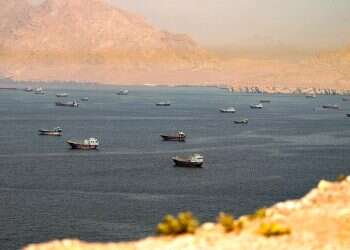
Earlier, it was reported that Iran had submitted a new proposal to the US for opening the Strait of Hormuz and ending the war, under which negotiations on the nuclear issue would be postponed to a later stage. Axios reported the proposal, citing a senior US official and two sources familiar with the details. According to the report, the Iranian proposal calls first for reaching an understanding on ending the war, then discussing the Strait of Hormuz and the American blockade, and only later addressing Iran's nuclear program.
Iranian Foreign Minister Abbas Araghchi, who also visited Oman and Pakistan over the weekend, arrived Monday in St. Petersburg and met with Russian President Vladimir Putin. "For our part, we will do everything that serves your interests and the interests of the peoples of the region so that peace is achieved as quickly as possible," Putin said, according to the Russian news agency TASS. Araghchi said, "I convey the greetings of the supreme leader and of Dr. Masoud Pezeshkian, the president of Iran," adding that "relations between Russia and Iran reflect a strategic partnership and will continue to grow stronger," according to Iran's Tasnim news agency.

German Chancellor Friedrich Merz sharply criticized the US handling of Iran, saying, "The Americans do not have a truly convincing strategy in the negotiations." He said, "An entire nation is being humiliated by Iran's leadership, especially by the so-called Revolutionary Guards." Merz compared the situation to the wars the US fought in Afghanistan and Iraq, noting, "The problem in conflicts of this kind is always the same: It is not enough to go in, you also have to get out." He made clear that, at this stage, he did not see what exit strategy the Americans would choose. He also said the Europeans had offered to send German minesweepers to clear the Strait of Hormuz, and that they would depart only after the fighting stopped.