The US Justice Department's announcement in recent days of a successful operation to arrest Mohammed Baqer Saad Dawood al-Saadi, a senior figure in Iran's network of proxies, offers a chilling glimpse into the depth of Tehran's octopus-like reach into the heart of both America and Europe.
Al-Saadi is not just another junior operative. He is a senior commander in Kata'ib Hezbollah, the spearhead of Iran's proxy network in Iraq, who previously worked closely with Qassem Soleimani and Abu Mahdi al-Muhandis, both of whom were eliminated by the US in 2020.
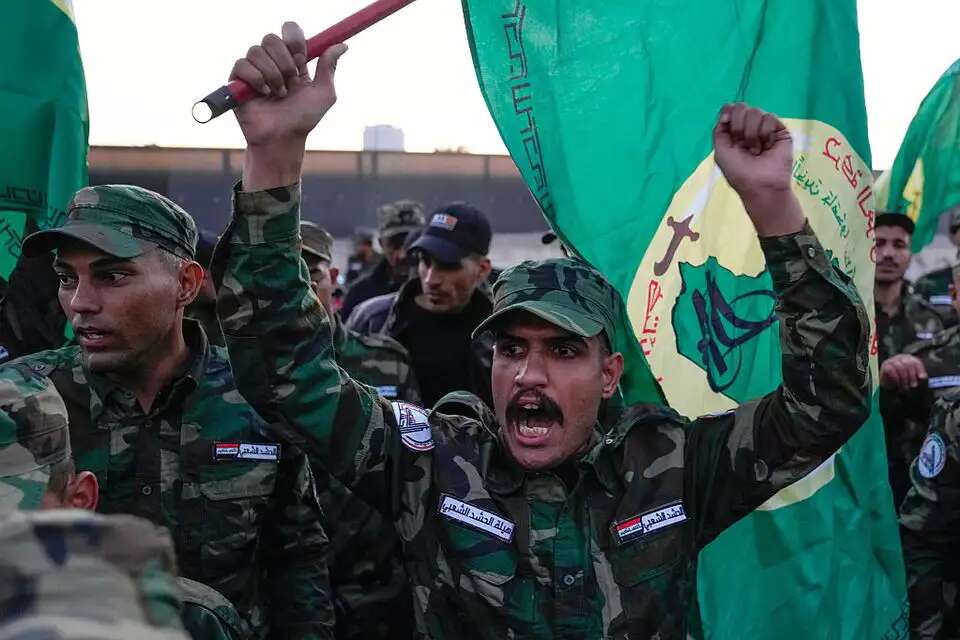
This time, however, it is not a counterterrorism operation limited to the Middle East, but the exposure of a transnational terror network that operated in Canada, the US and Europe. The indictment filed against him in a federal court in New York includes six counts of serious terrorism offenses and attributes to him direct involvement in nearly 20 attacks and attempted attacks in the West.
Al-Saadi, who was arrested in Turkey and extradited to the US, directed, according to FBI data, a sequence of 18 terrorist attacks across Europe over a period of just three months during the current year. The evidence reveals that in early April he was recorded instructing an undercover US agent to carry out a coordinated attack against a synagogue in New York and additional Jewish institutions in Los Angeles and Arizona.
The West hesitates in the face of the threat
The exposure of this network directly links al-Saadi to the activation of a new and secret Iranian proxy operating under the name Harakat Ashab al-Yamin. The organization was established by the Iranian regime as a subversive response to the military campaign launched by the US and Israel against the regime in Tehran.
The organization's list of operations demonstrates its audacity: an attack against an American bank in Amsterdam in mid-March, the torching of a synagogue in Skopje in North Macedonia in mid-April, and a stabbing attack in London against two Jewish civilians in late April. This came alongside a series of explosions and arson attacks against Jewish targets in Belgium and the Netherlands.

This reality again proves the direct threat posed by the Iranian regime to national security in Europe. The European Union did cross a significant red line several months ago when it added the Revolutionary Guards to its list of terrorist organizations, but in the UK the picture is more complex.
In late March, the British Foreign Office reprimanded the Iranian ambassador over espionage targeting Jewish centers in the kingdom, but official London is still dragging its feet and refusing to apply a sweeping terrorist designation to the Revolutionary Guards. Against this backdrop, US members of Congress recently urged the British government to end its hesitation.
Europe's division and weakness
The American pressure is bearing partial fruit: During a visit in late April by Prime Minister Keir Starmer to a London synagogue that had been attacked, he pledged to introduce a bill outlawing the organization in order to "ensure that the Jewish community feels safe."
Al-Saadi's arrest leaves no room for doubt: The Iranian regime represents a clear and immediate danger to the sovereignty of Western countries. This danger is worsening as Iran develops its ballistic missile program, whose operational range already covers large parts of the European continent.
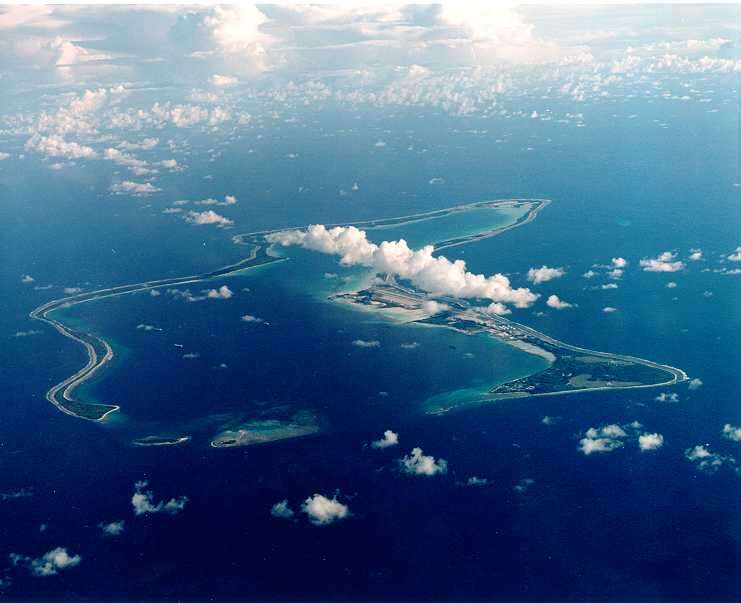
The Iranian launch toward the British-American base at Diego Garcia in late March demonstrated a launch capability at a range of 3,800 kilometers. This is a direct threat that places major European cities, including London, Paris and Rome, within immediate striking range.
Yet precisely in the face of this growing threat, the West is exposing its weakness. While the US is acting to choke off Iranian aggression, key European countries are choosing a line of panicked appeasement. The peak of this trend was reflected in the refusal by France, Spain and Italy to allow US transport planes carrying critical weapons to Israel to pass through their airspace.
This policy only intensifies Iranian pressure. Those who refuse to assist their allies in wartime against Iranian aggression discover that Tehran's terrorism does not stop in the Middle East, but is knocking at the gates of Europe and the US. The only way to ensure public safety is not to contain the proxies, but to eradicate the head of the snake in Tehran.