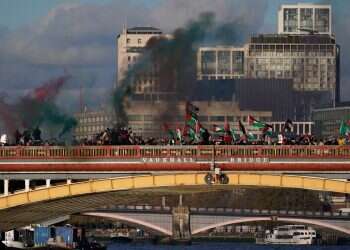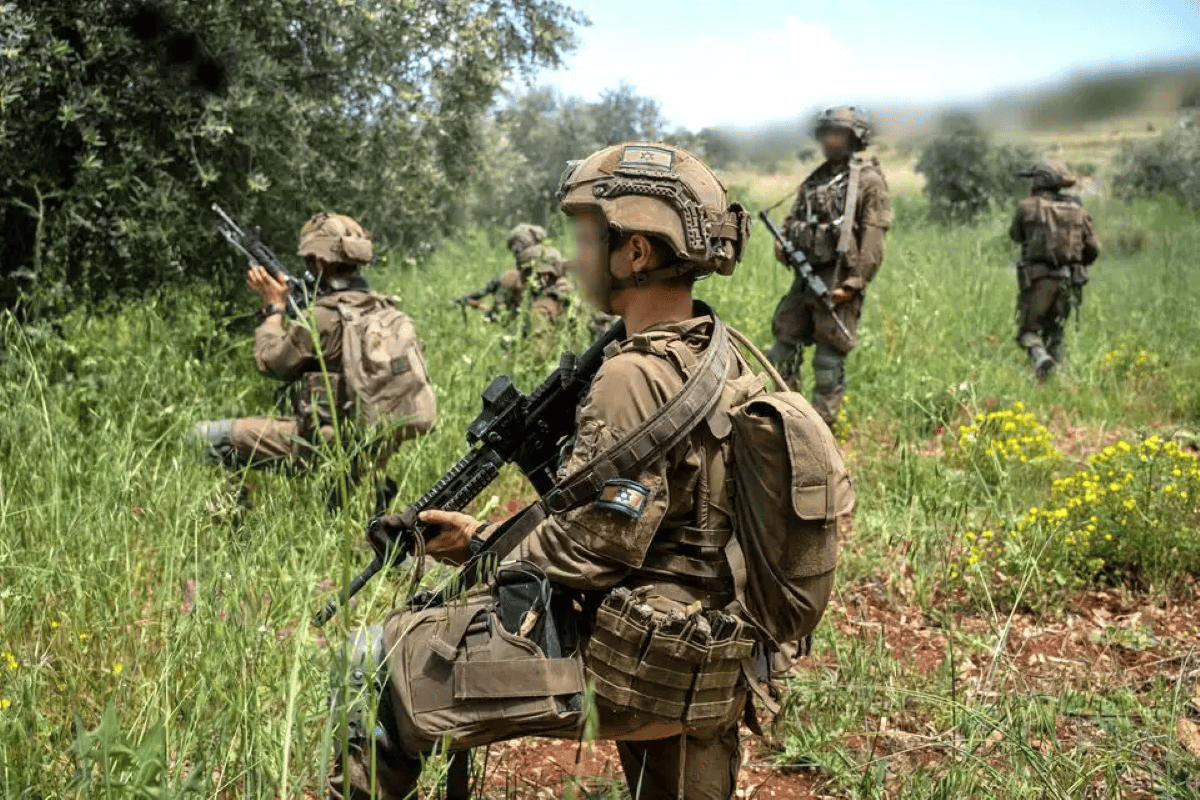
None of the participants in the historic meeting in Washington on Wednesday believed that the announcement of an agreement between Lebanon and Israel would "extinguish the fire." The American, Lebanese, and Israeli representatives understood full well that Hezbollah – acting on Iran's behalf – would do everything in its power to sabotage any potential peace between the two countries.
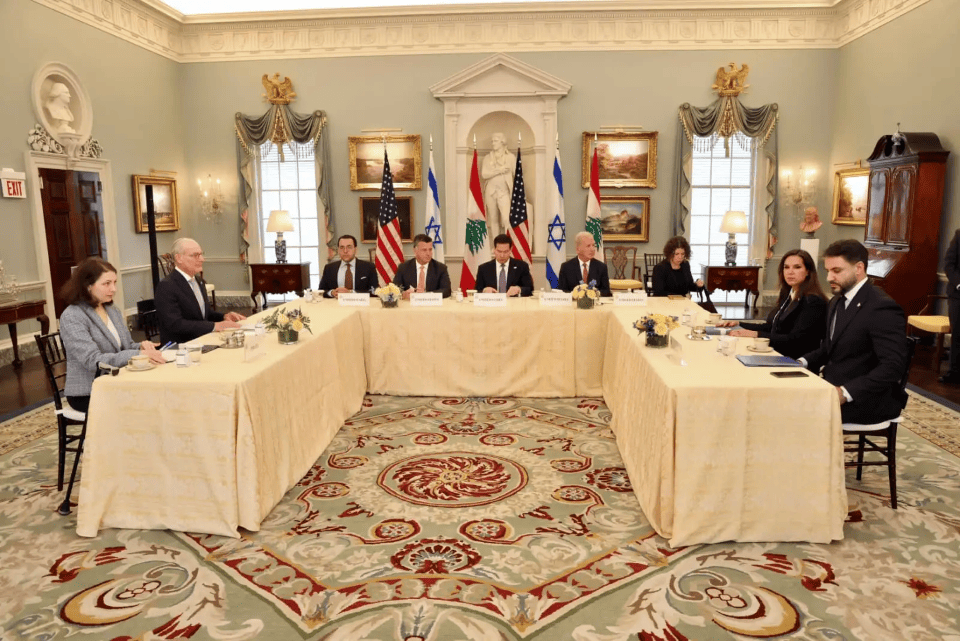
Nothing, after all, threatens the death-eaters in Tehran more than reconciliation between Israel and its neighbors. That is precisely what US Ambassador Liter, his Lebanese counterpart Nada Mawad, and senior State Department officials set out to demonstrate.
The aspiration of all parties that "these steps will enable progress toward a comprehensive peace and security agreement" was written into the joint statement of the three countries. In a pointed rebuke of Iran, the statement added, "The future of relations between Israel and Lebanon must be determined by the two sovereign governments. They reject any attempt, by any state actor (Iran, that is) or non-state actor (Hezbollah), to hold Lebanon's future hostage."
No military solution
That was the message. But no one thought – not for a moment – that someone would wave a magic wand and, poof, the war would end. As US President Donald Trump put it, "In that part of the world, ceasefire means shooting in a more moderate manner."
Since the president announced his partial ceasefire on Monday, the exchanges of fire have eased. That is not a satisfying outcome, but the trend line must be recognized and protected. Trump declared a targeted agreement. The joint statement addresses the long-term – and while both carried the headline "ceasefire," the nature of the two moves could not have been more different.
One must be honest: Israel has no military solution to the Hezbollah problem. Occupying all of Lebanon is simply not an option. So at the end of the road, only a combination of military and diplomatic tools can produce a normal reality – one in which Hezbollah stops firing at Israel and is simultaneously denied the ability to rebuild.
Moreover, the terrorist organization is a shadow of what it was before September 2024. For all the justified anger over the continued shooting, it is wrong to go to extremes and say "nothing has changed." Statements like that betray factual reality. Worse, they please Naim Qassem and serve the organization's propaganda.
Beyond all that, there are the constraints Trump has imposed on Israel through his ban on attacking Dahiyeh. Here, too, it is worth remembering that striking at Hezbollah's center of gravity would not necessarily stop the launch of explosive drones and rockets. Bombing the neighborhood would have shattered Hezbollah's morale further and certainly complicated its operations, but it would not have entirely stripped the cells on the ground of the ability to keep harassing IDF troops in southern Lebanon and Israeli civilians in northern communities.
Surrendering to Iranian threats
Clearly it would have been far preferable had Trump authorized Israel to follow through on the ultimatum that Prime Minister Benjamin Netanyahu and Foreign Minister Israel Katz publicly declared. Beyond breaking their word, Trump is making a fundamental error in yielding to Iranian threats. He wants to focus on the nuclear question without letting "side issues" – as he views them – divert his attention from the central problem.
And yet, in making that concession, Trump is acting against his own interests. The same is true of his restraint following the bombing of Kuwait's airport and the leak suggesting he would return to the fight only if American soldiers were killed. These are all serious mistakes. Such weaknesses do not escape the eyes of the Islamic Revolutionary Guard Corps. Wounded and battered as they may be, the sharks in Tehran can smell blood even in their current condition.
So precisely because Trump embarked on a bold historical act, he must finish the job. Yes, the war is unpopular in America – the Democrats are inciting against it and against him, and the erosion among Republicans is growing. And yet, a renewed resurgence and an insistence on achieving the original objectives would also resolve the political problems at home. This is where creative operational ideas from the US military need to come in.
For now, the president is still giving diplomacy with Iran a chance. But anyone with eyes in their head understands that there are only two possibilities: a bad deal or no deal at all. And the more weakness Trump projects toward Iran on the military front, the more he whets Iran's appetite at the negotiating table. That, too, must factor into his calculations.
It can be assessed that once Trump realizes that talks with Iran are ultimately futile, he will lift his objection to Israeli action in Beirut. When that happens, it will be the Iranians who face the test of whether they truly wish to restart the war – because Israel, for its part, is certainly not afraid.
In other words, nothing is over yet. Not on the Lebanese front, and not on the front facing Iran.