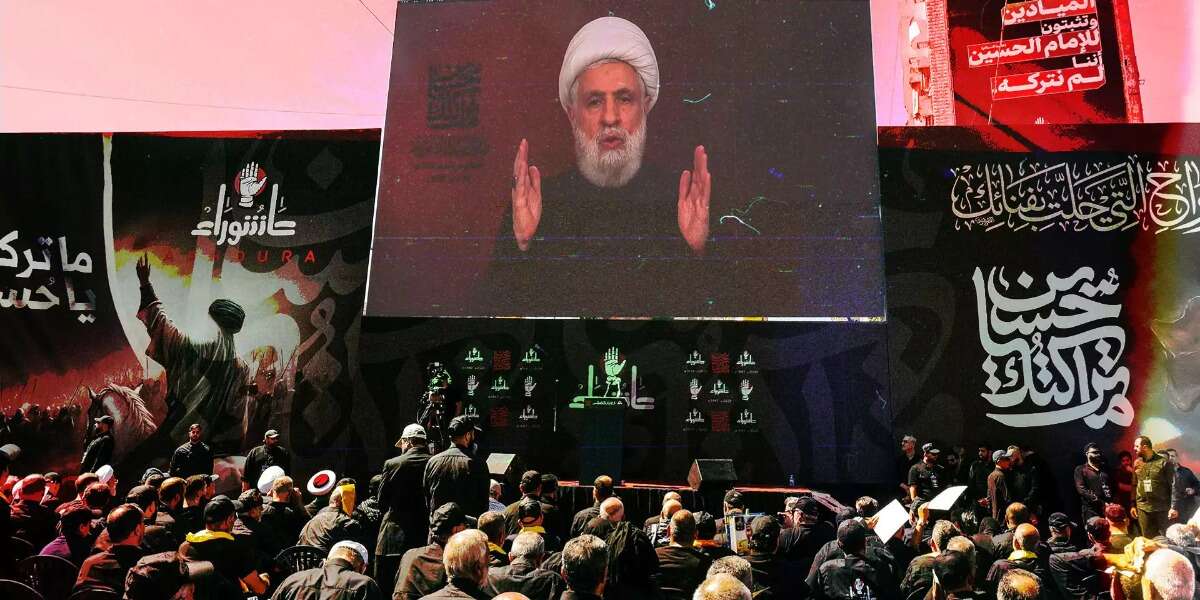
The US has a plan to help the Lebanese army rid Lebanon of Hezbollah's weapons, the Lebanese website Al-Modon reported, citing sources in Washington. However, the sources expressed concern that the aid plan for the Lebanese army could fail as it did in Afghanistan and Iraq, because of institutional corruption, sectarian divisions and Hezbollah's deep penetration of state institutions.
The plan focuses on the Lebanese army and views it as "the central key to solving this problem," according to the sources. The report said that during security negotiations with Israel at the Pentagon, a discussion was held on the Lebanese army's ability to implement the disarmament plan. As part of this, Lebanon was reported to have committed to expanding the area under its control and preventing terrorist organizations from returning to territory under its responsibility.
It was also noted that according to US reports, Israel's demands went beyond the demilitarization of southern Lebanon and also included the demilitarization of the Beqaa Valley in eastern Lebanon, where Hezbollah has missile launchers and an underground military arsenal.

The sources in Washington added that the Trump administration was "betting on strengthening the Lebanese army's capabilities in order to balance Hezbollah's power." In this context, they described Lebanon's agreement to negotiate with Israel over the disarmament of Hezbollah as "a bold step." They said this was why there was a genuine US intention, through a training program for the Lebanese army, to provide the capabilities needed to carry out the missions.
According to the report, after exchanges of messages between senior security officials from the US and Lebanon, it became clear that the Lebanese army lacked the institutional capabilities and firepower needed for a confrontation with Hezbollah. Therefore, the report said, US training would focus on operational planning, intelligence gathering and coordination efforts. The sources claimed that the Lebanese army's independence would give it an advantage over Hezbollah, which is suffering from disruptions to its supply lines with the Iranian regime because of al-Sharaa's rule in Syria.