The Israeli security establishment does not know exactly what the details are of the emerging deal between the US and Iran, but security officials say now is the time to minimize the damage and try to influence the final agreement as much as possible during the 60 days in which it will be discussed. As for the Lebanese front, Israel's main task now is to try to separate Iran from Lebanon as much as possible, despite Iran's clear attempts to reconnect the two.
The way to do this, security officials believe, is through firm opposition to an IDF withdrawal back to the international border. There is near unanimity among Israel's political and security leadership regarding the need to keep the IDF deployed along the yellow line, at least in order to protect residents of the north. At the same time, the view at the top of the security establishment is that Israel should respond harshly, including with another strike in Dahiyeh, to any launch toward the State of Israel, even at the cost of another confrontation with Iran and American displeasure.

As of now, the soldiers positioned beyond the border line have not received new instructions, and they are continuing to destroy terrorist infrastructure and defend themselves against threats when necessary. At the same time, the IDF is also preparing for the possibility that Israel's political echelon will issue different instructions.
Likewise, as has been evident over the past three days (as of the time of writing), Hezbollah is not firing at the State of Israel, and its forces are not advancing and are focusing on defending themselves. Ultimately, the test will be one of action, meaning whether Hezbollah fires at the State of Israel and what Israel does in response.
The security establishment is not hiding its view that the best way to sever the link between Iran and Hezbollah now is to rapidly advance the negotiations between Israel and Lebanon, under American auspices, which are taking place, as is known, independently of Iran.

In closed-door conversations, security officials have criticized the fact that the issue was not advanced more quickly in recent weeks, and it seems the government did not put its full weight behind it when it appointed Israeli Ambassador to the US Yechiel Leiter to lead the negotiations.
With all due respect to Leiter, and there is respect, the Israeli government could have appointed a more senior representative and advanced the negotiations more effectively. Now, as stated, Israel must try to minimize the damage and advance the negotiations, which greatly concern Hezbollah and its patron Iran, since they could weaken Hezbollah's power in Lebanon and strengthen the Lebanese government and its army.
At the same time, no one in Israel is deluding themselves that the Lebanese government will succeed in disarming Hezbollah, even if it very much wants to, and it is not certain how much it wants to.
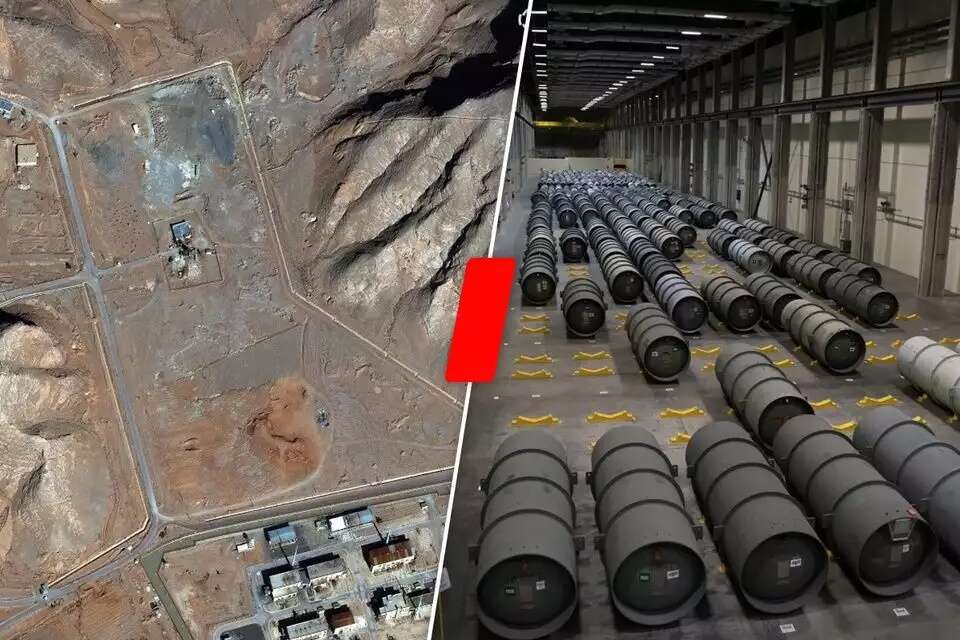
As for Iran, in light of the shift and the fact that the Americans are moving toward an agreement with it without involving Israel, the security establishment is talking about the need to formulate a new strategy while continuing close intelligence monitoring, given the possibility that Iran will exploit the coming period precisely now to pursue nuclear weapons, which it believes would grant it immunity from future attacks.
The security establishment is talking about the need to adjust its situational assessment while trying to uphold Israeli interests in regards to the Americans, without harming relations.
Security officials also say that although the Israeli public may feel a certain calm in the near future, Israel must not become complacent. The IDF still needs to maintain strong defense along the borders and prepare for a future confrontation with Iran, which the security establishment believes will take place, given that the Iranian regime will not abandon its nuclear ambitions or its desire to destroy the State of Israel.
Officials further note that it is too early to throw the baby out with the bathwater, since militarily there is no doubt that Israel's enemies have been badly hit over the past two and a half years. At the strategic level, however, they acknowledge that the trend, which had been positive, is now reversing, but it is too early to know what the future holds. They say Israel should wait for the final agreement between the US and Iran and try to influence it as much as possible through the US.