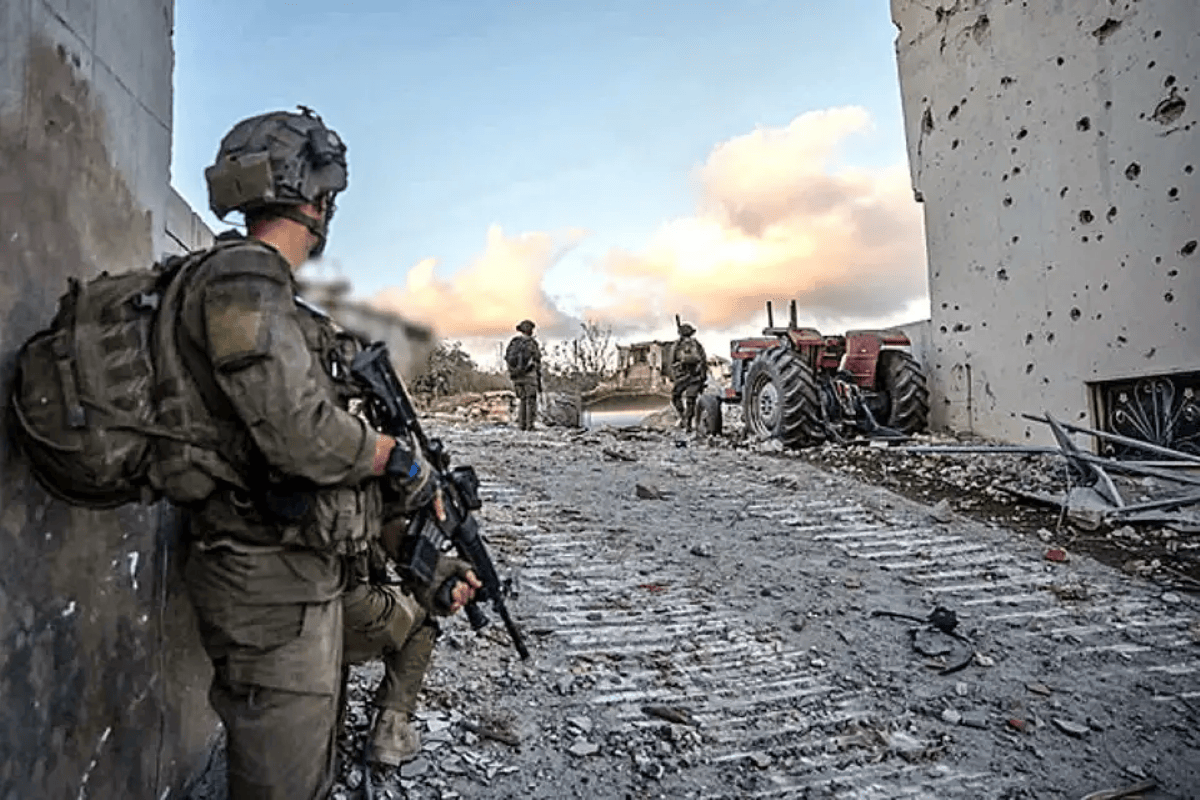
The IDF's ground maneuver in southern Lebanon has been suspended for the time being, but Israel still holds extensive territories in the southern Lebanon region, more than it held in the years preceding the IDF's withdrawal from Lebanon in 2000. As part of the maneuver, the IDF captured a massive Hezbollah tunnel in the Shia village of Majdal Zoun, located eight kilometers from the Israeli border. This was not a surprise for the IDF, as it is a tunnel of strategic importance for Hezbollah that was known to Israel.
In practice, already during 2024, the tunnel was attacked by the Israeli Air Force and was partially blocked. Hezbollah attempted to rehabilitate the strategic site under the radar, just as it did in other areas in southern Lebanon attacked by Israel, to continue threatening the communities of the north and the Israeli coastline.
Therefore, the IDF chose this time to attack the tunnel from the ground. IDF forces entered Majdal Zoun by land and reached the terror infrastructures built there, both on the surface and underground, at a depth of about 25 meters beneath them. According to the IDF's announcement, an underground route about 200 meters long was located, containing 4 launch shafts and 12 rooms for residency and the storage of explosive devices, anti-tank missiles, and UAVs throughout the entire area. In the battles in the village, more than 20 Hezbollah terrorists were eliminated, 10 of whom belonged to Hezbollah's elite "Radwan" force.

As part of the tactic of using the civilian space as a shield, Hezbollah stored its observation posts and weapons depots in the village beneath civilian structures, a mosque, and a school. This is precisely the infrastructure that was intended to allow the terror organization to assemble, store, and launch UAVs from the heart of the civilian space. By doing so, it sought to make it difficult for Israel to strike it, and in fact left the IDF with no choice but to publish evacuation notices to minimize harm to civilians as much as possible as part of its warfare against Hezbollah.
IDF commanders operating in Majdal Zoun told the media that the forces found more than 50 UAVs in the village, including models with a wingspan of 2.5 meters, and over 8 tons of additional weaponry. The UAVs arrived disassembled, were assembled, and were launched from Hezbollah's underground infrastructure in Majdal Zoun. The range of these UAVs reaches 200 to 500 km, which sharpens the severity of the threat posed by the strategic tunnel that was thwarted, which threatened far beyond the region of northern Israel and most of Israel's coastline. Accordingly, the IDF announced that this was practically a "UAV airfield" that Hezbollah attempted to cover up underneath a civilian village.
At the same time, Hezbollah does not hide its aspirations to restart its plan for the "Conquest of the Galilee." Senior Hezbollah official Wafiq Safa stated in an interview with the Lebanese media on June 18 that the organization is committed to the "Galilee Conquest Plan," and that it is preparing to execute it as soon as it can in the future. In parallel with the round of talks between Israel and the State of Lebanon in Washington on June 23, Hezbollah Secretary-General Naim Qassem declared that the organization insists on a total Israeli withdrawal from Lebanon, after which the Lebanese Army will deploy alone in the southern Lebanon region. According to Qassem, his organization will cooperate with the Lebanese Army based on mutual trust, "just as we did before."
However, the deception of Hezbollah and southern Lebanon was exposed in the "Lion's Roar" war. Contrary to the declarations of the Lebanese Army, and following it the Lebanese government, Hezbollah did not withdraw its forces from the southern Lebanon region, thereby enabling it to launch missiles and rockets against Israel from the southern Lebanon region during the war, and even to carry out an infiltration attempt using a Hezbollah terrorist who was eliminated by the IDF after infiltrating an Israeli enclave in the Ramim Ridge area of the Upper Galilee.
Despite suffering severe blows, the regime in Iran is encouraged by its achievements in the war, especially against the backdrop of the memorandum of understanding that is expected to guarantee it significant economic dividends. At the same time, statements by senior officials are heard in Iran from time to time about initiating a multi-arena invasion against Israel in cooperation with all components of the "Axis of Resistance." Hezbollah's motivation to participate in such a future attack, as reflected in Wafiq Safa's statement, and the weakness displayed by the Lebanese Army in confronting Hezbollah, obligate Israel to continue holding the buffer zone to protect its border. In the face of pressure from the Trump administration, Israel must make it clear to Washington that the IDF will remain in the buffer zone as long as Hezbollah is not disarmed, since this is a red line for it, and a first-rate strategic interest concerning its national security and its continued existence.
In the interview, Wafiq Safa, who was close to Nasrallah, also admitted that Nasrallah could not bear the sights of the wounded from the pager attack. According to him, if he had not been eliminated by Israel, he would have died of grief. He stopped eating and barely drank. As Safa described it: "Everything that happened in the 40 years preceding the pager attack was one thing; the pager attack was something entirely different."
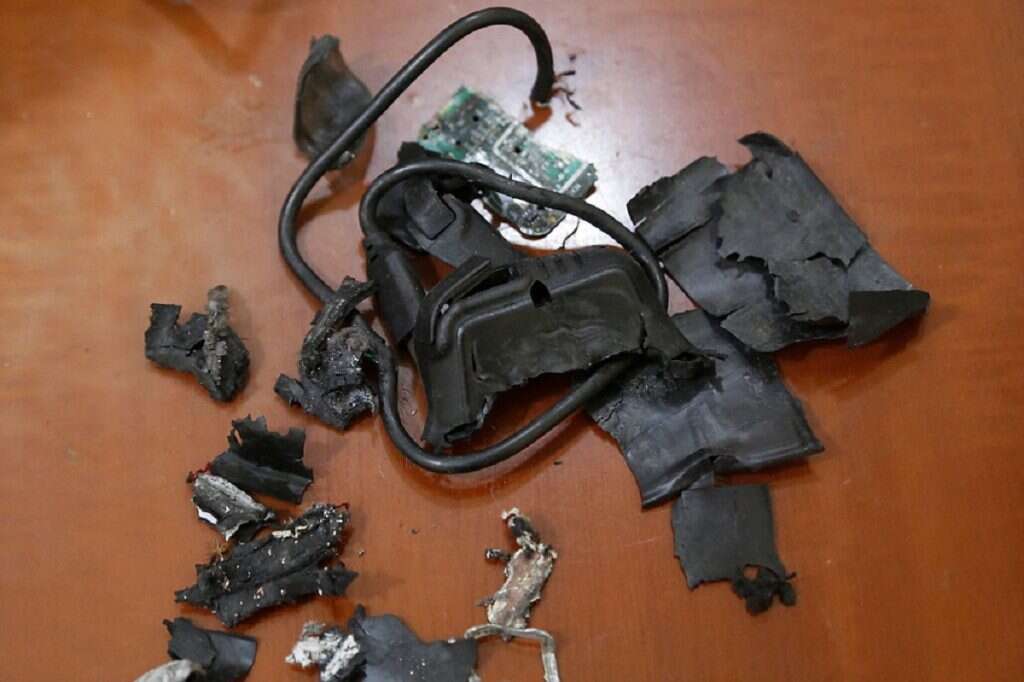
Safa's words make it very clear that through sophisticated warfare, Israel can break the spirit of the bitterest enemy. According to recent reports in the Lebanese media, one of the conditions Israel is placing in negotiations with the State of Lebanon for a withdrawal from the country is that the Lebanese Army must take control of the Ali al-Tahar Ridge area, expel Hezbollah operatives, and destroy the existing facilities there, under American supervision. After this is executed, IDF forces will withdraw from the villages of Zoutar and Kfar Tibnit.
Afterward, similar steps will be taken on a larger scale before any further Israeli withdrawal south of the Litani River. It is evident that Israel's partners in the leadership of the State of Lebanon, who are also interested in the eradication of Hezbollah, will be able to complete the activity against Hezbollah if they act to strengthen the Lebanese Army so that it can serve as a body that enforces the government's decisions against it. Alongside this, the State of Lebanon must act to sever Hezbollah's control over the Shia community in the country, the exclusive power supplier of its military and political strength.
The author is a researcher at the Misgav Institute for National Security and a lecturer in the "Politics of the Middle East" M.A. program at the School of Political Sciences at the University of Haifa.