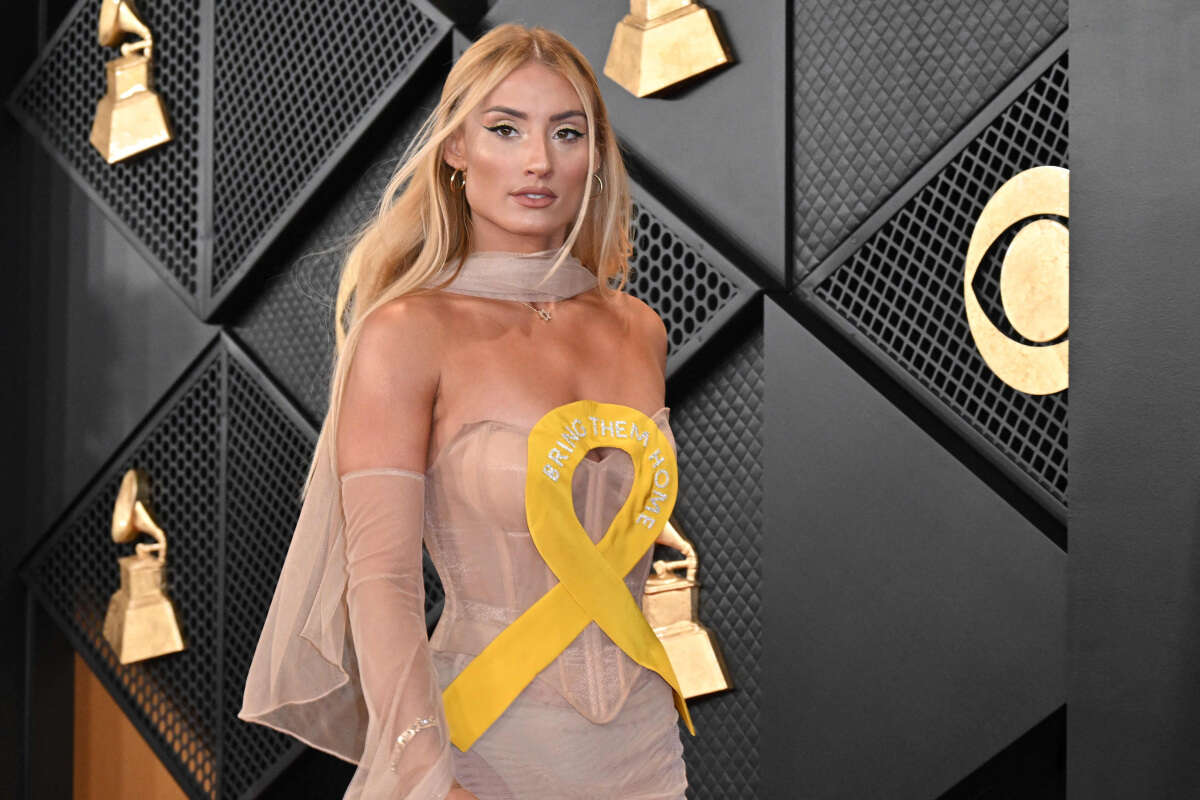
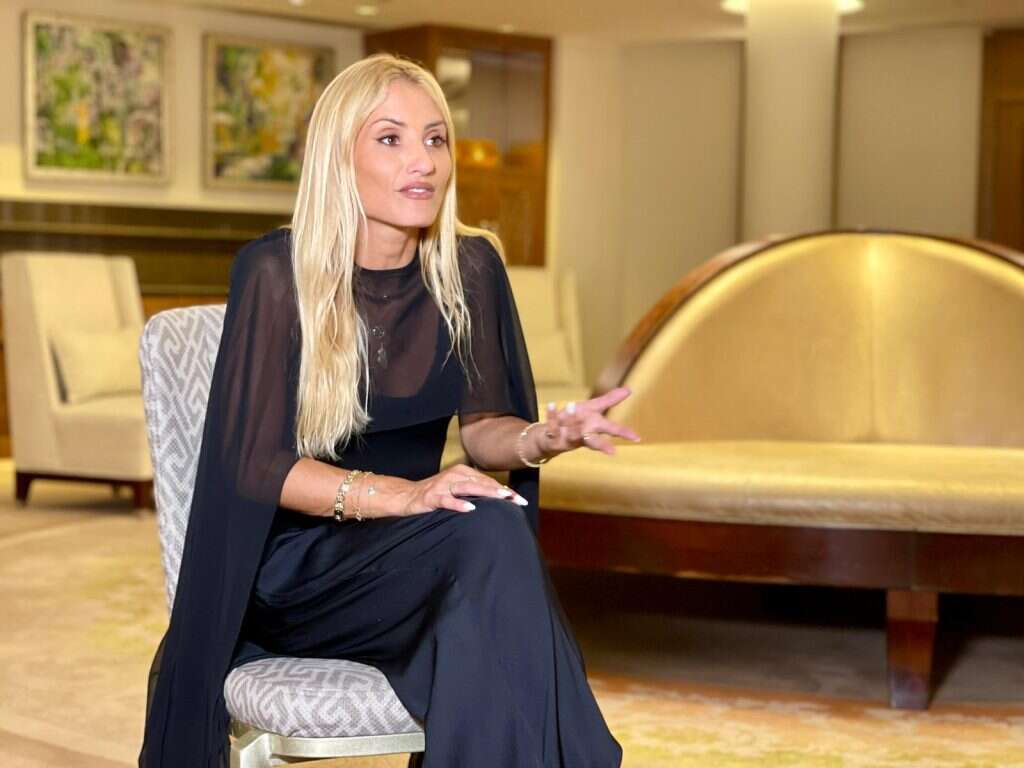
I secured a highly limited slot in the packed schedule of one of the most prominent social media activists, Montana Tucker. The Jewish–American star, who has already managed to visit Israel no fewer than nine times since the outbreak of the war, made the journey all the way from Florida to Israel this time to take part in one of the largest events of the Jewish community in Israel – an honor she was denied last year after the outbreak of Operation Rising Lion – participating in the opening ceremony of the 2026 Maccabiah Games (the Jewish Olympics).
With a whopping 14 million followers across all platforms, Tucker, who is also a singer and dancer, began her professional path on social media through dance videos that attracted a large audience, alongside collaborations with other well-known dancers and creators online. I caught up with her for a conversation just a few hours before she took the stage with her new song, "We're Not Strangers," which she revealed for the first time at the opening ceremony of the games.
"I've performed all around the world before, but to be able to perform for the first time here in Israel at the Maccabiah… I am so excited," Tucker told me in glee.
Indeed, over the past three years, Tucker's connection to Israel has only grown. Despite her substantial success overseas, following the Hamas massacre on October 7, Tucker began creating content to combat anti-Israel propaganda and refute the lies circulating online. Thus, alongside her dance and singing videos, her content took on an additional dimension at a time when a pro-Israel stance was far from popular.
"It's my duty and my responsibility"
"My grandparents are Holocaust survivors, and they always instilled in me the importance of Israel," she explained. "They believe the Holocaust would have never happened if Israel existed back then. I feel it's my duty and my responsibility to do what I'm doing. I never thought twice about if I should do it.
"I feel like I was wise, and I am so blessed to have this following of 14 million followers across platforms, from doing what I love, to be able to now spread the truth and reach millions of people around the world who may have never met a Jew before, or who have definitely never been to Israel before, or hearing the lies and propaganda about Israel and about Jews," she said, elaborating on her endeavor to tackle misconceptions about Israelis.
"I try to share this as much as I can on my social media, but Israelis are the most beautiful, amazing, peaceful people. [People] think Israel is just white Jews who live here – Israel has such an arrangement of races that are here, ethnicities that are here, people that come from all around the world who live here in Israel.
"I talk to strangers all the time here in Israel. Everyone just wants peace. And I think that's something that people don't really know about Israel. I also think people think Israel is just in the middle of the desert, but Israel, with all the technology, and Tel Aviv is so alive – it reminds me so much of Miami. There's nothing like Israel. As I always say, just come and visit, you will see it for yourself."
Q: What do you think is the biggest problem with Israel's messaging or image then?
"I don't think it's Israel's problem. I think it's so easy for lies and propaganda to be spread on social media now. Something could just blow up overnight, and a video could go viral from somebody who's not credible at all. But people believe a video that has 20 million views, right? Especially our younger generation, which is who I try to attract with my messaging. They just care about what's popular, what's trending, what's viral.
"So if they see a video that is viral of some young girl in her bedroom talking about how Israel's an apartheid state, or Israel is killing children, they're going to believe it."
It is for this reason that Tucker said she uses her platform to amplify stories and testimonies from the ground, offering verified content that captures the complex reality in Israel and the aftermath of Oct. 7.
"Everything I do is 100% authentic. I try to share as many personal, real stories as I can. Since the beginning of this war, I've gone into all the communities here in Israel. Anyone who wants to share their story with me, I will put it on my page and share it.
"I even went into Gaza, because I was sick and tired of people saying that Israel is blocking the aid from getting into Gaza. I went into Rafah, and I saw all the aid that the Gaza Humanitarian Foundation was distributing to all the citizens there, and I documented that on my page. So for me, all I do is spread the truth, and I will continue to do that."
Reaching hearts
Q: You also took part in the "Children of October 7th" documentary and helped share some heartbreaking Israeli testimonies from that awful day – yet I feel that Israeli pain and trauma are still often dismissed. Why do you think that is?
"That documentary was so important because it was told directly from the children. It was their authentic, real stories of what happened to them that day. Their testimony. These kids were sharing their testimonies in real time when some of their fathers were still held captive. When we filmed the documentary, there were still signs of life of their fathers.
"Right before we released the documentary, two of the fathers from the documentary were murdered in captivity. I think that documentary really reached the hearts of a lot of people who may not have been touched before. The messages I got from people, they understood it differently, coming from these children.

"I think it humanized Israel and humanized what happened on October 7th in a different way, even though all the footage should have done that already," she explained.
"We don't speak with agitators"
The experience on US college campuses, however, was far less receptive. For the young students who set up encampments to protest against Israel, the testimonies changed nothing. According to Tucker, that was precisely where she encountered the most difficult experience of her journey.
"I went to UCLA, and I took off all my Jewish jewelry. I wanted to interview these students when protests were happening on college campuses in the encampments. When I do these videos in public, I always try to have conversations. It's not to be combative. It's not to attack. It's to hear each other and then see if we can come to some kind of understanding of each other, and they can at least learn something from me or from what I'm doing.
"No one would speak to me. They would say, 'You have to speak to our media liaison,' as they're sitting there, doing graffiti, for days, not showering. The media liaison, who knew who I was, said, 'We don't speak with agitators.' Then they kept following me all around the campus, which is public property, and they wouldn't let me go anywhere near them. And they started building a human barricade. I have this all on film – they started blocking me, and if I had tried to walk, they would have pushed me.
"That moment was, I don't know, I feel like I've been really strong, but for some reason I broke down really bad there," she said candidly. "You know, I heard from my grandparents about what happened before the Holocaust, about how they had friends that they were friends with their whole lives that were not Jewish. And then all of a sudden, all the announcements came out about how Jews were the reason for the economy collapsing, or Jews were the reason for this or for that.
View this post on Instagram
"And then these kids would start spitting on my grandpa. They said, 'You dirty Jew,' and kicking him, and then that was what started happening with these students there. So, I think that was a really big moment for me. But at the end of the day, it made me go even harder," she emphasized.
"I always will be pro-Israel"
She summarized her message unequivocally, stating her clear position: "Yes, of course I'm pro-Israel. I'm absolutely pro-Israel. Always will be pro-Israel. But my goal is to unite everybody. And if you don't see that, that's up to you, unfortunately. But for me, I will always try to bring everybody together as a proud Jewish woman, as a granddaughter of Holocaust survivors, as someone who is in love with Israel," she stated.
Israel has clearly rubbed off on her. Like a true Israeli, she says she "can't go anywhere without my schnitzel," has started taking Hebrew lessons, and now calls aliyah her "ultimate dream."
"But I believe there's just so much work to be done around the world right now," she explained, adding, "so I will continue to do that until I feel like it is time for me to be here." And with that statement, we conclude the interview. "Until next time," we say.