Israel's largest-ever gas deal has taken a significant step forward: NewMed Energy, controlled by Yitzhak Tshuva's Delek Group and Idan Wells, announced that the undersea pipeline between Ashdod and Ashkelon has been completed, a project that will make it possible to increase the flow of natural gas from Israel to Egypt.
The project, carried out by Israel Natural Gas Lines, will increase by about 2 billion cubic meters a year the volume of gas that can be transported through the EMG pipeline, which connects Ashkelon to el-Arish in Egypt.
Following the completion of the work, transmission capacity in the pipeline will increase from about 6.5 billion cubic meters a year to about 8.5 billion cubic meters. Of that amount, the Leviathan gas field's export capacity is expected to stand at about 6.5 billion cubic meters a year, in addition to about 2 billion cubic meters currently exported to Egypt via the export pipeline to Jordan and northern Egypt.
This marks the first stage in implementing the export agreement with Egypt signed in August, which is considered Israel's largest energy export deal, worth about $35 billion.
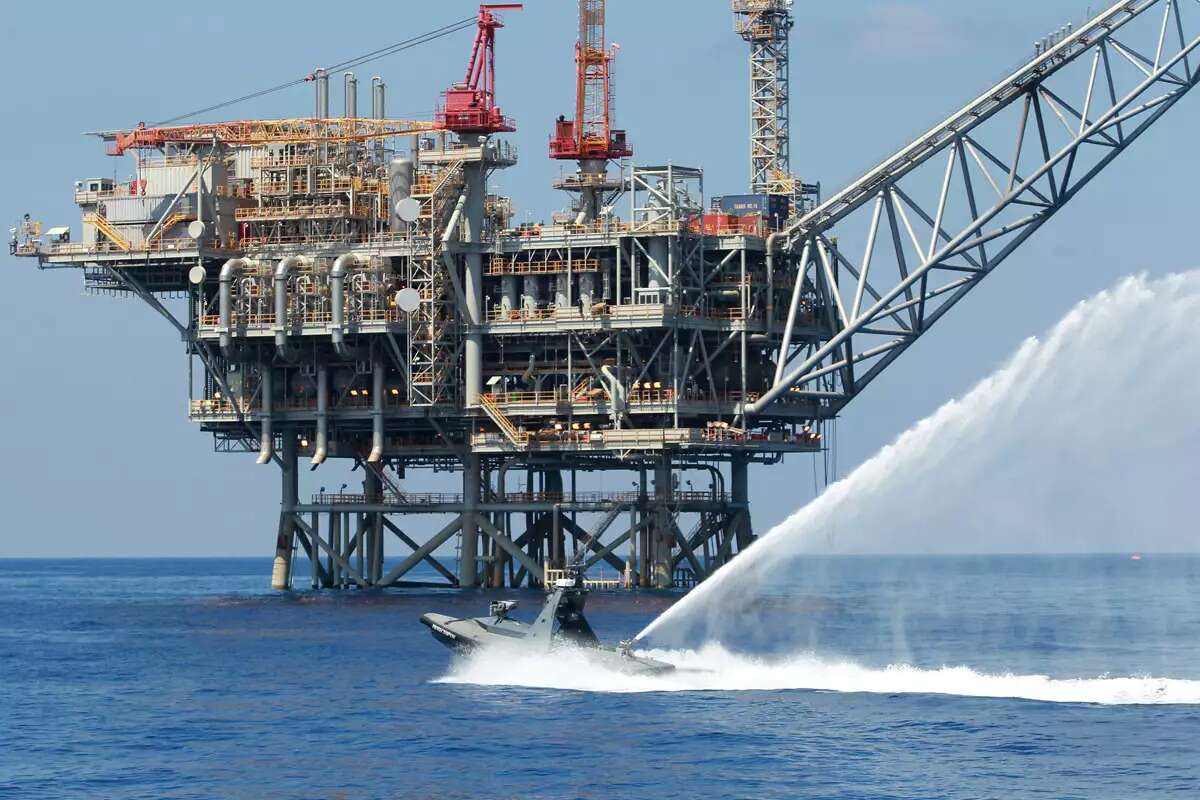
The first stage included two major projects: connecting a third pipeline from the Leviathan reservoir to the production platform, which increased the field's production capacity to about 15.8 billion cubic meters a year, and expanding the transmission system between Ashdod and Ashkelon, which has now been completed.
Following the fulfillment of the required conditions, the amount of gas the Leviathan partners are committed to supplying Egypt is expected to increase from about 4.7 billion cubic meters a year to about 6.7 billion cubic meters, an increase of about 40% compared with the amount currently exported.
"The completion of the Ashdod-Ashkelon transmission line project allows the largest export deal in the country's history to get underway," NewMed Energy CEO Yossi Abu said. "This opens up an important bottleneck in transmission to Egypt, enabling us to significantly increase volumes and save on transmission costs."
According to Abu, increasing production from the Leviathan reservoir and advancing the next expansion phase will make it possible to meet growing demand in Israel and in export markets.