While the Iranian regime continues launching drones and missiles at Arab countries, Gulf states view the attacks as a clear sign of weakness. At the same time, officials in the region believe a more substantial coalition must be established to counter the threats.
A senior Saudi commentator told Israel Hayom that "following Iran's latest attacks in the Gulf and Jordan, Tehran appears to be playing the last cards it has left, while threatening the Strait of Hormuz and disrupting maritime security."
Nevertheless, the commentator said, "Iran's regional tools are no longer expanding its power, but rather increasing its losses. Iran is playing exactly the game its adversaries want it to play. This behavior is broadening the coalition against it."
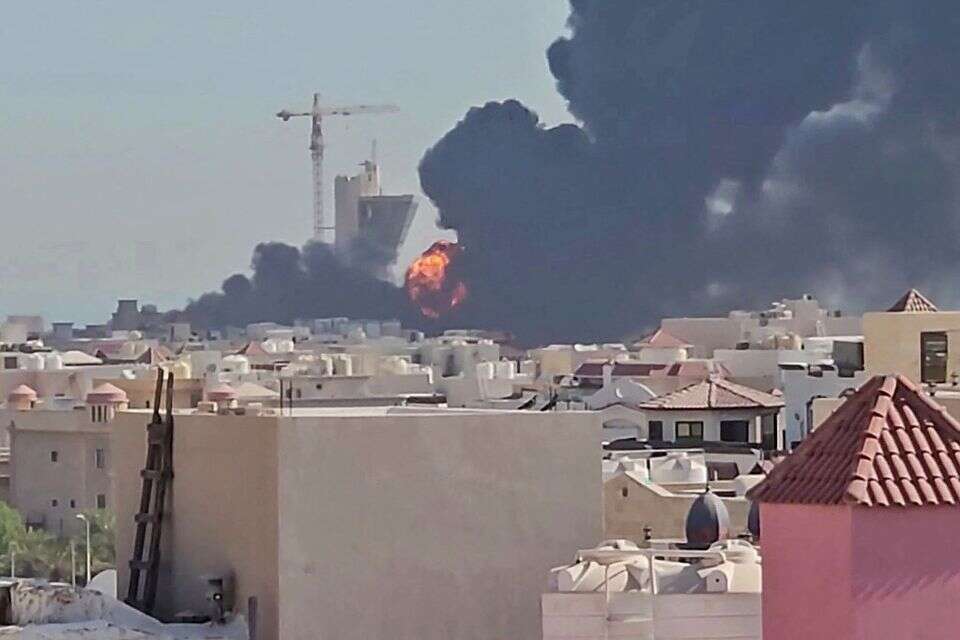
He added that "continued attacks across the Gulf against its neighbors will cost Iran the last mediators it still has, such as Qatar and Oman, and drag it into a broader confrontation with the international community, including its closest allies."
"Iran can expand the conflict, but it cannot control who ultimately joins it," he said. "The era in which it blackmails the world through instability in the Middle East will come to an end." Despite this cautious optimism, the remarks come as the Houthis, Tehran's allies in Yemen, escalate their threats against Saudi Arabia and raise their demands.
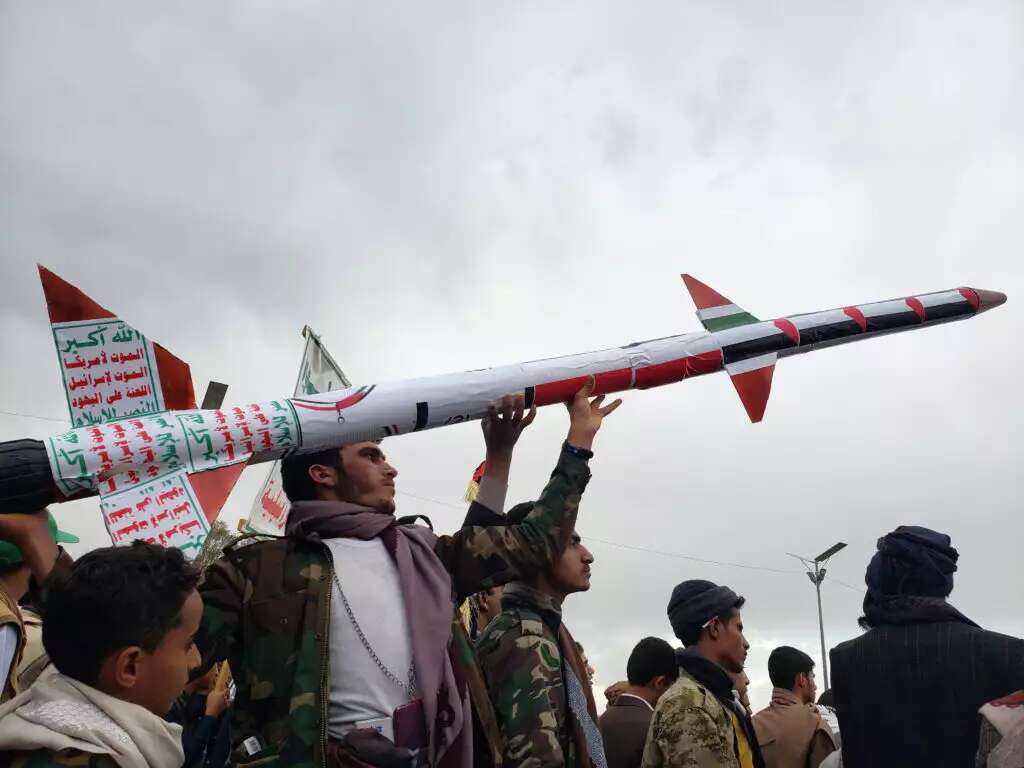
In recent days, the terrorist organization has gone beyond approving an air route between Tehran and Sanaa. It has also demanded that Saudi Arabia stop supporting the authorities aligned with Riyadh in southern Yemen, cease interfering in Yemeni affairs and pay compensation for damages.
At the same time, the Houthis have threatened to target aircraft in Saudi airspace and attack energy infrastructure. Officials in Riyadh have also warned that the organization could disrupt shipping through the Bab el-Mandeb Strait and the Red Sea.
Other figures in the Gulf increasingly recognize that the regional response to the Iranian axis' aggression must be improved. "The Gulf Cooperation Council was established to strengthen the security and stability of its member states," Anwar Gargash, diplomatic adviser to United Arab Emirates President Sheikh Mohamed bin Zayed Al Nahyan, said recently.
"Today, expanding the council's collective cooperation has become essential. The existing tools, modest as they may be, should serve as an incentive to strengthen the council's role and improve its effectiveness regarding our shared security. The status quo must not be perpetuated."
There is also growing dissatisfaction with the West across the region. "If NATO does not act, the US must build a new coalition with regional partners to confront the Iranian regime," prominent Emirati commentator Amjad Taha said.
"When the Libyans rose up, NATO intervened, attacked Muammar Gaddafi's forces and helped topple his regime. But when the Iranian regime brutally suppressed our people, attacked countries across the region and threatened shipping through the Strait of Hormuz, NATO stood on the sidelines."
Meanwhile, Jordanian officials expressed outrage over Iranian missile launches toward the kingdom this week. "Extremists are leading Iran today, and they have no good intentions toward Jordan, despite its calls for calm and an end to the regional escalation," former Jordanian information minister Muhannad Mubaidin told Saudi media.

Faisal al-Fayez, speaker of Jordan's Senate, the upper house of parliament, added that "Jordan will not allow its territory and airspace to become an arena for regional conflicts." Iran's chargé d'affaires in Amman was also subsequently summoned for a reprimand at the Jordanian Foreign Ministry.
The Iranian regime has increasingly focused its attention on Jordan following a buildup of US forces in the kingdom. According to a report in The New York Times, Jordan's strategic importance has grown after the US transferred some of its forces there from Bahrain, the United Arab Emirates and Qatar.
In practice, Tehran is applying pressure in an effort to force US troops to withdraw from Jordan as well. From Tehran's perspective, the cycle of escalation will continue to widen as US attacks against Iran intensify. After Jordan, the next stage of Iranian escalation could be an attack against Israel.