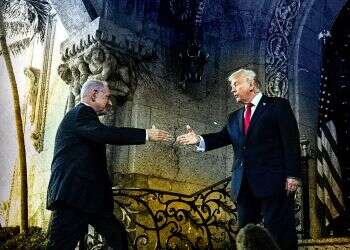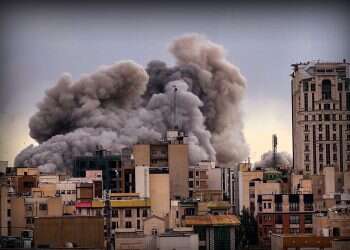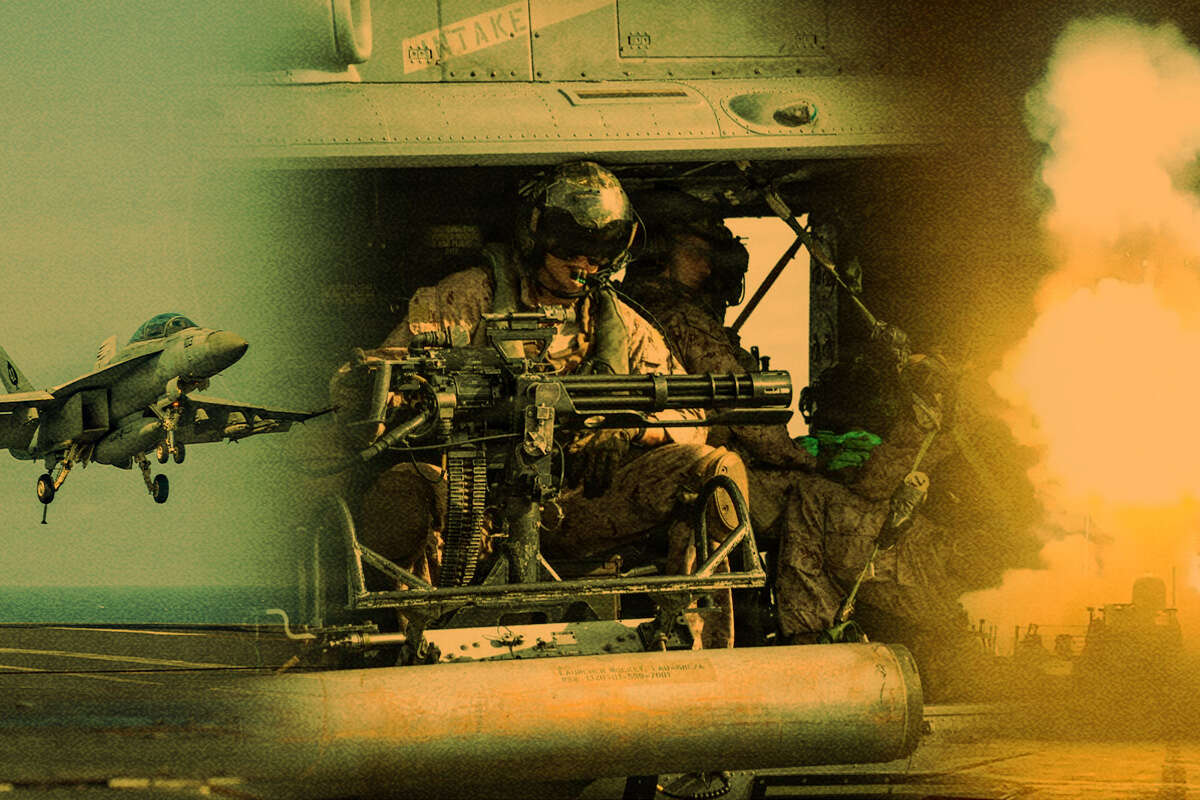
US War Secretary Pete Hegseth's meeting with Prime Minister Benjamin Netanyahu on Monday offers new insight into the unusually high level of military alert in recent days. Despite US President Donald Trump's statements that he does not intend to strike Iran before the elections, Netanyahu has been holding daily discussions with senior administration officials on the issue.
Diplomatic and security officials point to two main reasons for the heightened alert. The first, and most urgent, is intelligence indicating increased activity at four major Iranian nuclear sites.
According to the intelligence, Iran is working to move its military nuclear facilities and centrifuges deeper underground. Tehran possesses approximately 450 kilograms (992 pounds) of uranium enriched to a level approaching weapons grade. Israel and the US share concerns that Iran's severe economic crisis, which has left the authorities struggling even to pay salaries, is pushing the leadership of the Islamic Revolutionary Guard Corps to accelerate development of a nuclear bomb as a "doomsday weapon" that would ensure the regime's survival and bring the war to an end.
Signs that military action may be approaching are mounting on both sides. Trump addressed the possibility over the past week, while details of preparations for the potential use of the Massive Ordnance Air Blast (MOAB), the largest conventional bomb in the US arsenal, have also been leaked. At the same time, Netanyahu recently identified preventing Iran from acquiring nuclear weapons as a top priority in his national security doctrine.

The window of opportunity before the elections
Unlike Israel's 1981 strike on Iraq's Osirak nuclear reactor, Iran's nuclear program is now far more advanced, and Israel is already engaged in a war against Tehran, with the US standing alongside it.
A strike in the coming days is expected only if military and intelligence assessments determine that waiting any longer would leave the facilities completely protected from attack or, worse, allow Iran to complete a nuclear bomb ready for use.
In a reversal of previous dynamics, officials within the US administration are now the ones pushing for an attack as soon as possible. Israel, meanwhile, is taking a somewhat more cautious approach, arguing that it would be preferable to wait for conditions to develop further under mounting economic pressure.
Nevertheless, Israeli officials have made clear that if developments in Iran's nuclear program make military action necessary, Israel will participate fully in the strike.
Cooperation in the Gulf
The second issue at the center of the meeting concerns Israeli assistance to Saudi Arabia in its war against the Houthi rebels in Yemen.
At the Saudis' request, Israel is providing intelligence assistance to the Saudi military through US Central Command (CENTCOM), which oversees American military operations across the Middle East.
Officials say these increasingly advanced forms of cooperation could also have significant implications for Saudi Arabia's potential future accession to the Abraham Accords, the US-brokered normalization agreements between Israel and several Arab countries launched in 2020.