I'll never forget the day, November 22, 2012, when I received an urgent phone call from the Prime Minister's Office informing me that the Palestinian Authority President Mahmoud Abbas was about to ask the International Court of Justice to sanction Israel for illegally occupying Judea and Samaria. "Israel's very existence is endangered," I was told and then instructed, as Israel's ambassador in Washington, to seek help from our best friend in the Senate. I was instructed to immediately call Lindsey Graham.
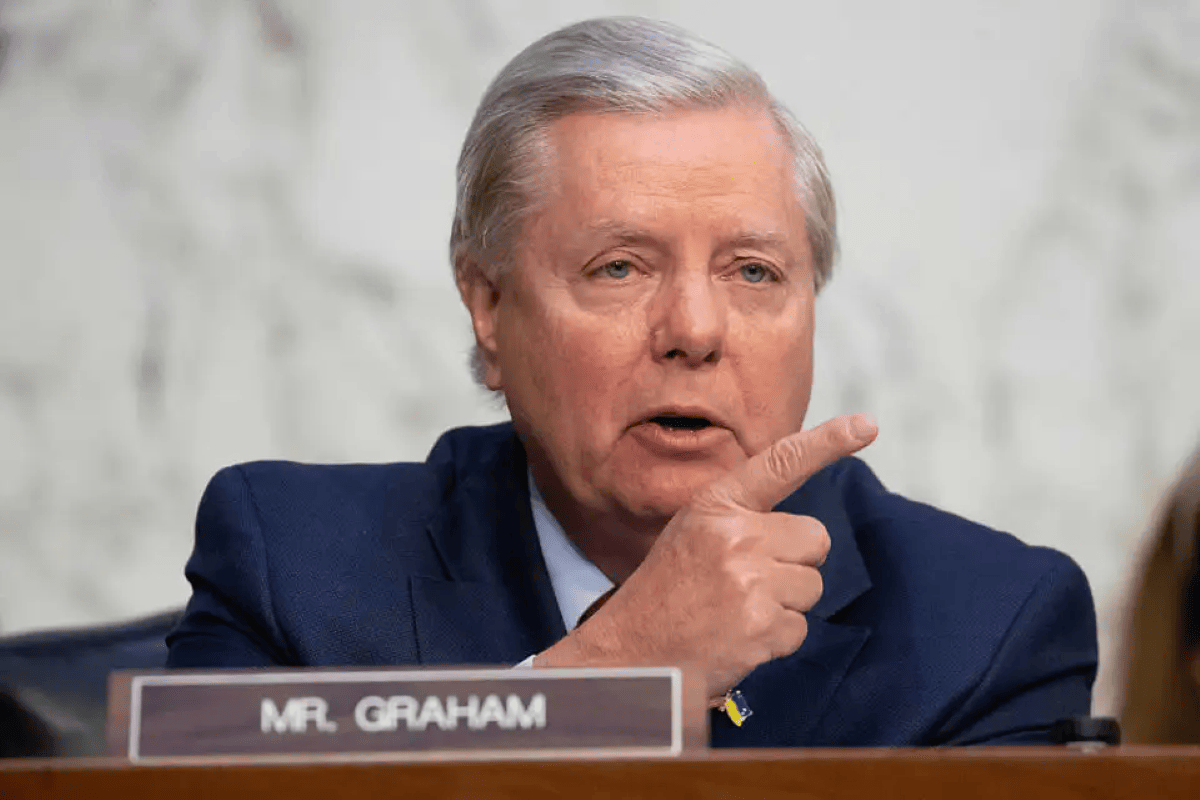
Along with Senators Joe Lieberman and John McCain, Graham was the third of the famous "Three Amigos" who basically ran their own foreign ministry, traveling the globe together and meeting world leaders. Though considered Conservatives, they would today be labeled Centrists, supporting an activist American foreign policy and standing firmly behind Israel. Lieberman, of course, was Jewish, and McCain had a longstanding relationship with the American Jewish community, but Lindsay came from South Carolina, a state with relatively few Jews. Nor was he an Evangelical. Rather, his love of Israel originated in his deep sense of justice, his realistic assessment of America's security needs, and his profound respect for the creativity and resilience of Israel's people.
This does not mean that Lindsay was uncritical. A relentless promoter of peace between Israel and Saudi Arabia, he chastised the current Israeli government's refusal to meet Riyadh's largely rhetorical request to discuss a "pathway" to Palestinian statehood." A pathway, he stressed, was a thing with gravel and needn't lead to a Palestinian state. It would, however, pave the way to peace with Riyadh.
Yet whatever differences he had with our government, Lindsey was always there when Israel needed him. He was there in 2012 when, after I called him with news of Mahmoud Abbas' plan, he quickly rallied Congressional support against the measure and successfully pressured the Palestinian president to back down. The senator was there again in recent years when I brought two delegations of displaced Israelis from the north to Washington. He met them both and gave them his full understanding and support.
John McCain died in 2018, and Joe Lieberman in 2024, and now Lindsey Graham, too, is gone. Their passing dealt a severe blow to Israel's status in Congress, which has historically been the principal source of our support in Washington. Presidents come and go, but Senators and Congress Members can remain in office for many years. In contrast to the past, when, if confronted by a problematic president, Israel could always count on Congress. Today, we have no one to complain to. We have no recourse. Should the need arise, the Republicans won't defend us from Trump, and the Democrats won't defend us at all.
The dire situation may not be permanent and may, in time, change, but for the foreseeable future, Israel will have to work hard to regain some measure of Congressional backing. Last week, I met with Rahm Emanuel – I've known him for many years – not to debate him about his immensely harsh criticism of Israel but to ask him, simply, "Is there a way back?" His answer was worth heeding: whether in the Syrian, Lebanese, or Palestinian front, Israel must show some kind of movement. "The image of Israel unwilling to take even symbolic steps is deeply hurting Israel's standing on Capitol Hill," he said. Lindsay Graham would have fondly agreed and advised us, as a true friend, to discuss that pathway.