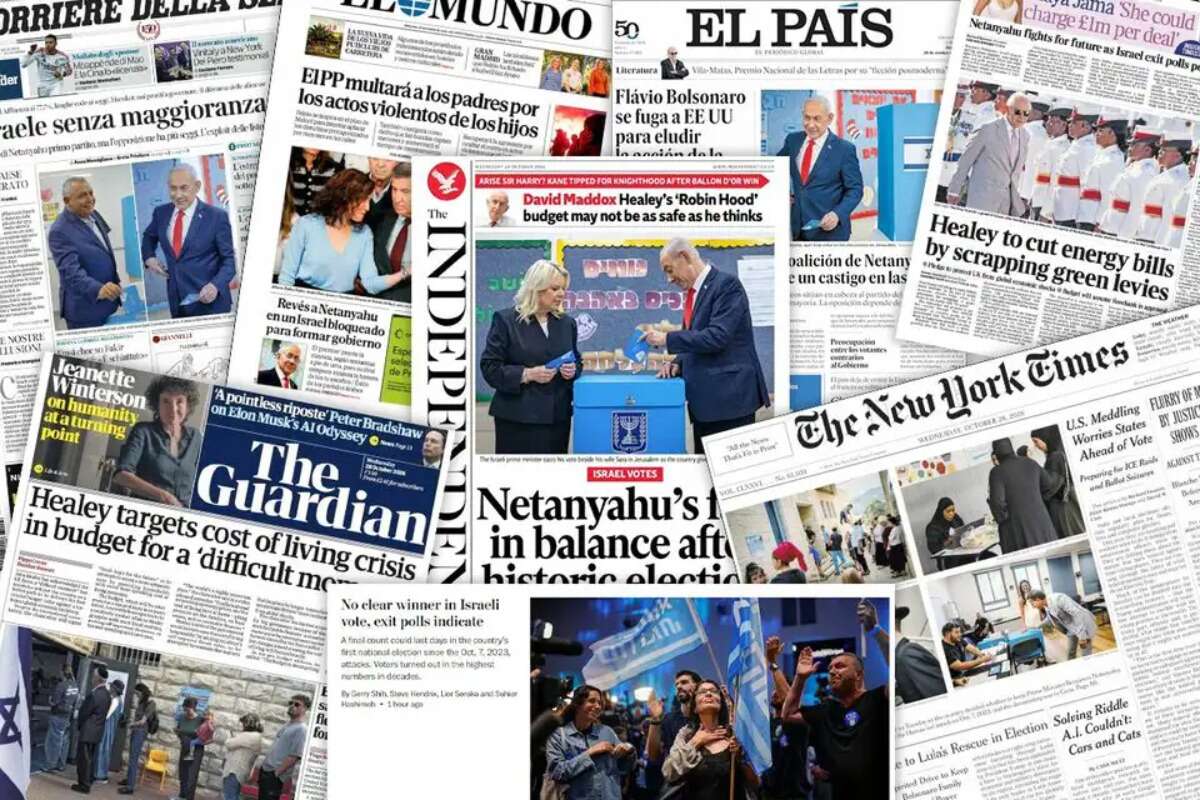
Leading global media outlets devoted extensive attention Wednesday morning to the election exit polls in Israel, pointing to a complex political picture without a clear outcome. According to reports, Likud is emerging as the largest single party, but the anti-Netanyahu bloc, led by Gadi Eisenkot, holds an advantage in the total number of mandates.
At CNN, coverage summarized the landscape under a headline stating there was no clear winner in the Israeli elections, according to exit polls. The network added that Prime Minister Benjamin Netanyahu and his primary rival are not expected to achieve a decisive victory, leaving the question of government formation open.
The British BBC also highlighted the gap between the size of the largest individual party and the broader bloc picture, noting that the Eisenkot bloc holds a slight lead. The network emphasized that this represents the first election campaign in Israel since the Hamas terror attack on October 7, 2023.
Video: Avi Cohen
"Most Israelis voted against the coalition."
The British newspaper The Guardian similarly focused on the divide between Likud's results and the combined strength of the bloc opposing Netanyahu. According to the publication, major Israeli television channels estimate that a majority of Israelis voted against the coalition, even as the prime minister's party appears set to remain the largest single faction.
At the same time, The Guardian noted an exceptionally high turnout rate, which could signal widespread public mobilization during the election campaign.
According to CNN, overall voter turnout reached at least 77.7% – the highest figure recorded since 1999. The increase was particularly pronounced within Israel's Arab society, where voter turnout has historically been lower compared to Jewish society. Arab political parties reported that turnout among Arab voters surpassed 75%, and they are projected to record their most significant electoral achievement in history.
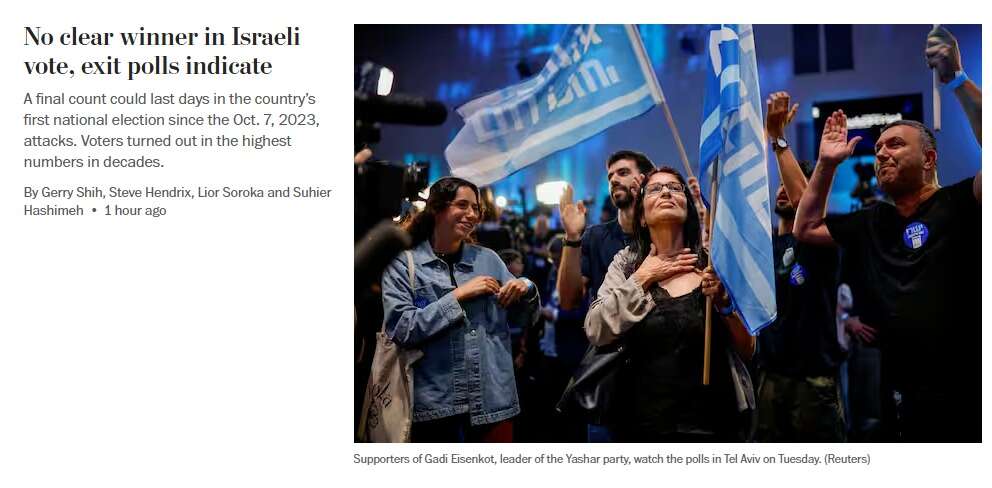
The American newspaper The Washington Post also addressed the rise of Arab parties and their potential significance in negotiations to form a government. According to the paper, the results could launch a period of intense political maneuvering over coalition building, during which Arab parties in Israel may play a decisive role in reaching the required 61-seat majority in the Knesset.
The expansion of Arab party representation could broaden options for the bloc opposing Netanyahu, though their practical influence will depend on final bloc compositions, party willingness to cooperate, and the ability to reach political agreements.
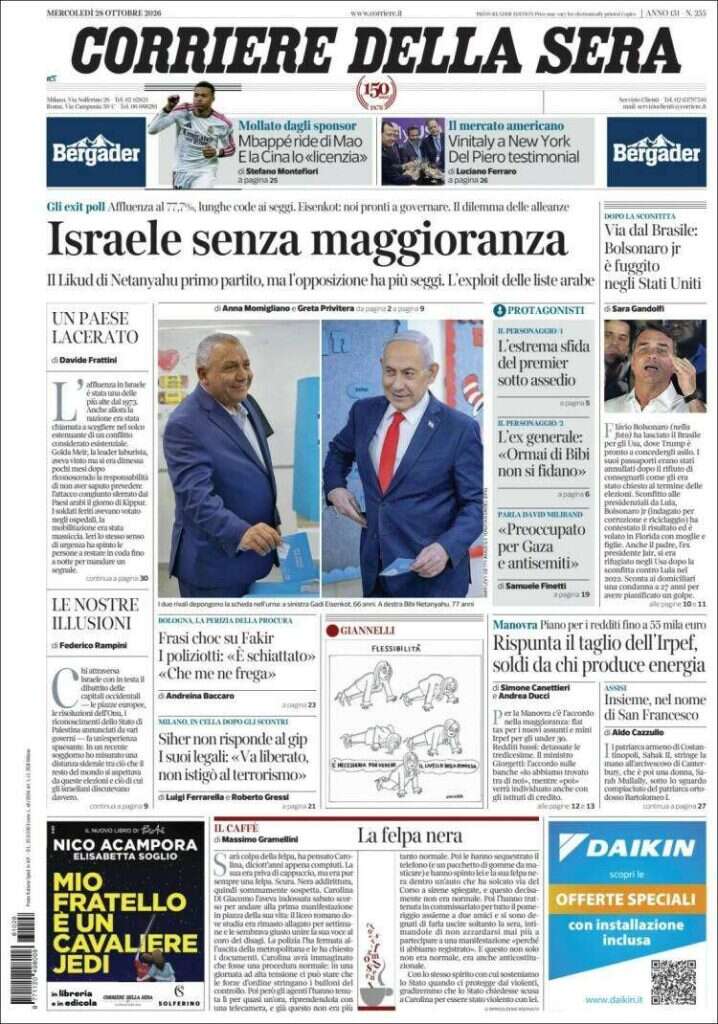
Meanwhile, the Spanish newspaper El País presented the exit poll results as a political blow to the Netanyahu coalition. The paper stated that the coalition suffered a setback at the ballot box, noting that while the prime minister's party stands at the top, it falls short of securing a majority. The report added that the opposition remains reliant on Arab political forces to construct a government.
The Italian newspaper Corriere della Sera likewise emphasized the disparity between Likud's success as an individual party and the broader bloc total, writing that Netanyahu's Likud is the top party, but the opposition controls more seats.
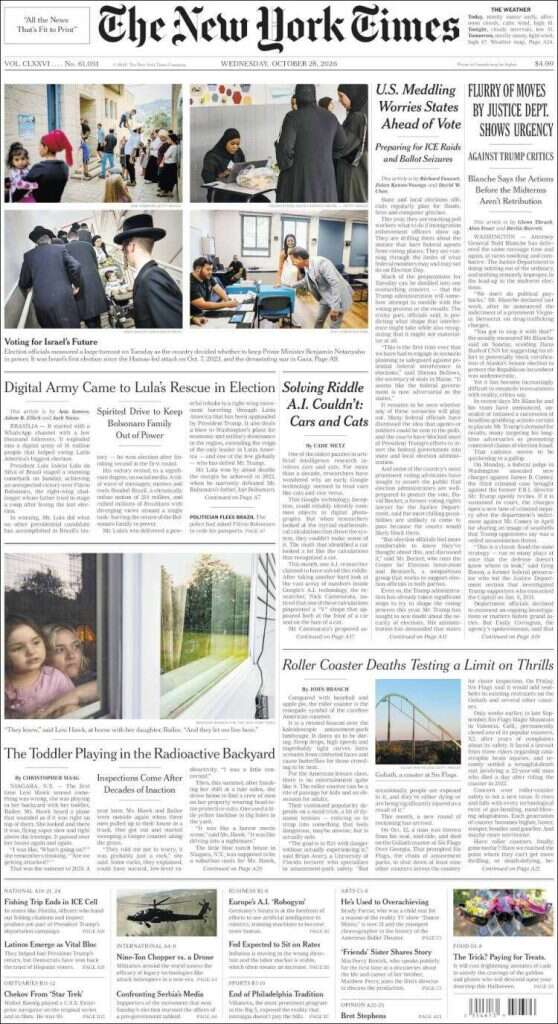
The New York Times chose to focus on the economic ramifications of the election. The publication cited recent economic statements by Netanyahu, writing that Israel's economic future hangs in the balance after the prime minister delivered a particularly grim forecast. In addition, the newspaper underscored potential implications for Palestinians, noting that the political resolution in Israel could carry major consequences for their daily lives – even though they do not vote in the election.
Global headlines continue to ponder who will lead the Israeli state following a heated and historic election campaign.