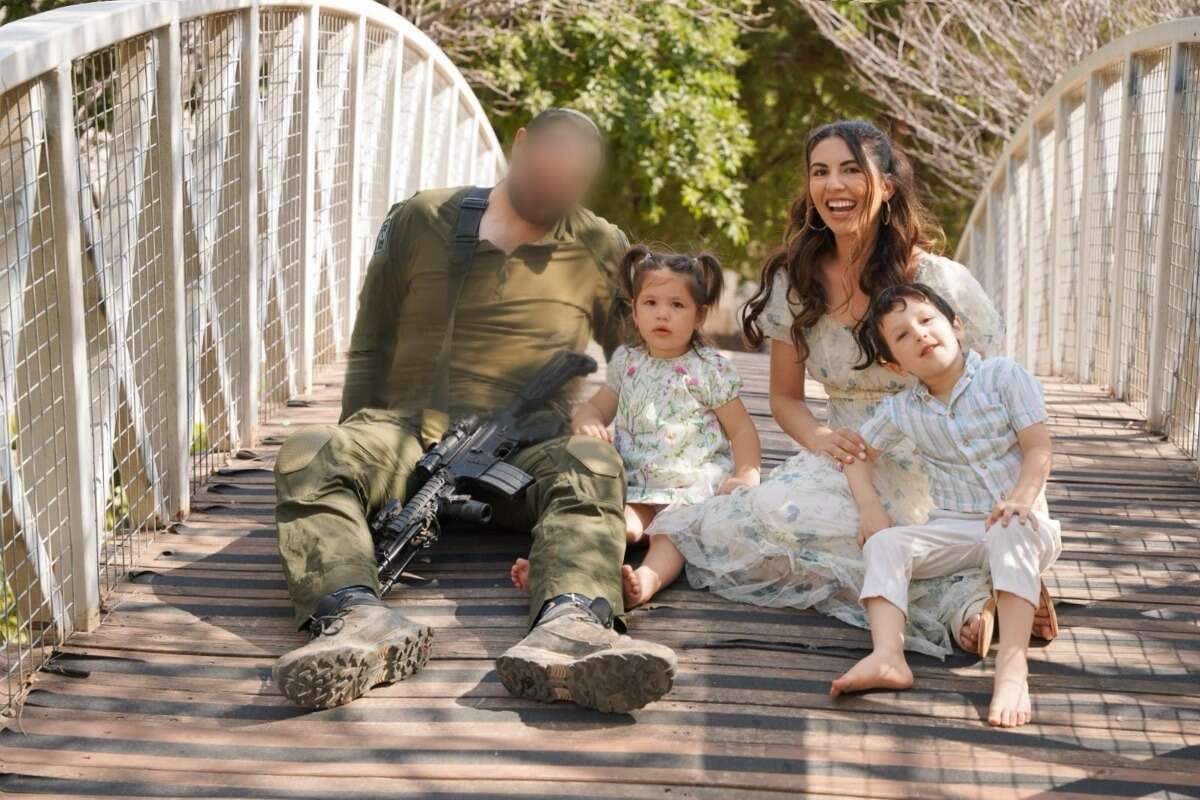
On Friday nights, when her husband Dovi is away on miluim (reserve duty), Esther K. tries to sing Shalom Aleichem and Eishet Chayil with a smile. She holds back her tears so the kids will feel like everything is normal. And then comes Kiddush. "You find yourself trembling, struggling to get the words out during Kiddush because it shouldn't be you standing there saying it," she shares. On another Shabbat, she tried spending the evening with friends to distract herself and the kids. Her son spent the entire night inconsolable, wailing because he missed his father.
It is for families like Esther's that "Olim B'Miluim" was created: a new program by the Orthodox Union (OU) in Israel geared toward English-speaking olim (new immigrants) serving in the reserves and their families. The initiative builds dedicated communities where reservists and their spouses can talk in their native language about what they've been through in service and at home, while receiving ongoing support even in the stretches between rounds. Special focus is given to women who made aliyah themselves and are suddenly holding down the household alone in a language, culture, and system they are still learning to navigate.
For Esther, who made aliyah from California and lives in Modi'in, this reality became everyday life on October 7. That morning, she and Dovi – who made aliyah from South Africa and served as a lone soldier – were visiting family in South Africa with their young son. They rushed back to Israel on a rescue flight; Dovi dropped Esther and their toddler off at home and headed straight up north to join his unit. Just a few days later, Esther found out she was pregnant with their second child, just as her husband began a first round of miluim that lasted nearly five months. "I don't have a single relative in Israel," she says. "There is a fundamental difference between having family here who get what life is like and not having family here."
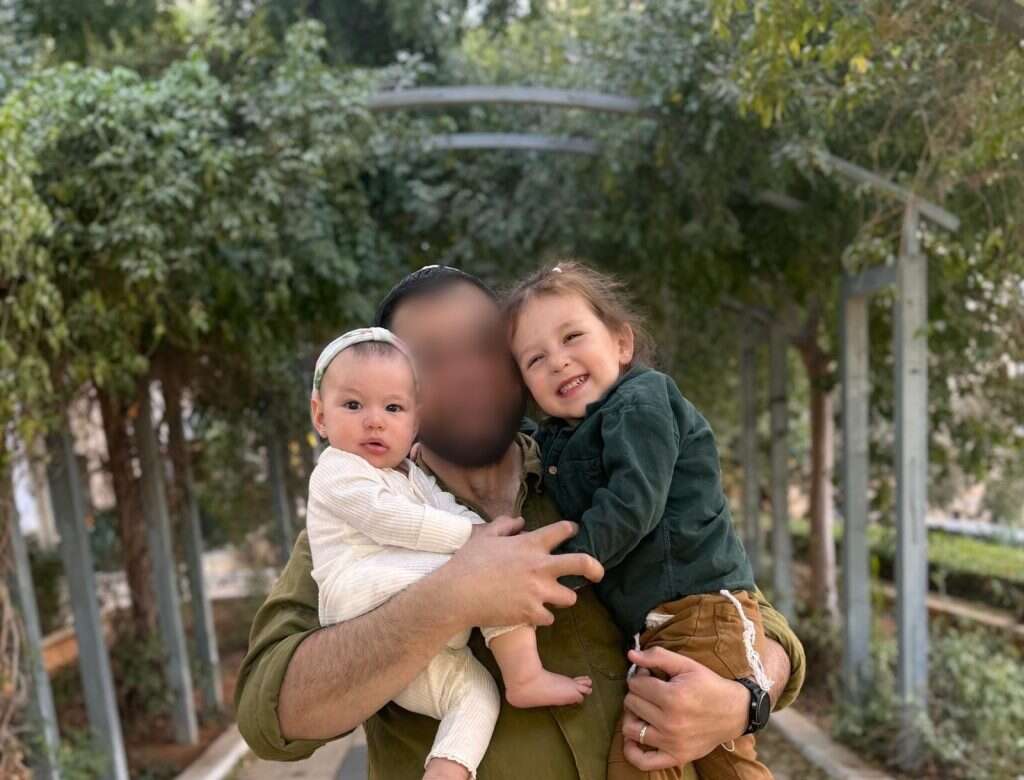
According to Esther, the challenge doesn't end when a round of duty is over: "Even when my husband is home, we're constantly living under the umbrella of the next possible call-up. We've never had more than 24 hours' notice before he's been called up, so there's always this feeling of walking on eggshells, waiting for the ball to drop. You're never quite able to fully relax or make plans."
In day-to-day life, it's the small things that pile up: "It's not necessarily the big things that break you, especially as an olah. It's the little things that bring out what's really going on underneath that become the straw that breaks the camel's back. It's the secretary who yells at you in Hebrew when you're just trying to understand what you're supposed to do. It's the appointment you can't properly explain yourself at, or the white-shirt day at Gan you missed because you couldn't keep up with the Hebrew WhatsApp group chat. It's the feeling that everyone else seems to know how things work, and you're constantly playing catch-up."
The person behind the initiative knows this burnout firsthand. Eitan Phillips made aliyah at 18 to study at Yeshivat HaKotel in Jerusalem and served in the Armored Corps through the Hesder program. "When I made aliyah, I thought about sitting on the beach, learning Torah – all the fun stuff," he recalls. After his mandatory service, he pictured doing a few days of miluim here and there. Instead, in December 2023, he entered Khan Younis, where he lost a fellow soldier and friend. For five straight weeks, he didn't see his family, came home for just 24 hours, and went right back into Gaza for another month.
Between rounds, Phillips returned to his work as a JLIC campus rabbi at Tel Aviv University, all while racking up more than 400 days of miluim since the war began. After one grueling deployment, as his kids struggled more and more each time he had to leave again, he realized his own family was hitting a brick wall.
"I was already completely burnt out, and my family was completely burnt out," he says. He pitched an idea to JLIC: organize a retreat for olim reservists and their spouses. Around 100 people showed up, and during the event, soldiers approached him and shared: "This is the first time I've actually had the chance to talk like this in English, with people who walked the exact same path I did."
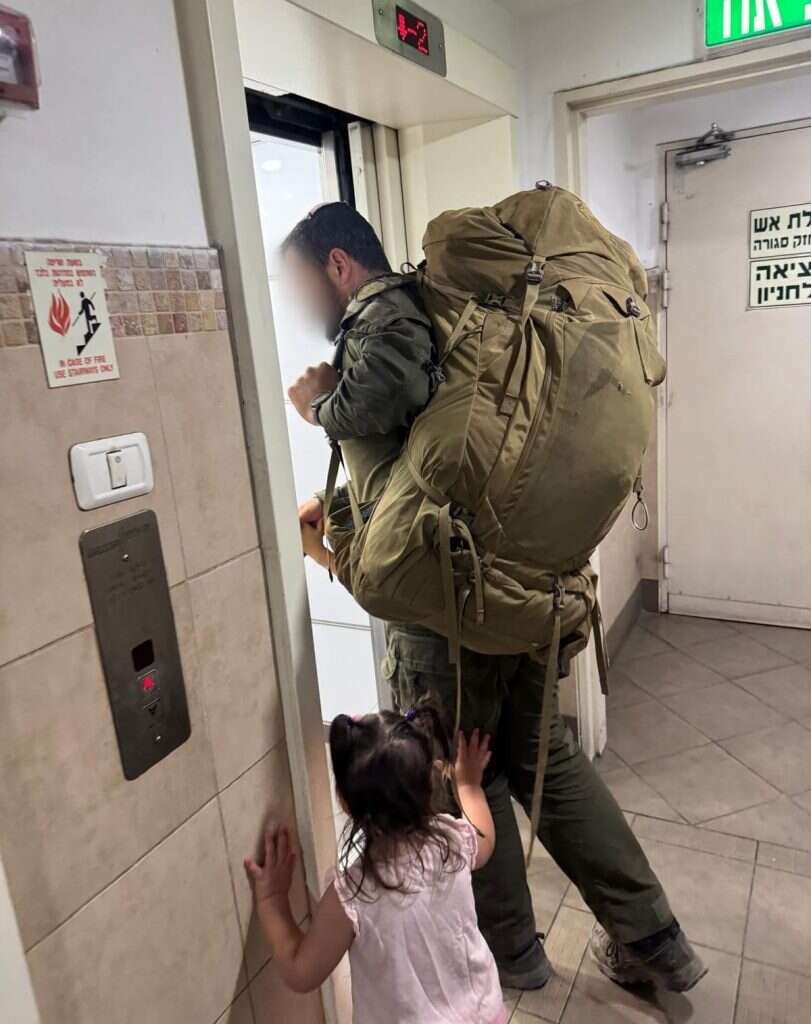
In a survey Eitan conducted recently among 135 olim reservists, many told him they felt invisible, noting that even the communities they left behind abroad had largely moved on. He wanted to reach those who have lived in Israel for years yet still have no grandparents nearby to pick up the kids when a Tzav 8 (emergency call-up) arrives. Recognizing the needs of a community that had given so much to the Jewish people, the OU made a strategic investment in developing a program dedicated to supporting them.
Esther K. experienced the impact of this initiative directly on the ground. She connected with Rabbi Phillips after organizing a community event at her shul to mark October 7, where families spoke openly about what life actually looks like between reserve rounds.
"Honestly, hearing about the initiative was in itself a sigh of relief," she says. "There's something incredibly powerful about being in a room where you don't have to translate yourself, literally or figuratively. When someone helps hold you up, you have more capacity to hold your children, hold your home, and take care of yourself, too. I also think there's something important about the peace of mind it gives your husband. Knowing that his wife isn't completely alone, that there are people looking out for her and somewhere she can turn, takes away at least a little of that worry."
Esti Moskovitz-Kalman, director of Anglo Engagement and Programming for the OU in Israel said: "Over the past year, the OU has made a deliberate investment in launching two new programs specifically designed for anglo olim serving in the IDF –'Olim B'Miluim' for reserves and 'Frontline Support' for active service. This investment reflects the organizational commitment to understanding the unique challenges and needs of olim soldiers and identifying where those needs intersect with the OU's mission, values, and strengths. We are proud to be developing initiatives that bring these two together, creating meaningful support and service for anglo soldiers as they navigate their service and their lives in Israel."
Rabbi Avi Berman, executive director of OU Israel shared: "OU Israel's work focuses on two central core pillars: English-speaking aliyah absorption and advancing at-risk youth. In the field of aliyah absorption, we understand well that aliyah comes from every walk of life, at every age, and in every style. Therefore, our outlook is to try to ensure that no population group arrives in Israel and falls through the cracks without a response tailored to its needs. This is doubly true when it comes to new olim who left everything behind out of Zionism, enlisted in the IDF, and are now on the front lines in miluim, while their families on the home front did not grow up in such a reality, do not know how to cope with it, and have no supportive backing of family and community to assist in a time of need.
"Our goal in the 'Olim B'Miluim' program, as in our range of programs for olim, is to empower every single oleh and olah, and to ensure that every such family can succeed in the State of Israel in the best possible way – with the right spirit, the right atmosphere, and the exact community embrace tailored to its needs."