Israel Hayom is a media organization founded on the belief that the Israeli public deserves better journalism—more balanced, more accurate, and more reliable. Journalism that speaks rather than shouts. Journalism that is trustworthy, objective, and matter-of-fact. A different kind of journalism, offered free of charge.
The first print edition was published on July 30, 2007, and in 2010 Israel Hayom became the Israeli newspaper with the highest weekday readership. The newspaper’s publisher is Dr. Miriam Adelson. Its Editor-in-Chief is Omar Lachmanovitch, and its founding editor is Amos Regev.
Israel Hayom’s Hebrew and English websites, as well as its Android and iOS applications, provide around-the-clock news coverage, exclusive content, breaking news and updates, analysis and commentary, video, podcasts, and live broadcasts.
The digital platforms of Israel Hayom include news and opinion channels covering culture and entertainment, lifestyle, technology, sports, business and consumer affairs, health, military affairs, food, Judaism, tourism, and automobiles.
In 2021, a new Hebrew-language website and mobile application were launched to provide users with a fast, up-to-date, secure, and convenient experience.
The content of the newspaper’s print edition is also available online through a daily digital edition and can be received via newsletter.
“The Israel Hayom Clique,” the publication’s exclusive benefits club, offers website users discounts and special promotions on products and services.
Israel Hayom welcomes feedback, criticism, and suggestions for improvement from its readers. You can contact the organization by email at hayom@israelhayom.co.il
In a profound shift that upends decades of reliance on high-tech military barriers, the Israeli government is advancing a multibillion-shekel national master plan to populate and fortify its highly vulnerable eastern frontier before regional adversaries can exploit the vacuum.
Democratic primary victories by candidates with anti-Israel views are raising fears in the US Jewish community and questions about deeper trends in American politics.
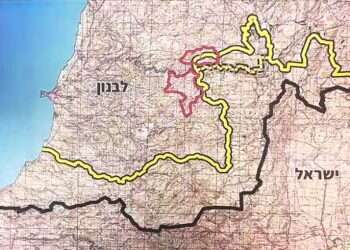
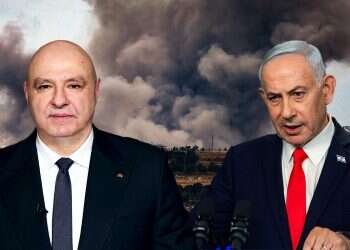
At a press conference, the prime minister presented a map of the pilot zones in southern Lebanon: "The Lebanese government showed courage. We told Iran it has no standing here." He also stressed that under the agreement signed, the IDF would maintain the original security zone outside anti-tank missile range as long as Hezbollah is not disarmed. Asked by Israel Hayom about the US and Iran, he said: We will send a delegation to Washington on the Iranian nuclear issue
The official described the move as “a gesture of goodwill” toward the Lebanese government. Israel has denied the report, while the IDF stresses: We were not instructed to withdraw.
Lebanese report claims new oversight mechanism will remain strictly military. Washington assures President Joseph Aoun that Beirut retains exclusive negotiating power separate from Tehran.
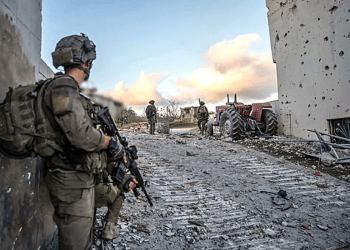
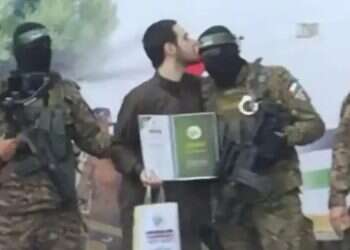
Sabai Zahir Abd al-Hamid Abu Hasna, a Nukhba terrorist who took part in the Oct. 7 massacre and was involved in holding Omer Shem Tov captive, was eliminated in an IDF strike in the northern Gaza Strip. In another strike, three armed Hamas terrorists who tried to carry out terrorist activity against forces in Gaza were eliminated.
Head of the Shin Bet security agency David Zini instructed the agency to prepare for a scenario involving an attack on the southern Israeli city of Eilat as a top priority. Zini warned of an invasion from the sea or from one of the land borders.
Jerusalem Center for Foreign Affairs and Security survey finds lessons of Oct. 7 have led to clear distrust of international forces and a reassessment of past policies. 56% view the disengagement as a strategic mistake, 73% support a buffer zone in Lebanon.
Shortly beforehand, Defense Minister Israel Katz made clear that Israel had no intention of withdrawing from Beaufort or the security zone in Lebanon. Katz: "It is vital for defending the communities of the Galilee and IDF troops."