

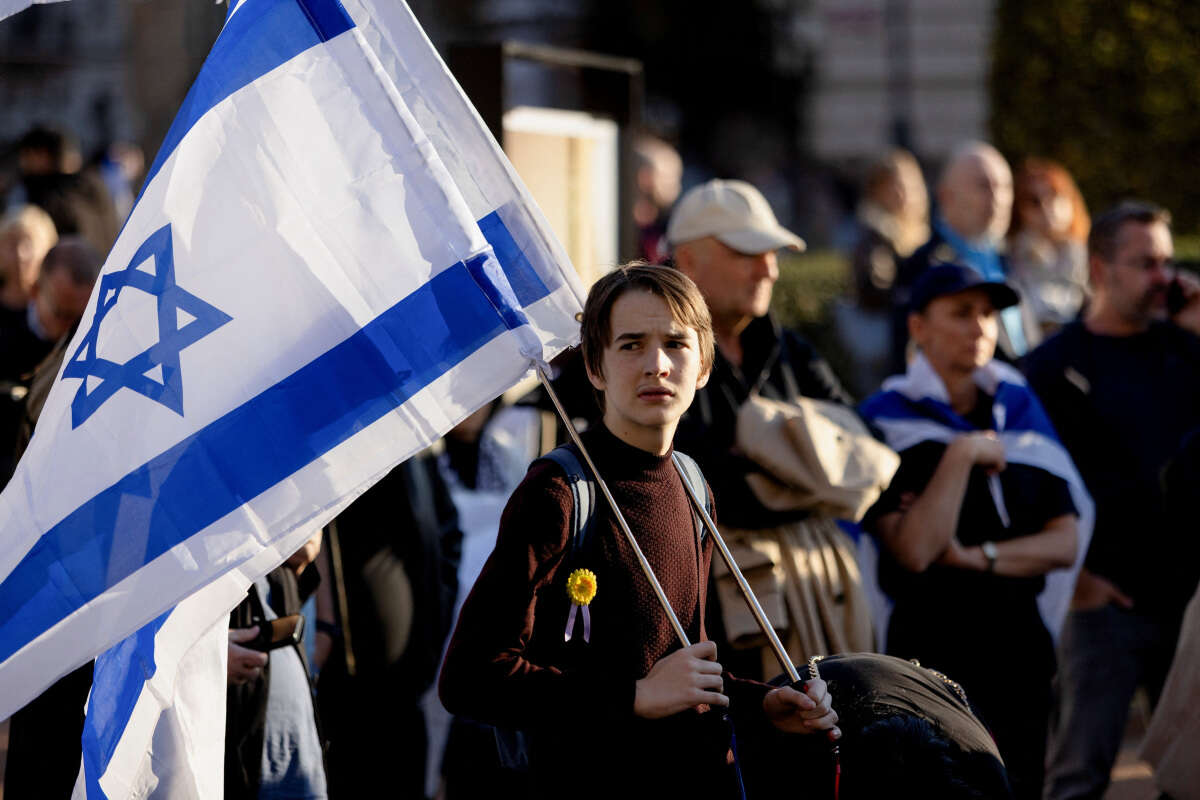
What do a Jewish educator from North Macedonia, a community leader from Honduras, and a teacher from Azerbaijan have in common? Beyond their Jewish identity, it is safe to assume that most Israelis know almost nothing about the communities they come from. We know the Jewish communities of New York, London and Paris well, but the global Jewish map is far broader. It includes hundreds of small communities, some of them in places where most of us would never imagine Jewish life exists.
When Israelis talk about Diaspora Jewry, the conversation usually focuses on the large communities, the federations, the donors and the centers of influence. But what happens in a community where a small Jewish school is the main anchor of Jewish identity? When there aren't enough children to open a class, when young people leave, or when one teacher carries on her shoulders the responsibility of passing on Jewish traditions to the next generation?
We have grown used to viewing Diaspora Jewry through the lens of "what can it do for us." Mobilize political support, help financially, fight delegitimization, and stand by Israel in times of emergency. But a relationship cannot survive when one side mostly asks, and the other mostly gives. Since October 7, the need for a more reciprocal relationship has become even more urgent.
While Israel was dealing with the war, Jewish communities around the world were dealing with a rise in antisemitism and new challenges to their security and identity. Now, of all times, Israel must broaden its view and understand that mutual responsibility does not begin and end at the country's borders. The late Ofir Libstein, head of Sha'ar HaNegev Regional Council, who was murdered on October 7, understood this well. He believed that a kibbutz in the Negev and a Jewish community overseas are part of the same family. From this vision grew initiatives to connect communities, among them the "Netaim" network, which today numbers close to 200 communities around the world.
Ofir and I started organizing these gatherings on a small scale, with only a handful of educators attending at first. In the coming days, more than 400 educators and Jewish community leaders from around the world will convene in Prague. Among the participants will be representatives from North Macedonia, Kosovo, Bosnia, Honduras, Costa Rica and Azerbaijan. From Ukraine alone, 13 participants will come from 11 different communities. Not to ask for donations or to take part in a solidarity event with Israel, but to build connections, share knowledge and strengthen the future of Jewish life in their communities.
There is an important lesson here for us Israelis as well. At a time when Israeli society struggles to navigate its internal divisions, secular, religious and ultra-Orthodox Jews will come together in Prague and share a Shabbat. They do not need to agree on everything in order to feel they belong to the same people.
The State of Israel is proud, and rightly so, to be the national home of the Jewish people. But a national home is not only a place one can come to in times of danger. It is also a commitment to see, know, and strengthen those who live outside it.
If we expect Jews around the world to remember that they are part of us, it is time for us to remember that they are part of us too. Not only in New York and London. Also in North Macedonia, in Honduras, and in every small community where someone insists that the Jewish story will continue.
The writer co-founded the International Gathering of Jewish Educators and Community Leaders with the late Ofir Libstein.


