Several days ago, King Abdullah of Jordan hosted in his palace in Amman the annual summit of parliamentary leaders from around the Arab world. The main piece of news to emerge from the summit was the comeback of the Syrian parliament speaker, who was banned from the forum eight years ago when his country's president, Bashar Assad, began slaughtering his people.
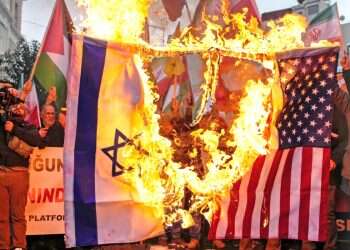
The other item of note to emerge, unsurprisingly, was found in the forum's jointly issued summary, which called on Arab states to "avoid any indication of normalization with Israel." Ironically, while Saudi Arabia and other Gulf states tried, according to various reports, to soften the statement, the speaker of the Jordanian parliament, which is a signatory to the peace treaty with Israel, enthusiastically pushed for a more strongly worded final draft.
Israeli-Jordanian relations have known their share of tribulations over the past 25 years, and have recently reached a low point. One of the more prominent expressions of this was the king's announcement several months ago that he wouldn't renew the clause in the peace treaty allowing Israeli farmers to access certain fields near the border.
Additionally, the king has responded strangely to the Muslim protests at the Gate of Peace structure on the Temple Mount. Jordan, the peace treaty stipulates, enjoys special status as protector of Muslim holy sites, and one could have expected it to try tempering the waqf religious authority under its control and maintain the status quo.
The impression in this case, however, is that the Jordanians worked to pour fuel on the flames, waiting for Israel to ask it for help to put the fire out. According to several reports, Jordanian representatives, who arrived specifically to attend the waqf's deliberations, either encouraged or at the very least didn't try stopping the continuation of prayers at the contested site. At the same time, they rushed to condemn Israel for the steps it implemented to temporarily ban waqf leaders from the Temple Mount.
Moreover, inexplicably, the Jordanians have recently tried expanding the waqf authority to include officials from the Palestinian Authority, perhaps as an expression of defiance toward Israel. That is to say: We and the Palestinians are united against Israel's efforts to "harm the rights of Palestinians," and in the same vein against the Trump administration's "deal of the century" soon to be unpacked in the region.
What is happening to the Jordanian king? He has to contend with two difficult challenges internally. The first is determined opposition in parliament and on the streets, demanding that he abolish the peace treaty with Israel – beginning with expelling the Israeli ambassador and recalling the Jordanian ambassador from Tel Aviv. The king's response to this challenge has been a concerted effort to avoid any overt form of civic cooperation with Israel and to highlight all anti-normalization measures, for instance revoking Israeli farmers' access to fields.
The other challenge is the kingdom's severe economic crisis. Jordan is facing high unemployment, slow growth and has been forced to harbor over one million Syrian refugees. A few months ago, violent protests targeted tax hikes and high costs of living. As a result, Abdullah fired his prime minister and replaced him with someone else.
The kings' solution to his country's economic woes has been to desperately seek donations. Saudi Arabia and the Gulf emirates have already begun channeling funds to the Central Bank of Jordan in what will amount to $2.5 billion in aid. Some of these funds are guarantees on loans from the World Bank and others come as cash, to allow the kingdom to survive and keep its head above water. In the meantime, Abdullah has rejected proposals for joint economic initiatives with Israel, which could have given the Jordanian economy a much-needed boost.
None of this has precluded the royal palace from reaping the benefits of close security and intelligence cooperation with Israel, out of the public eye, which has clearly helped the monarchy survive. What's absurd about this is that King Abdullah indulges in open condemnation and criticism of Israel, and even does things plainly unpalatable from Jerusalem's perspective, in the knowledge that Israel, which doesn't want the regime in Amman to crumble, will forego too harsh a response and will continue supporting him against all threats internal or external.