Israel Hayom is a media organization founded on the belief that the Israeli public deserves better journalism—more balanced, more accurate, and more reliable. Journalism that speaks rather than shouts. Journalism that is trustworthy, objective, and matter-of-fact. A different kind of journalism, offered free of charge. The first print edition was published on July 30, 2007, and in 2010 Israel Hayom became the Israeli newspaper with the highest weekday readership. The newspaper’s publisher is Dr. Miriam Adelson. Its Editor-in-Chief is Omar Lachmanovitch, and its founding editor is Amos Regev. Israel Hayom’s Hebrew and English websites, as well as its Android and iOS applications, provide around-the-clock news coverage, exclusive content, breaking news and updates, analysis and commentary, video, podcasts, and live broadcasts. The digital platforms of Israel Hayom include news and opinion channels covering culture and entertainment, lifestyle, technology, sports, business and consumer affairs, health, military affairs, food, Judaism, tourism, and automobiles. In 2021, a new Hebrew-language website and mobile application were launched to provide users with a fast, up-to-date, secure, and convenient experience. The content of the newspaper’s print edition is also available online through a daily digital edition and can be received via newsletter. “The Israel Hayom Clique,” the publication’s exclusive benefits club, offers website users discounts and special promotions on products and services. Israel Hayom welcomes feedback, criticism, and suggestions for improvement from its readers. You can contact the organization by email at hayom@israelhayom.co.il

Sunday Jul 19, 2026
NEWSLETTER
www.israelhayom.com
  • Home
  • News
    • Israel
    • Israel at War
    • Middle East
    • United States
  • Opinions
  • Jewish World
    • Archaeology
    • Antisemitism
  • Lifestyle
    • Food
    • Travel
    • Fashion
    • Culture
  • Magazine
    • Feature
    • Analysis
    • Explainer
  • In Memoriam
www.israelhayom.com
  • Home
  • News
    • Israel
    • Israel at War
    • Middle East
    • United States
  • Opinions
  • Jewish World
    • Archaeology
    • Antisemitism
  • Lifestyle
    • Food
    • Travel
    • Fashion
    • Culture
  • Magazine
    • Feature
    • Analysis
    • Explainer
  • In Memoriam
www.israelhayom.com
Home Commentary

To prevent Hamas' resurgence, Israel must stay on Philadelphi

Could an Israeli-Egyptian mechanism, with US involvement, effectively replace direct Israeli control? Historical precedent offers little room for optimism.

by  Meir Ben Shabbat
Published on  07-13-2024 12:00
Last modified: 07-14-2024 11:14
To prevent Hamas' resurgence, Israel must stay on PhiladelphiEmilio Morenatti/AP

An Israeli military vehicle driving through the Philadelphi corridor along the Egypt-Gaza border in the southern Gaza Strip town of Rafah, on Sept. 4, 2005. | Photo: Emilio Morenatti/AP

Share on FacebookShare on Twitter

Israel's grip on the Philadelphi Corridor stands out as one of its key strategic gains in the Gaza war. This control serves a dual purpose: it provides leverage in hostage release negotiations and, more critically, acts as a bulwark against Hamas' potential resurgence. The move reflects a hard-learned lesson from Israel's two-decade struggle to contain military buildup in Gaza. Past reliance on international arrangements as a security substitute has proven ineffective, with little reason to believe such measures would fare better in the future. Moreover, acquiescing to these arrangements could embolden Hamas, fostering hope that post-conflict Gaza might revert to its pre-Oct. 7 status quo.

Video: Israeli armored vehicle on the Philadelphi corridor / Usage under Israeli intellectual property law Article 27a

The flurry of updates on hostage deal negotiations and ongoing Gaza operations has overshadowed recent reports suggesting Israel's potential withdrawal from the Philadelphi Corridor. However, the question of who controls this strategic strip could prove decisive in determining the lasting impact of Israel's war efforts. The extent of control over this route will not only influence how quickly adversaries could pose renewed threats to Israel but also shape the nature and intensity of future security challenges. One need look no further than Hezbollah's daily provocations for a glimpse of potential scenarios absent effective control.

Drawing from its Gaza experience, Israel has emphasized that any future political settlement must include Israeli control over the external border areas. This stance, initially articulated regarding arrangements with the Palestinian Authority, holds even truer for Gaza in the absence of a formal agreement. The devastating toll of Oct. 7 has lent legitimacy to this position, while the war has created the operational conditions to make it feasible. However, relinquishing this control now would be irreversible. Israel would be hard-pressed to reclaim the area after making commitments to Egypt and the US, especially within the context of broader international understandings.
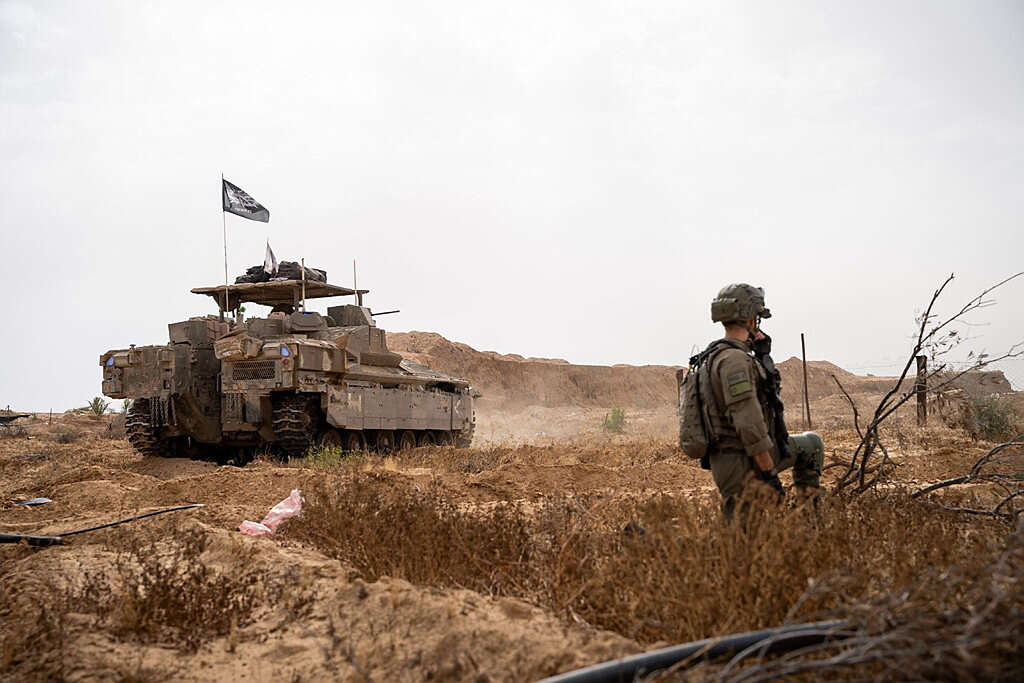
The IDF's 401st Brigade on the Philadelphi Corridor, May 31, 2024. Credit: IDF Spokesperson's Unit IDF Spokesperson's Unit

Could an Israeli-Egyptian mechanism, with US involvement, effectively replace direct Israeli control? Historical precedent offers little room for optimism. In Jan. 2009, as Operation Cast Lead wound down, then-Foreign Affairs Minister Tzipi Livni signed an agreement establishing such a mechanism. While this accord halted Israel's military campaign short of decisively defeating Hamas, it failed to prevent even a single instance of smuggling.

This wasn't without precedent. In Oct. 2005, at the urging of US officials, Israel agreed to regulate the opening of Gaza border crossings. Promises of assistance in countering resulting security threats proved hollow. The PA lost its foothold in Gaza, Israeli security assurances evaporated, and Hamas reveled in the perceived folly of the arrangement.

Any reasonable person understands that detection and monitoring systems alone can't stop smuggling. An effective operational force is crucial – capable of swift, timely responses to incidents. Without Israeli control, we would be dependent on the goodwill of the Egyptians. Their priorities and considerations may not align perfectly with Israeli security imperatives. The likelihood of such a mechanism meeting Israel's expectations is far lower than the probability of smuggling along this route becoming a flashpoint in Israeli-Egyptian relations.

Undoubtedly, Israeli control of the Philadelphi Corridor presents complex operational, diplomatic, and logistical challenges. However, these must be weighed against the costs of relinquishing control. The current climate provides unprecedented justification for implementing necessary engineering measures to enhance the security of Israeli forces in the area.

While Israeli control of the Philadelphi Corridor may not be ideal from all perspectives, it represents a vital course correction. It embodies the principle of self-reliance in defense, deprives a significant strategic asset of those responsible for the Oct. 7 atrocities, and marks a substantial step toward reshaping Gaza's future security landscape.

Tags: EgyptGaza WarHamasIsrael

Related Posts

A reckless gamble on Ahmadinejad demands a state inquiryReuters

A reckless gamble on Ahmadinejad demands a state inquiry

by Danny Citrinowicz

The Mossad fantasy of installing a puppet in Tehran and partnering with Kurdish militias collapsed under geopolitical realities, leaving Israel...

Regime feels economic squeeze as talks to end war stall

Iran's threats against Trump must be taken seriously

by Dr. Yossi Mansharof

Western observers tend to dismiss the new supreme leader’s threats as mere rhetoric. In reality, revenge is an ideological imperative...

Trump expected to announce Turkey's return to F-35 program

Trump's F-35 deal with Erdoğan threatens Israel, but could also strengthen it

by Zvika Haimovich

All signs indicate that the sale of F-35 fighter jets to Turkey will go ahead. While Trump’s move could eventually...

Menu

Analysis 

Archaeology

Blogpost

Business & Finance

Culture

Exclusive

Explainer

Environment


Features

Health

In Brief

Jewish World

Judea and Samaria

Lifestyle

Cyber & Internet

Sports


Diplomacy 

Iran & The Gulf

Gaza Strip

Politics

Shopping

Terms of use

Privacy Policy

Submissions

Contact Us

About Us

The first issue of Israel Hayom appeared on July 30, 2007. Israel Hayom was founded on the belief that the Israeli public deserves better, more balanced and more accurate journalism. Journalism that speaks, not shouts. Journalism of a different kind. And free of charge.

All rights reserved to Israel Hayom

Hosted by sPD.co.il

  • Home
  • News
    • Israel at War
    • Israel
    • United States
    • Middle East
    • Sports
  • Opinions
  • Jewish World
    • Archaeology
    • Antisemitism
  • Lifestyle
    • Food
    • Travel
    • Fashion
    • Culture
  • Magazine
    • Feature
    • Analysis
    • Explainer
    • Environment & Wildlife
    • Health & Wellness
  • In Memoriam
  • Subscribe to Newsletter
  • Submit your opinion
  • Terms and conditions

All rights reserved to Israel Hayom

Hosted by sPD.co.il

Newsletter

[contact-form-7 id=”508379″ html_id=”isrh_form_Newsletter_en” title=”newsletter_subscribe”]

  • Home
  • News
    • Israel at War
    • Israel
    • United States
    • Middle East
    • Sports
  • Opinions
  • Jewish World
    • Archaeology
    • Antisemitism
  • Lifestyle
    • Food
    • Travel
    • Fashion
    • Culture
  • Magazine
    • Feature
    • Analysis
    • Explainer
    • Environment & Wildlife
    • Health & Wellness
  • In Memoriam
  • Subscribe to Newsletter
  • Submit your opinion
  • Terms and conditions

All rights reserved to Israel Hayom

Hosted by sPD.co.il