Israel Hayom is a media organization founded on the belief that the Israeli public deserves better journalism—more balanced, more accurate, and more reliable. Journalism that speaks rather than shouts. Journalism that is trustworthy, objective, and matter-of-fact. A different kind of journalism, offered free of charge. The first print edition was published on July 30, 2007, and in 2010 Israel Hayom became the Israeli newspaper with the highest weekday readership. The newspaper’s publisher is Dr. Miriam Adelson. Its Editor-in-Chief is Omar Lachmanovitch, and its founding editor is Amos Regev. Israel Hayom’s Hebrew and English websites, as well as its Android and iOS applications, provide around-the-clock news coverage, exclusive content, breaking news and updates, analysis and commentary, video, podcasts, and live broadcasts. The digital platforms of Israel Hayom include news and opinion channels covering culture and entertainment, lifestyle, technology, sports, business and consumer affairs, health, military affairs, food, Judaism, tourism, and automobiles. In 2021, a new Hebrew-language website and mobile application were launched to provide users with a fast, up-to-date, secure, and convenient experience. The content of the newspaper’s print edition is also available online through a daily digital edition and can be received via newsletter. “The Israel Hayom Clique,” the publication’s exclusive benefits club, offers website users discounts and special promotions on products and services. Israel Hayom welcomes feedback, criticism, and suggestions for improvement from its readers. You can contact the organization by email at hayom@israelhayom.co.il

Sunday Jul 19, 2026
NEWSLETTER
www.israelhayom.com
  • Home
  • News
    • Israel
    • Israel at War
    • Middle East
    • United States
  • Opinions
  • Jewish World
    • Archaeology
    • Antisemitism
  • Lifestyle
    • Food
    • Travel
    • Fashion
    • Culture
  • Magazine
    • Feature
    • Analysis
    • Explainer
  • In Memoriam
www.israelhayom.com
  • Home
  • News
    • Israel
    • Israel at War
    • Middle East
    • United States
  • Opinions
  • Jewish World
    • Archaeology
    • Antisemitism
  • Lifestyle
    • Food
    • Travel
    • Fashion
    • Culture
  • Magazine
    • Feature
    • Analysis
    • Explainer
  • In Memoriam
www.israelhayom.com
Home News Middle East Iran & The Gulf

US officials say Iran attack 'potentially soon, without notice'

"We truly don't know if they will do it, when they will do it, and with what force they will do it. We don't have firm answers for all of that right now," top administration official tells the WSJ.

by  ILH Staff
Published on  08-12-2024 13:46
Last modified: 08-18-2024 09:48
US officials say Iran attack 'potentially soon, without notice'AFP / Atta Kenare

A large banner depicting the slain commander of the Islamic Revolutionary Guard Crops' (IRGC's) Quds Force Qassem Soleimani (C-R) and slain figures of Iran-backed groups on August 14, 2024 | Photo: AFP / Atta Kenare

Share on FacebookShare on Twitter

The United States is intensifying efforts to prevent a potential Iranian attack on Israel, as tensions in the region reach a critical point, according to reporting from the Wall Street Journal. The Biden administration is grappling with the challenge of containing Iran's actions, which could surpass the scale of its April missile and drone assault on Israel.

US officials have issued stern warnings to Tehran, both directly and through intermediaries, about the severe consequences an attack on Israel could have for Iran's government and economy. The situation has put both nations in a precarious position, with neither seeking this escalation but now forced to navigate the possibility of a broader conflict.

An Iranian woman walks near a billboard of new Hamas leader Yahya Al-Sinwar hanging on a wall at the Palestine Square in Tehran, Iran, August 12, 2024 (EPA/Abedin Taherkenareh) EPA/Abedin Taherkenareh

"We truly don't know if they will do it, when they will do it, and with what force they will do it. We don't have firm answers for all of that right now," a senior administration official told the WSJ. "But we believe an attack of some sort could very well come, potentially soon and without much notice."

The current crisis was triggered by an attack in Tehran that killed Hamas leader Ismail Haniyeh, which Iran blamed on Israel. This incident occurred shortly after an Israeli strike killed a Hezbollah commander in Beirut. Iran's new president, Masoud Pezeshkian, asserted it was his country's "legal right" to retaliate.
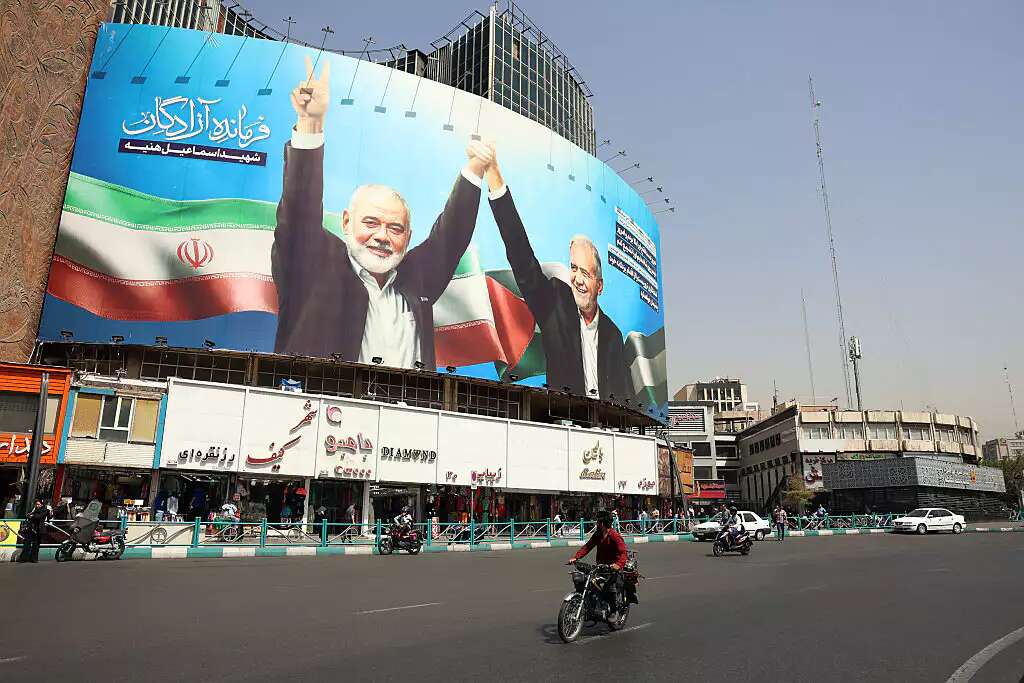
A poster with an image of Haniyeh and Iranian President Masoud Pezeshkian in the streets of Tehran, Photo: EPA.

Israeli Prime Minister Benjamin Netanyahu's office has indicated cooperation with White House de-escalation efforts, agreeing to participate in US-organized cease-fire talks. However, Israel has also threatened a harsh response to any Iranian attack and hasn't ruled out an offensive in southern Lebanon if Hezbollah strikes.

President Biden told reporters on Tuesday that he expected Iran would refrain from strikes if the parties reached a deal. But he acknowledged "it's getting harder" to complete a cease-fire agreement. US officials are traveling to Qatar for another round of diplomacy, with White House spokeswoman Karine Jean-Pierre stating, "We expect these talks to move forward as planned."

Hamas has announced it won't attend the negotiations this week, while Netanyahu has shown little willingness to compromise in recent months. US officials admit that the possibility of a comprehensive agreement is diminishing, prompting the development of a "bridging proposal" to resolve differences between Hamas and Israel.

Dalia Dassa Kaye, a Middle East security expert at UCLA's Burkle Center for International Relations, observed, "Without a cease-fire, it's hard to see the Iranians, or Hezbollah for that matter, backing off."

Iran faces several challenging options, each with significant drawbacks. Backing down could be perceived as weakness, while a massive attack risks broader conflict and Israeli counterstrikes. Repeating the April barrage might appear ineffective while still increasing the chances of a wider war.
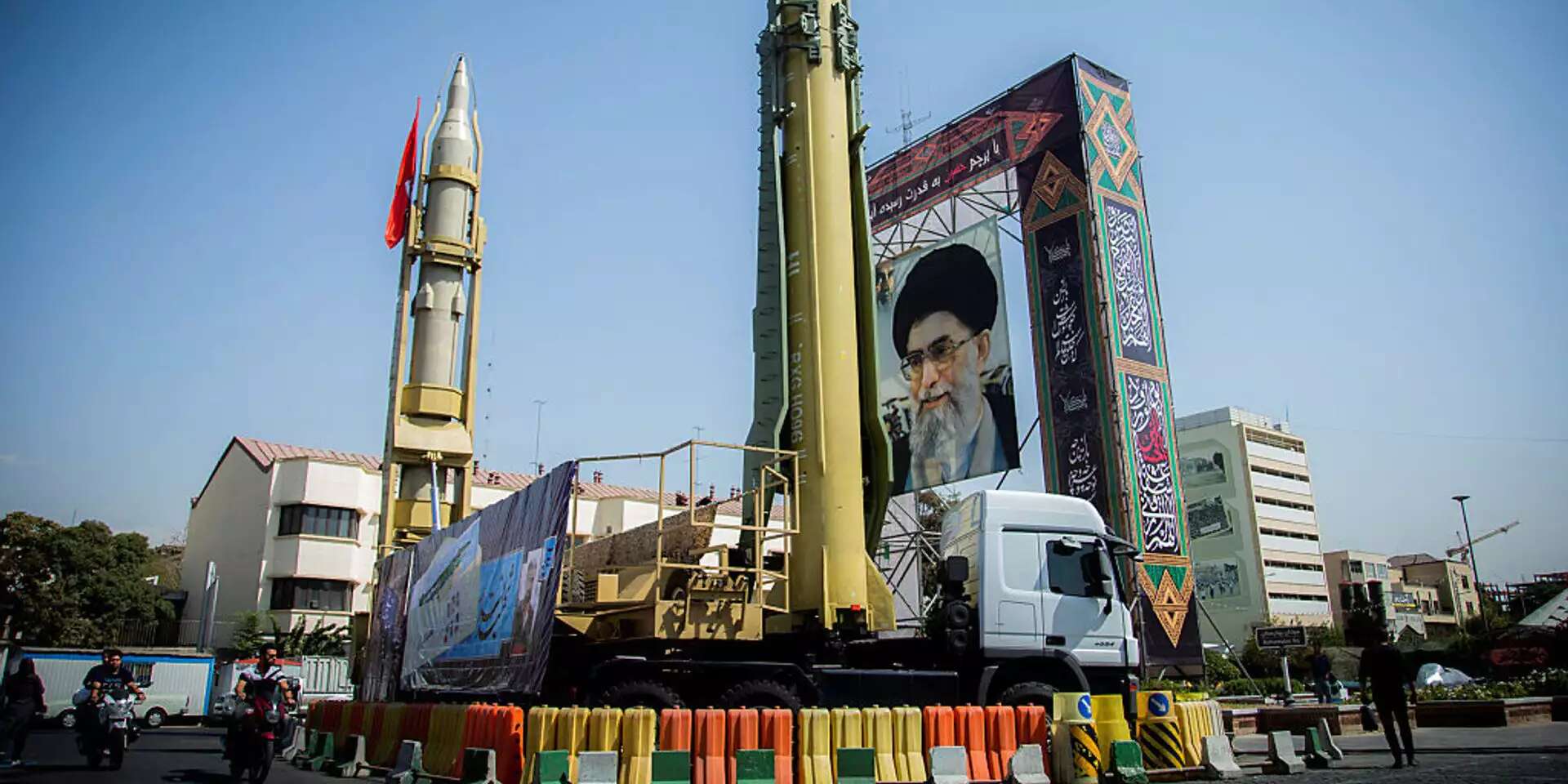
Khamenei alongside Iranian missiles. Photo: Reuters

"There is no doubt intense debate within Iran's leadership about how to respond because none of their options look good," Kaye told the WSJ. The Biden administration's initial strategy of containing Iran through nuclear deal revival and regional alliances has been challenged by Tehran's actions, including its support for proxies that killed US troops in Jordan and its backing of Russia's invasion of Ukraine.

Iran's decision to directly attack Israel in April marked a significant shift from its usual proxy-based approach. The US has responded by deploying additional military assets to the region, including F-22 Raptors and the USS Abraham Lincoln carrier strike group. A senior administration official told the WSJ, "We know they are paying attention to our messages. We don't know if it's changing their minds."

However, Dana Stroul, former top Pentagon civilian for the Middle East, cautioned that Iran is unlikely to cease its aggressive behavior, stating, "By over-messaging the desire to prevent full-scale war, Iran has interpreted this as a US lack of will to take offensive action."


Tags: Gaza WarIranIsrael

Related Posts

Trump vows US response after Iran downs Apache helicopter over Strait of Hormuz

US-Iran escalation appears inevitable

by Neta Bar

Kuwait says it intercepted Iranian drones and ballistic missiles after another night of US strikes as Tehran threatens: “US troops...

Report: Mojtaba Khamenei is not in Iran

Report: Mojtaba Khamenei is not in Iran

by Shachar Kleiman

According to an Israeli security official, Iran’s new supreme leader is no longer in the country, while Islamic Revolutionary Guard...

US shifts course, strikes strategic bridges leading to Bandar Abbas

US shifts course, strikes strategic bridges leading to Bandar Abbas

by Dudi Kogan

At least seven bridges, a railway junction and an observation tower were targeted in southern Iran. US Central Command says...

Menu

Analysis 

Archaeology

Blogpost

Business & Finance

Culture

Exclusive

Explainer

Environment


Features

Health

In Brief

Jewish World

Judea and Samaria

Lifestyle

Cyber & Internet

Sports


Diplomacy 

Iran & The Gulf

Gaza Strip

Politics

Shopping

Terms of use

Privacy Policy

Submissions

Contact Us

About Us

The first issue of Israel Hayom appeared on July 30, 2007. Israel Hayom was founded on the belief that the Israeli public deserves better, more balanced and more accurate journalism. Journalism that speaks, not shouts. Journalism of a different kind. And free of charge.

All rights reserved to Israel Hayom

Hosted by sPD.co.il

  • Home
  • News
    • Israel at War
    • Israel
    • United States
    • Middle East
    • Sports
  • Opinions
  • Jewish World
    • Archaeology
    • Antisemitism
  • Lifestyle
    • Food
    • Travel
    • Fashion
    • Culture
  • Magazine
    • Feature
    • Analysis
    • Explainer
    • Environment & Wildlife
    • Health & Wellness
  • In Memoriam
  • Subscribe to Newsletter
  • Submit your opinion
  • Terms and conditions

All rights reserved to Israel Hayom

Hosted by sPD.co.il

Newsletter

[contact-form-7 id=”508379″ html_id=”isrh_form_Newsletter_en” title=”newsletter_subscribe”]

  • Home
  • News
    • Israel at War
    • Israel
    • United States
    • Middle East
    • Sports
  • Opinions
  • Jewish World
    • Archaeology
    • Antisemitism
  • Lifestyle
    • Food
    • Travel
    • Fashion
    • Culture
  • Magazine
    • Feature
    • Analysis
    • Explainer
    • Environment & Wildlife
    • Health & Wellness
  • In Memoriam
  • Subscribe to Newsletter
  • Submit your opinion
  • Terms and conditions

All rights reserved to Israel Hayom

Hosted by sPD.co.il