Israel Hayom is a media organization founded on the belief that the Israeli public deserves better journalism—more balanced, more accurate, and more reliable. Journalism that speaks rather than shouts. Journalism that is trustworthy, objective, and matter-of-fact. A different kind of journalism, offered free of charge. The first print edition was published on July 30, 2007, and in 2010 Israel Hayom became the Israeli newspaper with the highest weekday readership. The newspaper’s publisher is Dr. Miriam Adelson. Its Editor-in-Chief is Omar Lachmanovitch, and its founding editor is Amos Regev. Israel Hayom’s Hebrew and English websites, as well as its Android and iOS applications, provide around-the-clock news coverage, exclusive content, breaking news and updates, analysis and commentary, video, podcasts, and live broadcasts. The digital platforms of Israel Hayom include news and opinion channels covering culture and entertainment, lifestyle, technology, sports, business and consumer affairs, health, military affairs, food, Judaism, tourism, and automobiles. In 2021, a new Hebrew-language website and mobile application were launched to provide users with a fast, up-to-date, secure, and convenient experience. The content of the newspaper’s print edition is also available online through a daily digital edition and can be received via newsletter. “The Israel Hayom Clique,” the publication’s exclusive benefits club, offers website users discounts and special promotions on products and services. Israel Hayom welcomes feedback, criticism, and suggestions for improvement from its readers. You can contact the organization by email at hayom@israelhayom.co.il

Thursday Sep 24, 2026
NEWSLETTER
www.israelhayom.com
  • Home
  • News
    • Israel
    • Israel at War
    • Middle East
    • United States
  • Opinions
  • Jewish World
    • Archaeology
    • Antisemitism
  • Lifestyle
    • Food
    • Travel
    • Fashion
    • Culture
  • Magazine
    • Feature
    • Analysis
    • Explainer
  • In Memoriam
www.israelhayom.com
  • Home
  • News
    • Israel
    • Israel at War
    • Middle East
    • United States
  • Opinions
  • Jewish World
    • Archaeology
    • Antisemitism
  • Lifestyle
    • Food
    • Travel
    • Fashion
    • Culture
  • Magazine
    • Feature
    • Analysis
    • Explainer
  • In Memoriam
www.israelhayom.com
Home Commentary

How Trump's Hamas ultimatum could shape Mideast strategy

by  David Zebuloni/Makor Rishon
Published on  12-04-2024 04:00
Last modified: 12-04-2024 09:08
Dismantling Hamas; uniting Israel: A deal now aligns with war objectives

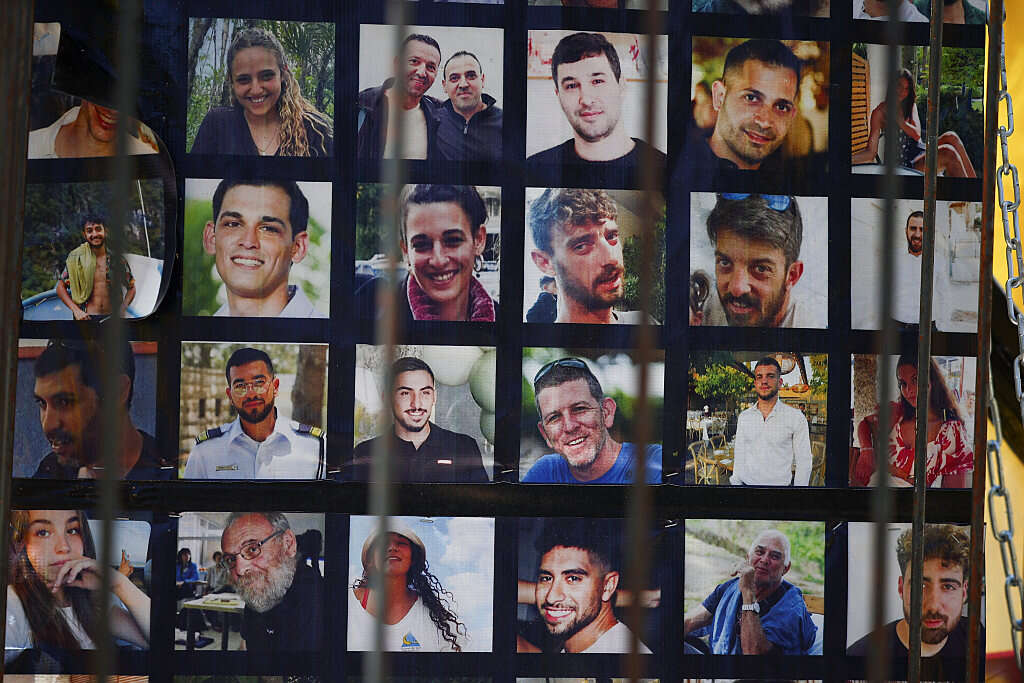
A view of pictures of hostages who were kidnapped during the deadly Oct. 7 massacre (Reuters/Florion Goga) | Photo:

Share on FacebookShare on Twitter

Donald Trump resonated with Israel's supporters when he posted on his social media platform TRUTH Social Tuesday: "Everybody is talking about the hostages who are being held so violently, inhumanely, and against the will of the entire world, in the Middle East – but it's all talk, and no action! If the hostages are not released prior to January 20, 2025, the date that I proudly assume office as President of the United States, there will be ALL HELL TO PAY in the Middle East, and for those in charge who perpetrated these atrocities against humanity."

After a year of political, social, and military struggle to bring the hostages home, the president-elect has once again brought global attention to this burning issue, which has not received adequate media coverage worldwide. What lies behind this threat? Does Trump's statement have concrete strategic backing, or does the incoming president believe that words alone can create deterrence?

"From our experience with the president, it starts with a post and then develops into strategy," explains Rotem Oreg, an American politics expert and director of the LIBRAEL foundation, in an interview with Makor Rishon. "This characterized his first administration, but now we're seeing him come more organized and prepared. This is particularly evident in how he's appointing people around him – importantly, people with more developed worldviews. The main challenge is actually finding effective pressure points, as it's clear to everyone that Americans won't directly intervene in Gaza. If anyone has such fantasies, they should abandon them."

Regarding realistic scenarios, Oreg suggests that "Trump might give Israel more operational freedom, but then the question becomes what haven't we already done that could help. His threat might also translate into support for specific Israeli actions against Hamas that could potentially change the dynamics."

Former US President and Republican presidential candidate Donald Trump speaks during an election night event at the West Palm Beach Convention Center in West Palm Beach, Florida, Nov. 6, 2024 (Jim Watson/AFP) Jim Watson/AFP

This isn't the first time the president-elect has raised the hostage issue. Throughout his White House campaign, Trump repeatedly called for their release. However, his latest statement appears considerably more forceful than previous ones. "There's a process aimed at helping Trump understand that he has an opportunity here to make history and get credit," Oreg explains. "When I met with advisers to senior officials in the new administration, I told them his way to brand this mission is to succeed where Biden failed. Biden spent more than a year trying to bring the hostages home without success, and Trump might actually accomplish it.

"The question is whether the incoming president is pursuing this because he sees potential for credit, which is what interests him, or if, like with North Korea, he'll hit a wall and back off. Trump needs to see that the hostage struggle benefits him somehow. As long as figures in Israel and the United States keep telling him that working for their release is important, as long as they continue to thank him for his involvement, Trump will keep participating in the mission."

How will the incoming president's post actually influence the terrorist organization? According to Oreg, "Hamas is less affected by American threats because they've already taken enough hits. The more someone is beaten, the less they have to lose, and this applies to terrorist organizations too. State actors like Iran are usually more sensitive to such threats because they have more assets to lose." This offers little encouragement to those who believed the American president's words would transform the Middle East.

Alternatively, journalist and Middle East researcher Edy Cohen told Makor Rishon that "Trump's threats aren't new; he's said these things before and is now naturally escalating the tone. However, I don't buy them. Actually, Hezbollah's defeat, the split battlefronts, the expulsion of Hamas leaders from Qatar, the Democrats' loss, Trump's rise, the elimination of Nasrallah and Sinwar, the ceasefire agreement – all these constitute a mortal blow to Hamas."

The researcher argues that the possibility of Hamas releasing the 101 hostages isn't far-fetched. "The organization is losing legitimacy even in Arab countries that previously supported it, and this plays much more in our favor than Trump's post. It's no coincidence that Hamas is now releasing more hostage videos – they want movement. They want to end the war."
Tags: bring them home nowhostagesTrump

Related Posts

Trump: Saudi nuclear deal contingent on joining Abraham Accords

Trump seeks Gulf backing for a new Middle East strategy

by LTC (Ret.) Or Horvitz

US President Donald Trump is expected to meet leaders of the six Gulf states on the sidelines of the UN...

Israel's enemies are learning what resilience really means

Israel's enemies are learning what resilience really means

by Meir Ben Shabbat

Israel's enemies have learned to respect not only its military superiority, but also the resilience of its home front and...

Netanyahu: War is not over, there is more work to do in Iran

Being worthy begins with taking responsibility

by Orna Neutra

Since October 7, we hear the same words over and over again: May we be worthy. Worthy of the fallen....

Menu

Analysis 

Archaeology

Blogpost

Business & Finance

Culture

Exclusive

Explainer

Environment


Features

Health

In Brief

Jewish World

Judea and Samaria

Lifestyle

Cyber & Internet

Sports


Diplomacy 

Iran & The Gulf

Gaza Strip

Politics

Shopping

Terms of use

Privacy Policy

Submissions

Contact Us

About Us

The first issue of Israel Hayom appeared on July 30, 2007. Israel Hayom was founded on the belief that the Israeli public deserves better, more balanced and more accurate journalism. Journalism that speaks, not shouts. Journalism of a different kind. And free of charge.

All rights reserved to Israel Hayom

Hosted by sPD.co.il

  • Home
  • News
    • Israel at War
    • Israel
    • United States
    • Middle East
    • Sports
  • Opinions
  • Jewish World
    • Archaeology
    • Antisemitism
  • Lifestyle
    • Food
    • Travel
    • Fashion
    • Culture
  • Magazine
    • Feature
    • Analysis
    • Explainer
    • Environment & Wildlife
    • Health & Wellness
  • In Memoriam
  • Subscribe to Newsletter
  • Submit your opinion
  • Terms and conditions

All rights reserved to Israel Hayom

Hosted by sPD.co.il

Newsletter

[contact-form-7 id=”508379″ html_id=”isrh_form_Newsletter_en” title=”newsletter_subscribe”]

  • Home
  • News
    • Israel at War
    • Israel
    • United States
    • Middle East
    • Sports
  • Opinions
  • Jewish World
    • Archaeology
    • Antisemitism
  • Lifestyle
    • Food
    • Travel
    • Fashion
    • Culture
  • Magazine
    • Feature
    • Analysis
    • Explainer
    • Environment & Wildlife
    • Health & Wellness
  • In Memoriam
  • Subscribe to Newsletter
  • Submit your opinion
  • Terms and conditions

All rights reserved to Israel Hayom

Hosted by sPD.co.il