Israel Hayom is a media organization founded on the belief that the Israeli public deserves better journalism—more balanced, more accurate, and more reliable. Journalism that speaks rather than shouts. Journalism that is trustworthy, objective, and matter-of-fact. A different kind of journalism, offered free of charge. The first print edition was published on July 30, 2007, and in 2010 Israel Hayom became the Israeli newspaper with the highest weekday readership. The newspaper’s publisher is Dr. Miriam Adelson. Its Editor-in-Chief is Omar Lachmanovitch, and its founding editor is Amos Regev. Israel Hayom’s Hebrew and English websites, as well as its Android and iOS applications, provide around-the-clock news coverage, exclusive content, breaking news and updates, analysis and commentary, video, podcasts, and live broadcasts. The digital platforms of Israel Hayom include news and opinion channels covering culture and entertainment, lifestyle, technology, sports, business and consumer affairs, health, military affairs, food, Judaism, tourism, and automobiles. In 2021, a new Hebrew-language website and mobile application were launched to provide users with a fast, up-to-date, secure, and convenient experience. The content of the newspaper’s print edition is also available online through a daily digital edition and can be received via newsletter. “The Israel Hayom Clique,” the publication’s exclusive benefits club, offers website users discounts and special promotions on products and services. Israel Hayom welcomes feedback, criticism, and suggestions for improvement from its readers. You can contact the organization by email at hayom@israelhayom.co.il

Saturday Jun 27, 2026
NEWSLETTER
www.israelhayom.com
  • Home
  • News
    • Israel
    • Israel at War
    • Middle East
    • United States
  • Opinions
  • Jewish World
    • Archaeology
    • Antisemitism
  • Lifestyle
    • Food
    • Travel
    • Fashion
    • Culture
  • Magazine
    • Feature
    • Analysis
    • Explainer
  • In Memoriam
www.israelhayom.com
  • Home
  • News
    • Israel
    • Israel at War
    • Middle East
    • United States
  • Opinions
  • Jewish World
    • Archaeology
    • Antisemitism
  • Lifestyle
    • Food
    • Travel
    • Fashion
    • Culture
  • Magazine
    • Feature
    • Analysis
    • Explainer
  • In Memoriam
www.israelhayom.com
Home Commentary

The real purpose of Israel's gas deal with Egypt

Israel traded energy for leverage, binding Cairo to its gas while securing strategic calm despite unresolved violations in Sinai.

by  Ariel Kahana
Published on  12-18-2025 10:40
Last modified: 12-18-2025 10:43
The real purpose of Israel's gas deal with Egypt

Prime Minister Benjamin Netanyahu and Egyptian President Abdel Fattah el-Sissi against the backdrop of the Leviathan gas field. Photo: AFP

Share on FacebookShare on Twitter

The signing of the massive gas deal with Egypt goes far beyond its headline price tag of $35 billion. One of the main reasons for the agreement's delay was Egypt's problematic conduct toward Israel on political and security issues.

The understandings between Israel and Egypt on the gas deal do not include an Egyptian commitment to withdraw prohibited forces from the Sinai Peninsula. Israel Hayom has learned that accompanying understandings include dialogue on mechanisms to address Egyptian violations. The US has promised to promote handling of the issue, but there is no clear commitment to rectify the situation.

In Israel, officials believe that once gas deliveries begin and Egypt becomes energy-dependent on Israeli gas, this dependence will serve as leverage to deter Cairo from violating the peace treaty. They also argue that had Israel not supplied Egypt with gas, its southern neighbor would have turned to Qatar. According to information gathered in recent years, Egypt has introduced forces into Sinai far beyond what is permitted under the security annex of the peace treaty. It has also built tunnels deep inside Sinai for storing weapons and has suspiciously extended runways at airfields.
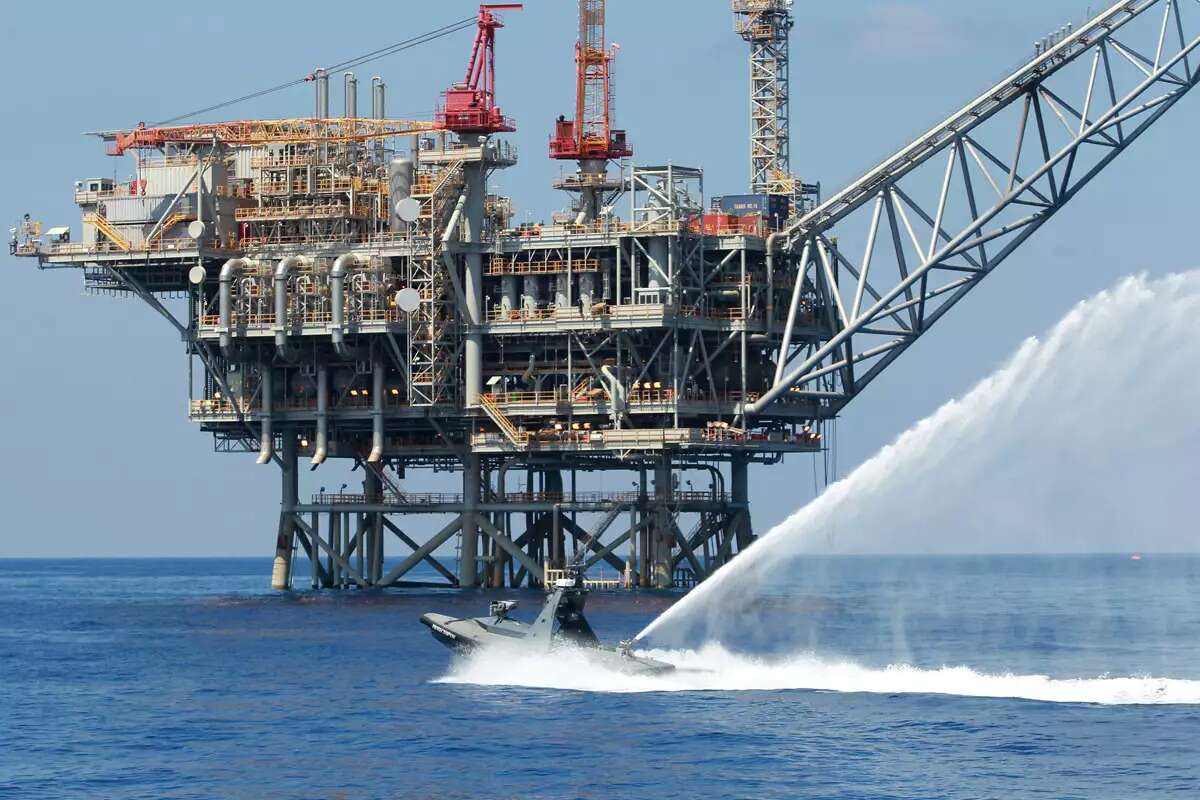
Gas en route to Egypt. (archive). Photo: Koko Koko

A security achievement

As far as is currently known, none of these problems has been fully resolved. The excess Egyptian forces will remain in Sinai, but Egypt has given commitments to limit their activity. Prime Minister Benjamin Netanyahu hinted that Israel achieved several gains on the security front.

Despite the agreement, efforts to politically warm relations with Egypt have so far failed because of the war in Gaza, which has yet to end, and the tense atmosphere between the presidential palace in Cairo and the Prime Minister's Office in Jerusalem. The Americans examined the possibility of holding a summit meeting between Netanyahu and Egyptian President Abdel Fattah el-Sisi, with US President Donald Trump participating, but the Egyptians rejected the idea.

Alongside these issues, the gas agreement enables Israel to achieve several strategic objectives. The first is Egypt's dependence on Israeli gas, which it uses both for domestic energy needs and for liquefaction and export to Europe, a vital source of foreign currency without which Egypt's economy would collapse. Egypt has gas fields of its own, but they are insufficient for these purposes. This dependence constitutes Israeli diplomatic and security leverage over its southern neighbor, though its impact is limited to major strategic issues, chiefly reducing or even eliminating concerns that Egypt might cancel its peace treaty with Israel.
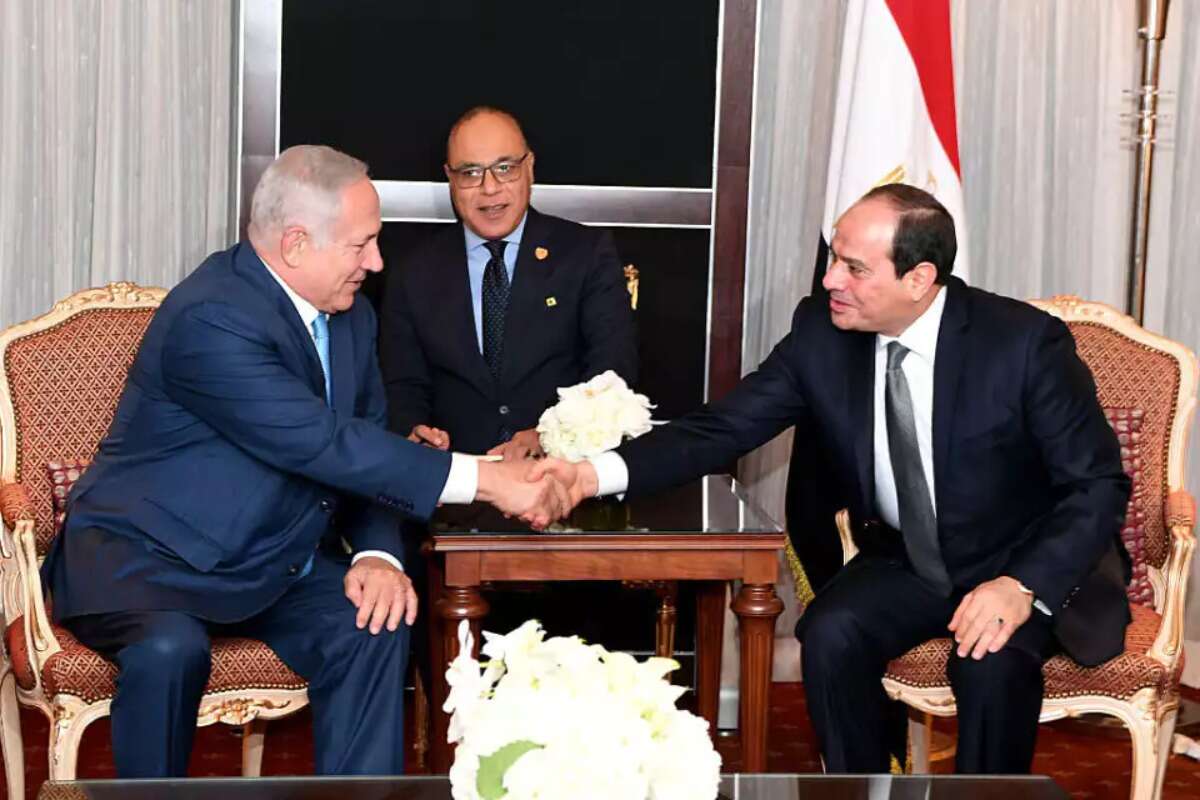
Prime Minister Benjamin Netanyahu meets with Egyptian President Abdel Fattah el-Sissi (archive). Photo: Avi Ohayon/GPO GPO/Avi Ohayon

An energy powerhouse?

Israel is consolidating its status as a regional power in the energy sector. It supplies gas to Egypt and also to Jordan, which uses it for a significant portion of its energy consumption. The agreement with Israel comes at Qatar's expense. Doha had been in talks with el-Sisi on building a new gas pipeline from Qatar's giant gas fields to Egypt. Laying such a pipeline would take years, and Egypt did not have the time to wait.

The agreement opens the door to additional energy projects in cooperation with Gulf states, projects that have been on the table for a long time and are expected to advance once an agreement is reached to bring Saudi Arabia into the Abraham Accords, likely not before elections and the formation of a new government in Israel.

In the energy sphere, under the agreement Israel will build an additional gas pipeline between Ramat Hovav and Nitzana, enabling further increases in exports to Egypt. The deal is expected to restart tenders for exploration of new gas fields in the eastern Mediterranean, and the Energy Ministry is set to renew preparations for those exploration bids.

Another reason for the delay in the agreement with Egypt was the Energy Ministry's demand that remaining reserves in existing fields be sufficient for Israeli domestic consumption and remain priced at the current low levels. According to the Energy Ministry, these demands were fully met.


Tags: EgyptIsrael

Related Posts

A voice needed now more than everAP

A voice needed now more than ever

by Dr. Miriam Adelson

A decade after the world lost “Reb Elie,” the Holocaust’s most vital witness, his moral clarity is needed more than...

Report: Israel sidelined as US, Iran establish military oversight cell in LebanonIDF Spokesperson's Unit

The buffer zone is Israel's red line

by Dr. Yossi Mansharof

The exposure of the strategic tunnel in Majdal Zoun and the "UAV airfield," alongside declarations by Hezbollah and the Iranian...

Netanyahu against the backdrop of a burning Iran

Israel is walking towards an Iranian trap with its eyes open

by Eyal Hulata

From Iran’s perspective, military pressure is not meant to defeat the enemy, but to influence the terms of the agreement...

Menu

Analysis 

Archaeology

Blogpost

Business & Finance

Culture

Exclusive

Explainer

Environment


Features

Health

In Brief

Jewish World

Judea and Samaria

Lifestyle

Cyber & Internet

Sports


Diplomacy 

Iran & The Gulf

Gaza Strip

Politics

Shopping

Terms of use

Privacy Policy

Submissions

Contact Us

About Us

The first issue of Israel Hayom appeared on July 30, 2007. Israel Hayom was founded on the belief that the Israeli public deserves better, more balanced and more accurate journalism. Journalism that speaks, not shouts. Journalism of a different kind. And free of charge.

All rights reserved to Israel Hayom

Hosted by sPD.co.il

  • Home
  • News
    • Israel at War
    • Israel
    • United States
    • Middle East
    • Sports
  • Opinions
  • Jewish World
    • Archaeology
    • Antisemitism
  • Lifestyle
    • Food
    • Travel
    • Fashion
    • Culture
  • Magazine
    • Feature
    • Analysis
    • Explainer
    • Environment & Wildlife
    • Health & Wellness
  • In Memoriam
  • Subscribe to Newsletter
  • Submit your opinion
  • Terms and conditions

All rights reserved to Israel Hayom

Hosted by sPD.co.il

Newsletter

[contact-form-7 id=”508379″ html_id=”isrh_form_Newsletter_en” title=”newsletter_subscribe”]

  • Home
  • News
    • Israel at War
    • Israel
    • United States
    • Middle East
    • Sports
  • Opinions
  • Jewish World
    • Archaeology
    • Antisemitism
  • Lifestyle
    • Food
    • Travel
    • Fashion
    • Culture
  • Magazine
    • Feature
    • Analysis
    • Explainer
    • Environment & Wildlife
    • Health & Wellness
  • In Memoriam
  • Subscribe to Newsletter
  • Submit your opinion
  • Terms and conditions

All rights reserved to Israel Hayom

Hosted by sPD.co.il