An interesting point that caught my attention during the recent days of calm on the Iranian front is the change in the sound and tone coming out of Tehran toward Israel, which may reflect something deeper. During this period, the Iranians identified Israel as a more determined and dangerous enemy, and therefore lowered the volume toward Jerusalem while focusing their verbal aggression on the US.
My sense is that there may be some rethinking on the Iranian side about whether to attack Israel in the coming or next confrontation. I am not saying it will not happen, but it is certainly a trend that draws attention. In the past, Iran's conduct was the opposite: bluntness toward Israel and a kind of politeness toward Trump, with the aim of keeping the American channel more open and friendlier.

This time, as noted, things are different. They seem to identify us as the more "problematic" and determined enemy from their point of view, and the US as a more convenient front, since it has other national interests. The Iranians are trying to make that distinction and set us aside for the moment, because we have made it our mission to bring down the regime, go all the way and uproot it, while from their perspective, a confrontation with Trump amounts, at most, to another round of fighting, similar to what is happening with Hezbollah, but not a threat to their very existence. If they survive, then as far as they are concerned, they have already won.
Eliminations should be considered
It should be remembered that the clock is ticking differently in Tehran than in Washington. Iran is maintaining high alert and is prepared to invest billions in the regime's survival. This period is even working in its favor: The regime is in danger, so there is justification for taking a hard line, not providing answers to the public and adopting a severe approach under which there is no response to basic civilian needs. In the US, by contrast, President Donald Trump's time windows are closing. Congress is applying pressure and demanding explanations, and the World Cup is expected to begin soon.

If I could whisper in the president's ear, and contrary to the lively discussion about striking energy infrastructure or civilian infrastructure, I would suggest that he implement a simpler point: After the rounds of eliminations targeting military leaders and commanders, Iran has been left with a narrow layer of six or seven senior leaders who do not really have replacements. If they are removed from the equation, a vacuum will be created that will be difficult to fill, one that could tip the scales in the struggle.
Because in the end, who presses the buttons? People, not missiles. I have never seen a missile fire itself. Leaving parliament speaker Mohammad Bagher Ghalibaf alive is like choosing between Mohammed Deif and Yahya Sinwar, two bad cards in one hand.
Striking power plants, when Iran already has no electricity, or dams, when the country has no water, is not necessarily relevant. Once the top Iranian leadership is replaced, it may be possible to advance former leaders into positions of power, because the public is thirsty for change but still afraid.
A short-term victory for Iran would be a scenario in which American attention is diverted elsewhere. If Trump is prepared to accept Iranian control of the Strait of Hormuz, charging fees and opening the passage at its discretion, that would be seen by them as recognition of their sovereignty and a significant victory. The physical departure of the Americans from the Gulf region would be, from their perspective, almost a miracle that would preserve the regime's survival.
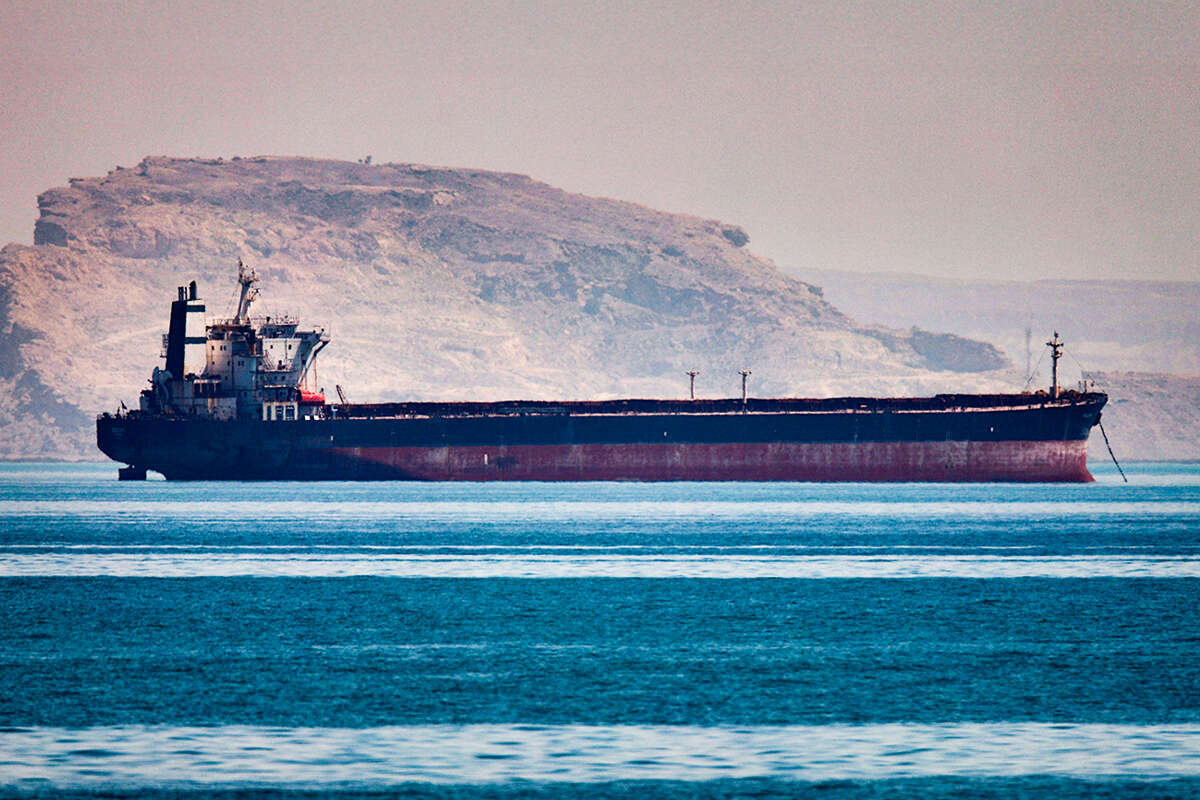
I find it hard to understand why seizing Kharg Island has become so complicated for the Americans. It may be that the concern is over Iran's use of shore-to-sea missiles. The Iranian regime apparently does not care about endangering its own soldiers while also damaging strategic facilities. The main thing is to hit the enemy, even if everything evaporates together.
A new-old leader
Reports that Israel and the US planned for former Iranian President Mahmoud Ahmadinejad to take power in Iran have more holes than Swiss cheese. Too many details are illogical and do not add up.
Bringing Ahmadinejad back would mean returning to the Tehran of 2005, to a place led by an antisemitic, anti-liberal and anti-Western leader. His appointment would be equivalent to bringing back the Islamic State in another version.
The whole affair simply sounds far-fetched. Who exactly are the associates, and how was communication with them carried out? In Iran, they know that all former leaders are a potential threat, and even their bodyguards belong to the elite of the Islamic Revolutionary Guard Corps, so every movement is under surveillance. It seems that someone tried to import the Venezuelan model into this case as well, but without a sufficient examination of reality.