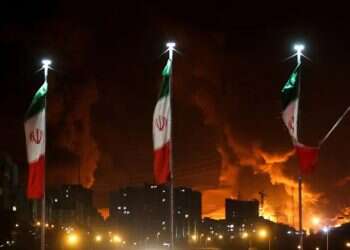
Iran.
It seems the die has been cast. This is no longer a question of if, but a question of when. President Donald Trump, after doubts and deliberations and after his visit to China, has finally decided to renew the fighting. As always with Trump, there is an asterisk here too: Until it starts, it is not really happening. But between the lines, it appears he has understood that he will not be able to shake the Iranians without hitting them hard again.
It is hard to miss the redhead's threefold frustration. First, that the achievements of the war, and there were quite a few, are not being translated into a meaningful result at the negotiating table. Instead of the US arriving there as the victor and Iran as the defeated party, the Iranians are acting as if they are the ones dictating the terms and the US is the one that has to comply.

The second frustration is that instead of moving on to other matters, Trump is still dealing with Iran. By this stage, he had already wanted to be in Cuba, in Greenland, distributing economic dividends, meaning signing contracts, that were supposed to be part of the division of the spoils after the war, and above all preparing for the World Cup, which begins in three weeks in the US, as well as in Canada and Mexico. It was supposed to be "his" World Cup, during which the US will also celebrate 250 years of independence. Instead, he is stuck with Iran.
The third frustration is that he has no good plan in hand. His generals cannot really promise him a swift and decisive achievement now, and he fears that instead of a decision, he will get a war of attrition and mire that will only deepen the crisis, and along the way drive his popularity to a new low.
In his dream, he was supposed to be a modern version of Julius Caesar, saying, "I came, I saw, I conquered." Instead, he risks being remembered as the person who trapped his country, and the entire West, in a strategic defeat.
That last sentence requires an explanation. From Trump's point of view, and Israel's, victory means at the very least a clear solution to the nuclear issue and the unconditional reopening of the Strait of Hormuz. If the regime also falls, that would be a significant bonus, one that would accelerate positive processes in Iran and radiate across the region and the entire world. Anything less than that would be a victory for Iran.
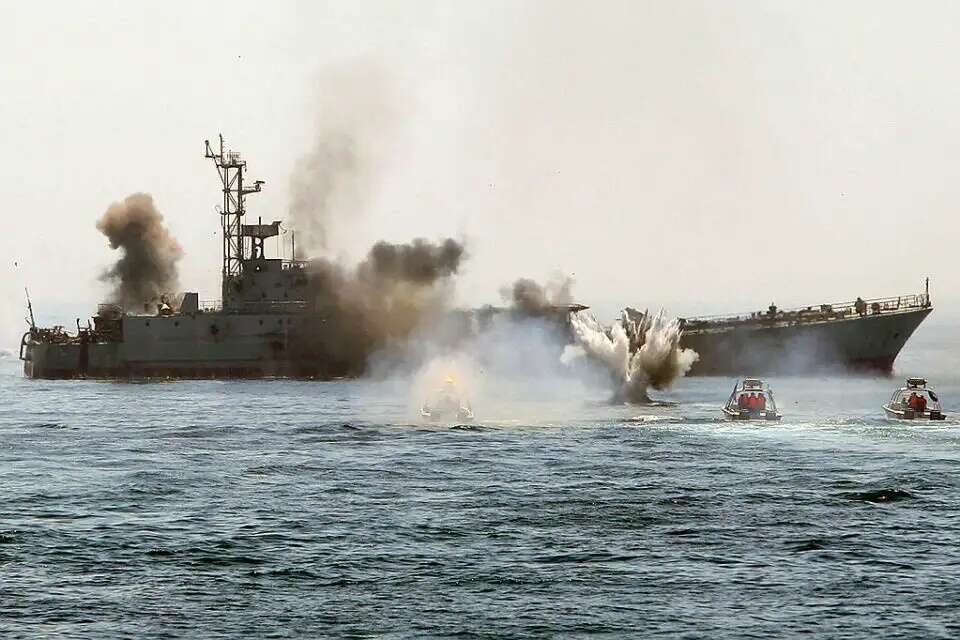
The explanations will not help: how badly Iran was hit, how deep the economic blow it suffered, and how severely its army and military industry were damaged. In the eyes of the Iranians, the absence of defeat is victory. And they will translate that victory into domestic, regional and global power. Worst of all, if Trump's US could not defeat them, it is doubtful any other country, or any other president in Washington, will dare try again in the future.
All of this is now on the table, along with several other issues that ostensibly should not be bound up in decisions of war and peace, but are deeply in the background. Chief among them is Israeli domestic politics on the eve of elections, and, to distill it further, the situation of Prime Minister Benjamin Netanyahu, who is desperately seeking a resounding achievement that will change the trend in the polls, or at the very least shift the conversation away from the disgrace of the draft law and the glaring failure in the north to arenas that are somewhat more comfortable for him. These are arenas in whose name everything can be set aside, especially bringing the election forward, under the worn-out argument: Quiet, we're shooting.
Such a war, should it indeed begin, because despite everything Trump can change his mind at any moment, would likely last from several days to several weeks. Another asterisk: As always, in war you know how you begin, but you do not really know how or when you end. Trump can reverse himself, regret his decision, go wild. Too many American and international actors are in his ear and pulling in opposite directions, including some who publicly pull in one direction and behind the scenes in another. In an effort to balance all of them, he will likely seek a way out that allows him to say "I won" and move on. Something that justifies renewing the campaign and justifies ending it.
From Israel's perspective, that "something" must be the nuclear program. That is the holy grail in whose name the campaign was launched in the first place. Any situation that leaves Iran close to nuclear capability could be worse than the situation on the eve of the war, given that the regime is more extremist and more vengeful than its predecessor, and understands that only a nuclear capability will immunize it against similar threats and attacks in the future. See North Korea.

In recent weeks, intelligence and academic experts have been engaged in a lively discussion over whether the new supreme leader, the son of the former one, will change his father's fatwa, which banned the development of nuclear weapons, and pave the way for it. The prevailing view is that Mojtaba is more extreme, more religious, and now also less inhibited than his father, both because of his character and beliefs and because his father, wife and son were eliminated, while he himself was seriously wounded in the assassination. The conclusion is that if an opening is left, Iran under the younger Khamenei could slip through it toward a bomb.
That conclusion has also been placed on Trump's desk. If he had an easy way to turn it into a clear result, he would have chosen it long ago. On paper, it may look easy: Come in, take it, leave. There were even people in Israel who echoed these ideas publicly this week, without truly understanding what they meant. One can only guess who the source with full access to the information was behind the dissemination of those comments. Reality, as always, is far more complex, with the potential for entanglement that challenges the chances of success.
The bottom line is the top line: It seems the die has been cast. This is no longer a question of if, but when. Trump will make the final decision. Last week he said he had already been about to decide on war on Tuesday, and stopped the decision at the last minute. It is not certain he is telling the truth, but that does not really matter. For every reason in the world, it is now or who knows if and when, because by mid-July there is the World Cup, then the summer break, then the US midterm elections draw closer, then winter comes again, and after that, God only knows.