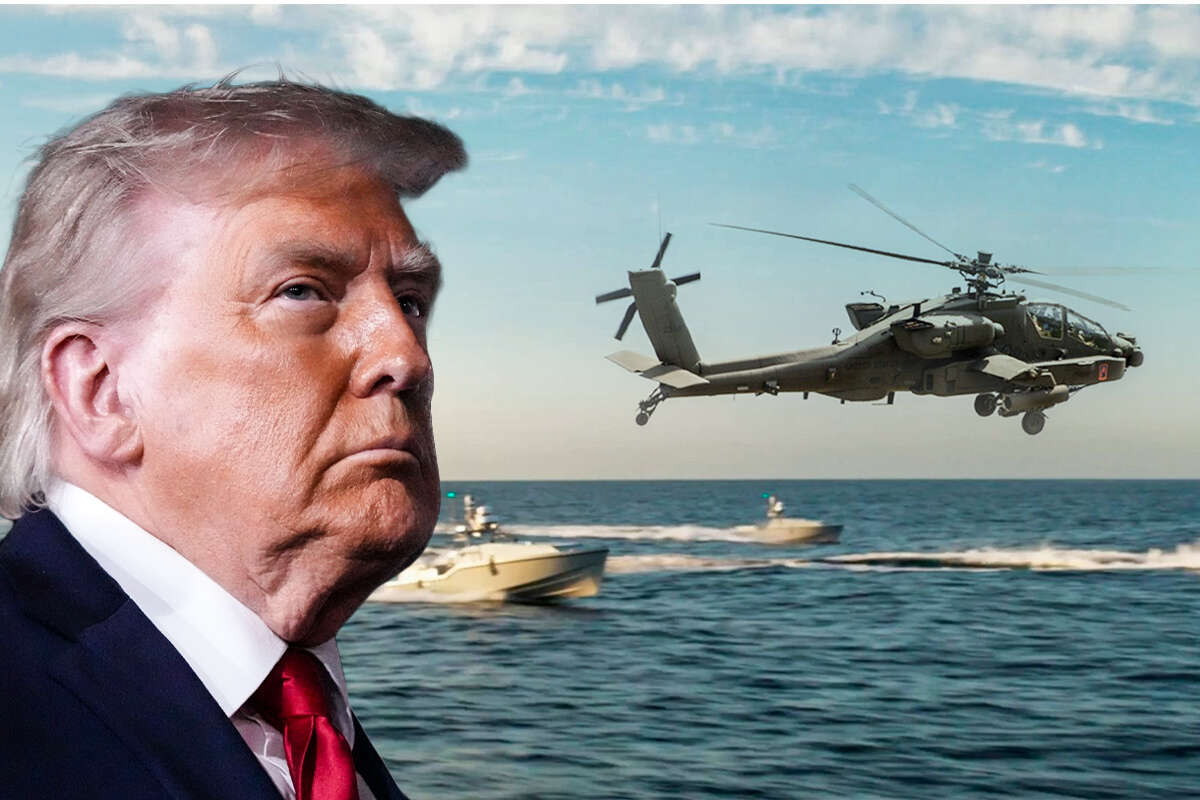
President Donald Trump threatened Iran with a US military response Monday after an American Apache helicopter was shot down over the Strait of Hormuz Monday, posting the warning directly on his Truth Social account.
On the platform, the president wrote, "I have just been informed by our Great Military that last night the Iranians shot down one of our highly sophisticated Apache Helicopters while patrolling over the Strait of Hormuz. There were two pilots involved, both are safe and uninjured. Nevertheless, the United States must, of necessity, respond to this attack."
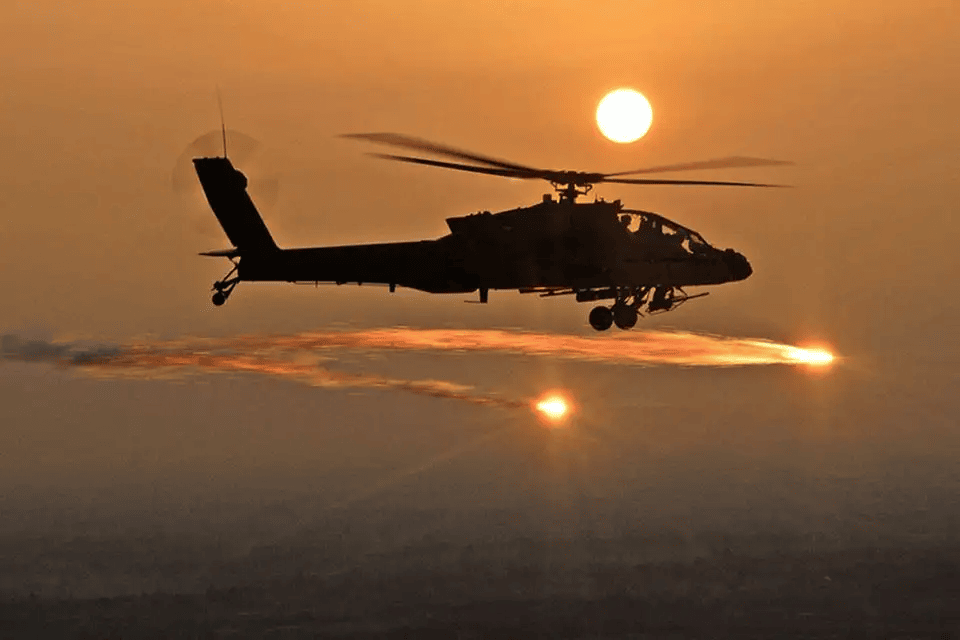
In the post, Trump confirmed that the helicopter had indeed been brought down in an Iranian strike – information that had not been clear in the initial reporting by The New York Times. The threat of a response came against the backdrop of an earlier statement by the president that the US and Iran were in advanced talks toward a long-term nuclear deal.
CENTCOM released an official statement Tuesday morning confirming that US forces rescued the two crew members at 7:33 p.m. Eastern time on June 8, after their helicopter went down near the Omani coast during a routine patrol. "The service members were rescued safely within approximately two hours and are in stable condition. The cause of the incident is under investigation," the statement read.
The rescue was led by US Navy forces under CENTCOM and the 82nd Airborne Division, with air and naval units providing support – among them the Fifth Fleet's Task Force 59.
The operation appears to be the first known instance in military history of an unmanned surface vessel pulling crew members from open water during a military search-and-rescue mission. American media identified the vessel as a Saronic Corsair – an autonomous unmanned craft measuring 7.3 meters (24 feet), built by the US company Saronic, capable of exceeding 35 knots and operating at ranges of over 1,000 nautical miles.
CENTCOM spokesman Captain Tim Hawkins told The Wall Street Journal that the drone vessel located the downed pilots in the water, and that both crew members climbed aboard after spending roughly two hours at sea before it ferried them to shore. "When it comes to search and rescue, you use the best asset that's closest and fastest – and that was the case here," Hawkins said. "We had trained this scenario in exercises, but not exactly like this." The use of unmanned surface vessels in active operations has grown steadily around the world, with Ukraine emerging as a clear trailblazer. The Ukrainian military has deployed such craft against Russia's Black Sea Fleet for some time, and has pulled off what is believed to be a historic first, downing a Russian Sukhoi-30 fighter jet using a "Magura" unmanned surface vessel armed with an R-73 air-to-air missile.