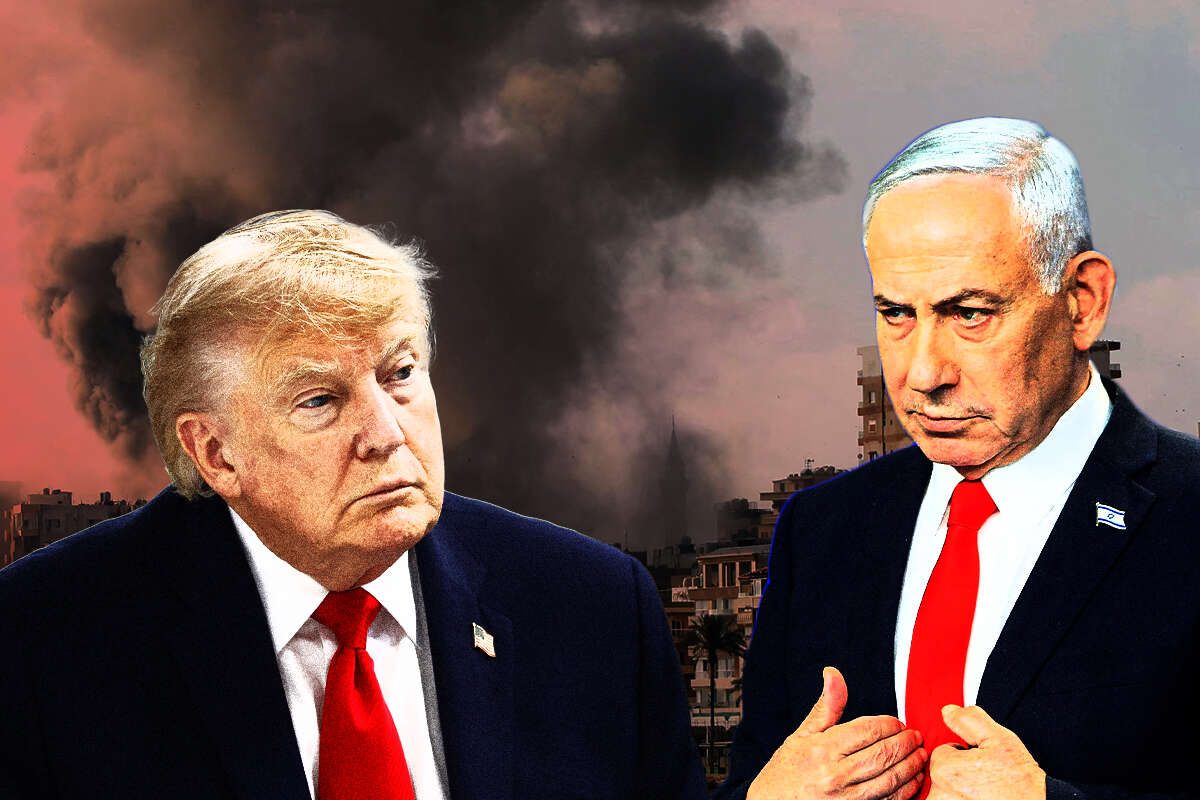
Prime Minister Benjamin Netanyahu believes Israel will face a complex diplomatic period at least until the US midterm elections, as a result of the administration's new line on Iran. He made the comments in internal consultations with his advisers.
The midterm elections will be held in early November, and according to informed sources, they were one of the two main considerations behind US President Donald Trump's decision to reverse his policy on Iran. According to a source familiar with the matter, White House Chief of Staff Susie Wiles warned the president that unless he solved the economic problem the war had created for US citizens, Republicans would lose their majorities in both the House of Representatives and the Senate. Under such conditions, the president would become a "lame duck" and would be unable to advance initiatives. Wiles, who is dealing with cancer while doing her job, is Trump's closest confidante and the person he trusts most.

A barrel of oil will cost $200
Her warning was joined by a grim forecast from the heads of the US oil industry. They frightened Trump by telling him that the US was approaching the red line of its available reserves. They further argued that if the Hormuz problem was not resolved by the end of June, the price of a barrel of oil would rise to $200. Other alarming forecasts circulating around the president claimed that the global economy would sink into a recession similar to the one caused by the oil crisis following the 1973 Yom Kippur War. According to another version, even the Great Depression of the 1930s was mentioned as a scenario that could develop as a result of the situation.
Trump gave expression to these warnings in his remarks in France last night, when he said that "if the bombings had continued, the markets would have fallen to the level of 1929."

Against the backdrop of Trump's reversal, Netanyahu believes that Israel will be in a complex position at least until the beginning of winter, since US policy completely contradicts Israel's interests. Despite the change in the US position and the serious damage accompanying it, the prime minister is convinced that Iran and the US will not manage to reach a full agreement. "As people say about Israel and the Palestinians, the Americans' maximum does not meet the Iranians' minimum," one diplomatic source assessed.
But even if a full agreement is not signed and the parties remain stuck in the current ceasefire, it is clear that the US move runs glaringly counter to Israel's most basic interests, including the failure to remove enriched uranium, the legitimacy Trump has given to Iran's missile development, and much more.
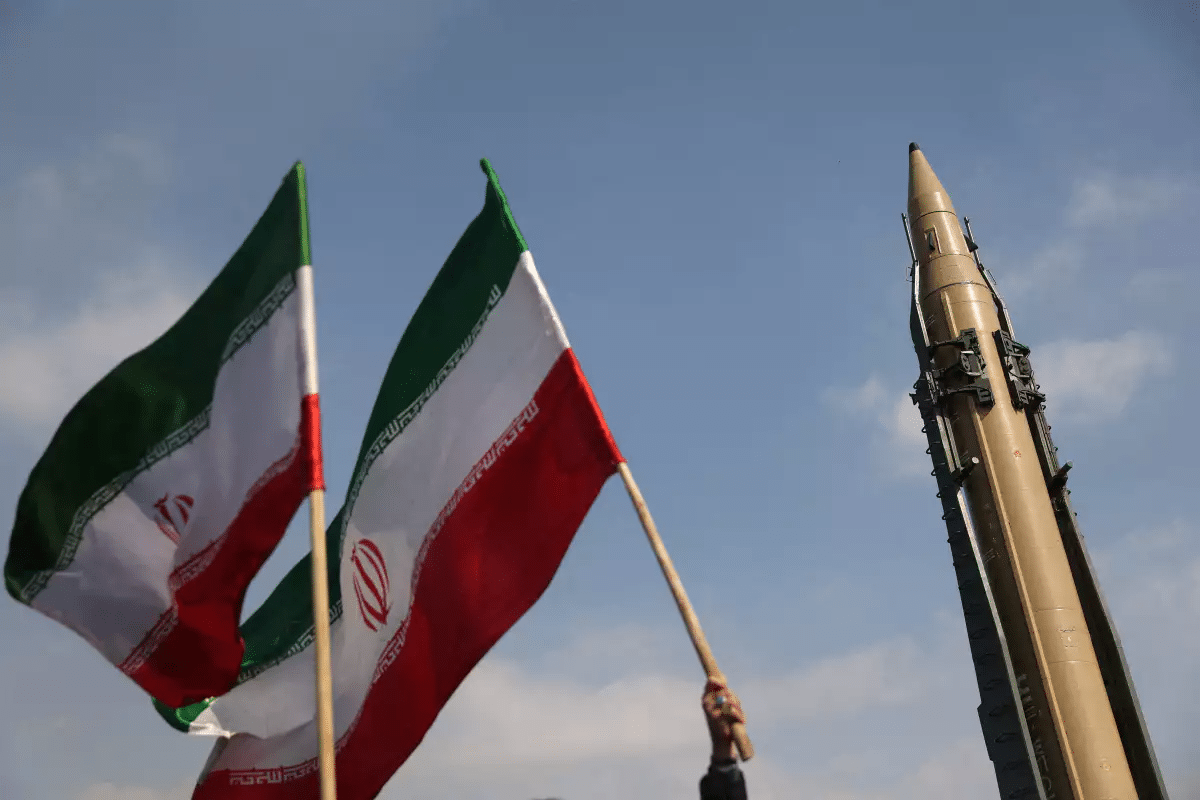
Under these conditions, Israel finds itself as the only country in the world publicly opposed to an agreement between the US and Iran. After a year in which the militaries of Israel and the US fought together against Iran, Jerusalem has been left to contend with the challenge alone. Moreover, it is doing so when, in many respects, Trump is incomprehensibly standing alongside the Islamic Revolutionary Guard Corps.
Under these conditions, Israel must quickly make clear to Trump and to its neighbors what its red lines are. Beyond the general statement about its right to defend itself, the prime minister must replicate steps similar to those he has taken over the past 15 years, both against Iran and US presidents. This is the only way to stop the rapid erosion of Israel's strategic standing.