"The growing discourse in Israel about the acceleration of Hamas' military force buildup in Gaza is intended only to justify continued Israeli aggression in this area," Hamas spokesman Hazem Qassem charged at the beginning of the week. He stressed that his organization remained committed to the ceasefire agreement and called on the mediating countries to pressure Israel to stop its violations.
Hamas' leadership is troubled by the spotlight being turned back on the Gaza front. The wars in Iran and Lebanon, which drew most of Israel's attention and military capabilities, eased some of the pressure on Hamas. It stabilized its systems, further entrenched its governance and stepped up efforts to restore its military capabilities. The series of targeted killings in its ranks has returned it to its grim reality and sent its senior officials back deep into the tunnels.
Reports that the Board of Peace quietly approved Israel's policy of targeted killings and reducing Hamas-controlled territory are troubling the terrorist organization's leaders. They are pulling out the creative formulas they prepared in advance to mislead the public and the mediating countries, but without any intention of disarming. They do not intend to accept even the softer formula proposed by Nikolay Mladenov, who was temporarily willing to settle for the "concentration, storage or freezing of the use of weapons."
The growing list of operatives killed provides Hamas with a demonstration not only of Israeli intelligence and counterterrorism capabilities, but also of its success in carrying out this policy despite the restrictive arrangements that Hamas and the mediating countries tried to impose on it.
From Israel's perspective, there is also something less encouraging about this list: It illustrates the growing threat from inside the Gaza Strip.
The wording of the IDF Spokesperson's announcements on the targeted killings offers hints of this. A large share of the terrorists killed were those who "advanced terrorist plots against our forces operating in the Gaza Strip."
Some of the strikes targeted underground infrastructure that Hamas tried to restore after the ceasefire, as well as launch shafts and launchers used by the organization. These too can be added to the indications of the terrorist organization's reconstruction efforts.
Do not allow Hamas to copy Hezbollah
Over the years, the Lebanese front has provided Hamas with countless strategic lessons about building its force and confronting Israel militarily. These include, among other things, the establishment of Hamas' army, the concept of underground warfare, which Hezbollah pioneered through its "nature reserves" in southern Lebanon, and the adoption of the principle of transferring the fighting into enemy territory. Hamas studied Hezbollah's models and adapted them to its own constraints and to the unique characteristics of the Gaza front.
It does not take an overactive imagination to guess what is going through the minds of Hamas leaders when they see the videos Hezbollah is distributing about the use of drones, and when they hear about the damage this weapon is causing Israel.
Hamas, which proved its capabilities in this field during the Oct. 7 attack and even before it, may see drones as the operational solution to the constraints it currently faces.
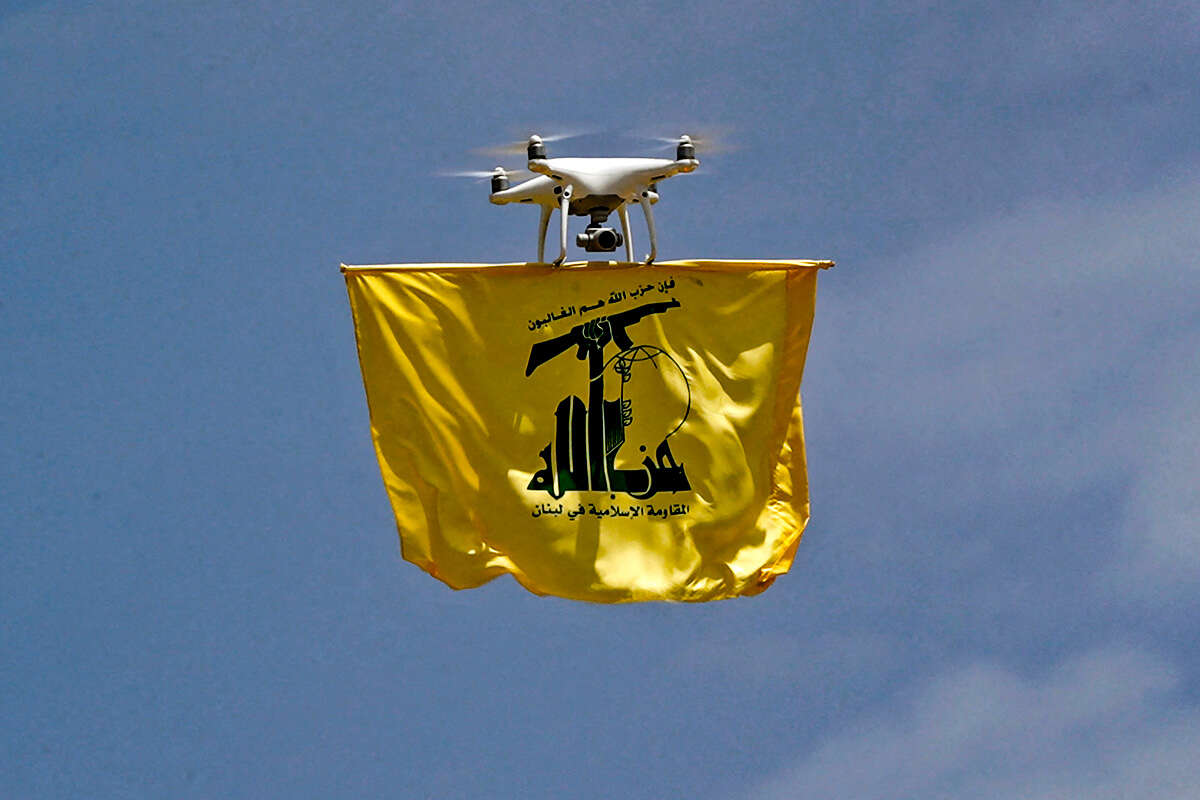
The path to building a significant threat of this kind could be short if the smuggling routes are not blocked. This is the most important preventive measure against the development of such a capability. In addition, it is vital to attack and destroy everything connected to the drone field: weapons, equipment, facilities and the people involved.
Instead of basking in the glow of an occasional counter-smuggling success, Israel should be asking what it is not managing to intercept. More broadly, amid the conflicting reports regarding Hamas' condition, it would be useful for an official source to present the public with a clear and detailed picture, not of the operatives and capabilities Israel has destroyed, but of what Hamas still has: its order of battle, the number and length of tunnels, weapons by type and quantity, weapons production infrastructure and more. We do not know everything, and not everything that is known can be reported. Even if the picture is incomplete, it would still be better than fragments of information, speculation or commissioned commentary.
Netanyahu vs. Trump
Three events could influence Israel's security policy in the near future and perhaps even endanger its achievements.
The first is the US midterm elections and the desire of President Donald Trump and his team to preserve maximum stability, at least until Nov. 3.
The second is the negotiations between the US and Iran over a nuclear agreement, and the attempts the regime in Tehran will make to use them as leverage against Israel through the Americans, in order to restrict Israeli activity and perhaps even its presence in the various fronts.
The third is Israel's election campaign.

The mistake that allowed the US to link the Lebanese front to the ceasefire with Iran must stand before Israel's decision-makers as a reminder in how to conduct themselves with Washington. With regard to Gaza, this means Israel must beware of any initiative or move that would link it to other regional issues.
It is right to be highly suspicious about the chances of activating a "technocrats' committee" or other mechanisms supposedly free of Hamas in a reality in which Gaza is still Hamas.
In the front where it all began, Israel cannot compromise on achieving all its objectives. Removing the threat from this front is an important achievement, but not enough. Preventing the threat from being rebuilt, completely dismantling Hamas' military and governing capabilities, and demilitarizing the area are goals Israel must achieve. Until then, Gaza must remain an active front.