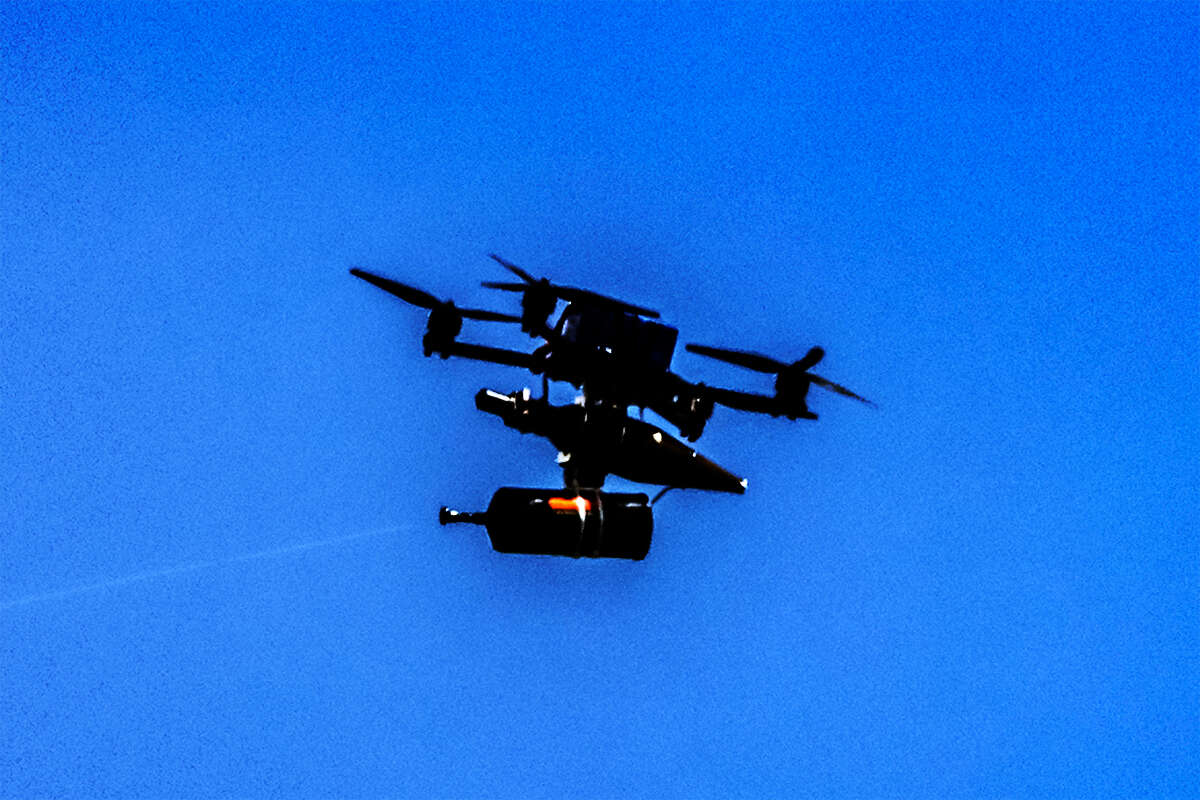
Something significant happened in Europe in recent days. On the night of Aug. 4-5, an explosive drone was discovered at Leipzig/Halle Airport in Germany, near a Ukrainian Antonov An-124 cargo aircraft reportedly carrying military ammunition. The drone did not explode, but US intelligence officials have assessed that the Russian government was behind its deployment, even though Russia is at least 600 kilometers (370 miles) from the site.
The incident occurred far from Israel, but it should serve as a flashing warning light for the country: The drone threat has become strategic, and its use against the home front of entire countries is no longer a question of whether it will happen, but when. Until just a few years ago, the drone threat was inherently limited. It was tactical, confined largely to areas near the battlefield, or lacked the command and navigation capabilities required for long-range operations. Then new technologies emerged and changed the equation.
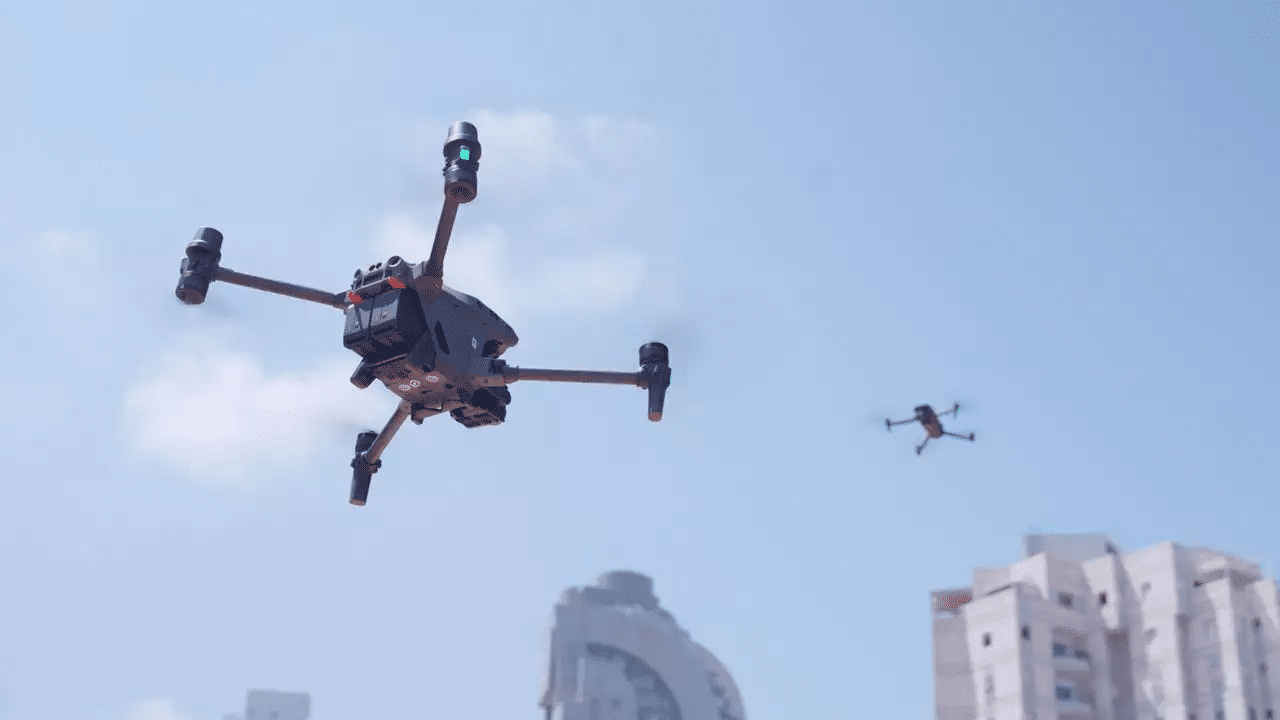
The first is fiber-optic drones, a threat Israelis have become familiar with from Lebanon. These drones can be controlled in flight through a secure physical connection, but they are inherently limited to relatively short ranges.
The second is less familiar and more troubling: the cellular-controlled drone. Such a drone relies on cellular communications and can potentially travel thousands of kilometers, alter its course in flight, fly at low altitudes that make detection more difficult and strike targets with a high degree of precision.
A drone of this kind could make its way to Israel from a hostile country, or be launched from within Israel itself, and strike a moving strategic target. Its operator could be sitting in a bunker in Tehran or Sanaa, thousands of kilometers away, while using an accessible cellular network to control it.
Precision, range and operational flexibility are becoming available even to actors that could never afford expensive guided missiles. This is not a theoretical threat, as the extensive use of such technologies by Russia and Ukraine demonstrates. The latest incident in Germany further underscores that the danger is real and should serve as a wake-up call for Israel. Recent reports that the Diplomatic-Security Cabinet considered the possibility of completely halting drone activity in Israel also suggest that awareness of the threat is beginning to sink in.
There are solutions to the new threat
Even so, not enough is being done. Israel remains alarmingly exposed to this threat, and unlike Iran or Russia, it cannot simply shut down its cellular networks altogether.
Israel must now devote resources to confronting this new danger in much the same way it addressed the rocket and missile threat. The first step should be to draw up detailed threat scenarios, applying one of the central lessons of the Oct. 7, 2023, Hamas attack: A threat that decision-makers fail to imagine is one they will certainly fail to prepare for.
To do so, Israel's intelligence agencies will need to deepen cooperation with Ukraine and Eastern European countries that have already been grappling with this threat for an extended period. Meanwhile, Israel must harness its technological innovation to rapidly develop advanced tools for monitoring and detecting these drones, not only along the country's borders but deep inside Israeli territory as well.

Such efforts could draw on the fact that cellular-controlled drones exhibit distinctive patterns of activity on mobile networks that could, at least theoretically, be detected. Israel will also need kinetic layers of defense, including interception systems and systems in which interceptor drones are used to destroy hostile drones.
At the same time, rapid and effective cooperation with the private sector will be essential. Israel has to move quickly, and it has to do so now. The pace of change in drone technology is extraordinary, and the years it took to build Israel's defensive architecture against rockets and missiles are simply not available in this case.
Here too, Israel must demonstrate to itself and to the rest of the world that with the right focus, there is no challenge it cannot overcome.