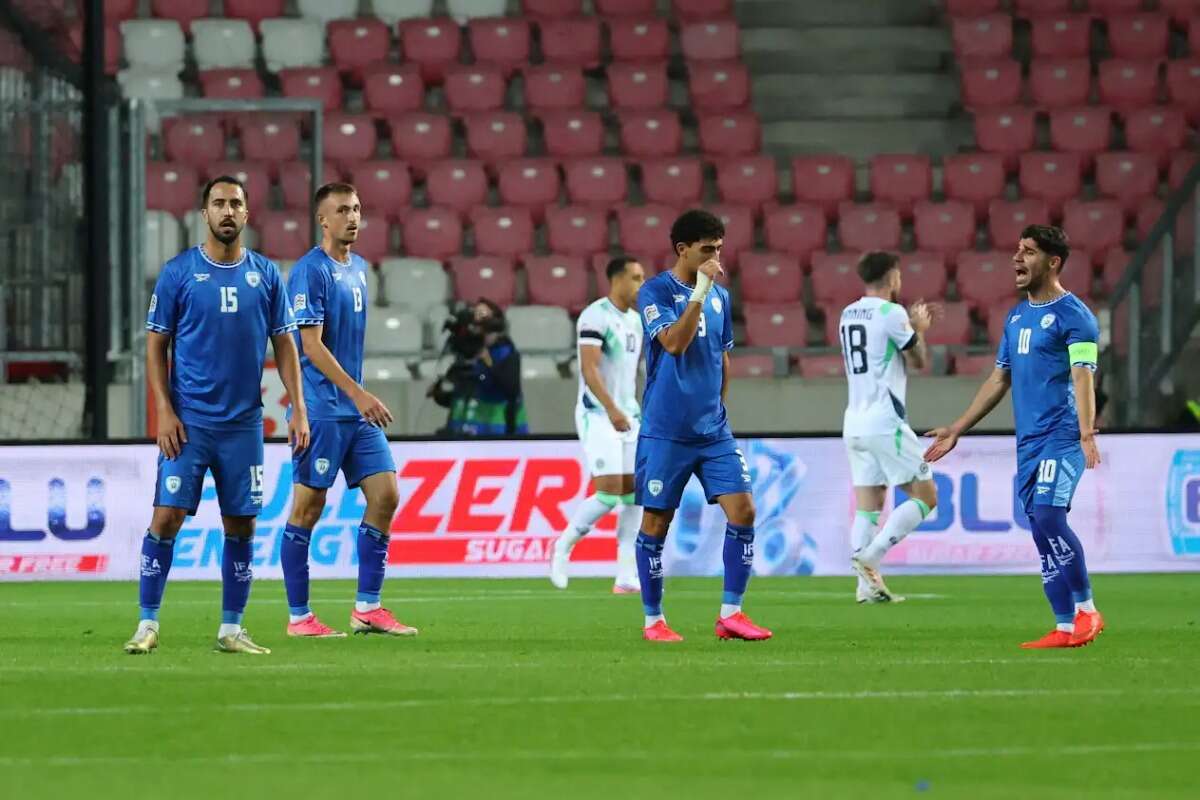
A little over a year ago, on September 8, 2025, Israel's national team last took the field at the stadium in Debrecen. Back then it was against Italy, a team that, even in its current shaky form, still ranks above Ireland. Israel lost that game, too - but what a difference!
That unforgettable evening, head coach Ran Ben-Shimon's team took the initiative, attacked, and led 1-0 and 2-1. Even after conceding four times, it fought back to tie the game 4-4, before conceding again in stoppage time and losing 5-4. On Sunday, the team didn't concede five goals this time, "only" three. But it also didn't score a single one.
The comparison isn't just about the numbers, the results, the statistics. It's about the approach. Losing is allowed in soccer. It's part of the game. And usually, though not always, the better team wins. That's what happened against Italy.
A humiliating performance
Against Ireland, though, it wasn't the loss itself that stood out; it was how it happened. And what happened in the first half was a disgrace. Head coach Ran Ben-Shimon, the man ultimately responsible, admitted as much, saying, "Today was a huge embarrassment, for all of us. What I won't say is that it was a horror show."
What makes it so startling is that 12 of the 16 players involved in the narrow loss to Italy also took the field against Ireland. Of those who started against the Italians, the only two who didn't play Sunday were center-back Idan Nachmias, who played against Austria and was rested this time, and midfielder Dan Bitton, who has been sidelined in recent months for medical reasons.
In other words, this is nearly the same team. Yet the gulf between the approach on display a year ago against Italy and the one we witnessed Sunday night against Ireland is enormous.
Poor mental preparation
So the question is, why? How does a team that was proactive, bold, and aggressive, turn, a year later, into one that is uncommitted and completely lacking aggression, when it's more or less the same players?
I wasn't in the locker room before the match to know exactly what was said there, but what we saw in the first half was a nightmare performance from a team that apparently didn't grasp what was at stake. And that came after days leading up to the match, in which there was no escaping this game was of far greater importance than any other in recent years.
The conclusion is clear: the mental preparation was genuinely poor, or there wasn't any at all, which is even worse.
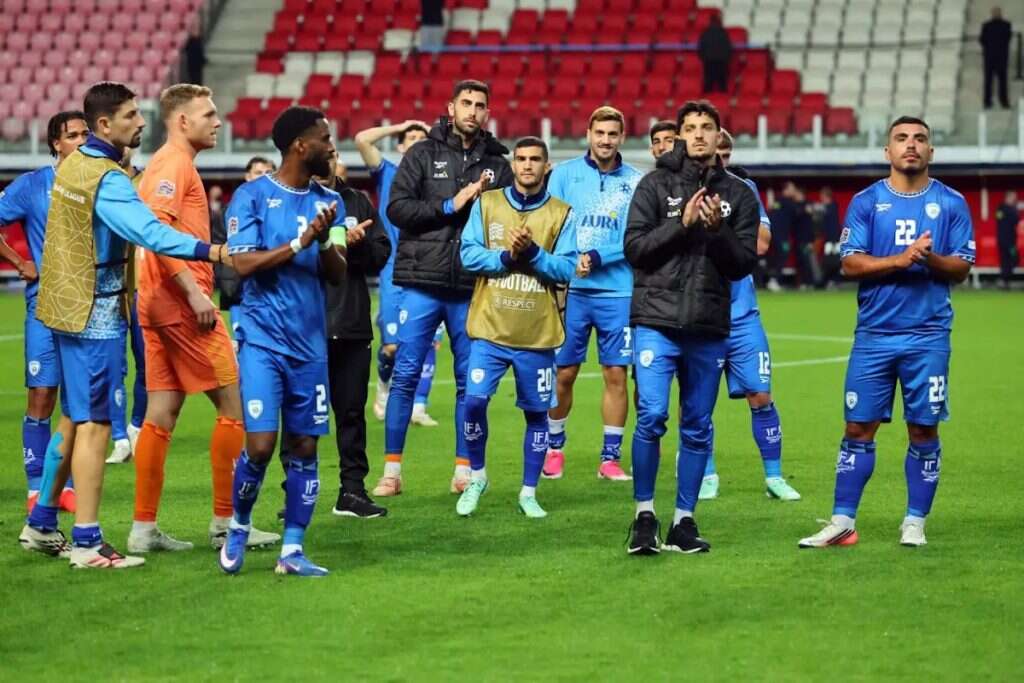
The numbers don't lie
Now that we've discussed mentality and approach, let's talk pure soccer. In the previous World Cup qualifying campaign, the team conceded a ton of goals, and that hasn't changed. It still concedes plenty, largely because Israel doesn't have good enough defenders. And it's not just the center-backs. Anan Khalaili and Roy Revivo excel mostly on the attacking side (though not Sunday), far less so defensively.
We thought that at least Israel had quality attacking midfielders and good forwards. And sure, against Moldova and Estonia, that held up fine. But against slightly better national teams, it's simply not enough.
And going back to that match against Italy, Dor Peretz starred with two goals. So who scored Israel's other two goals? Manuel Locatelli and Alessandro Bastoni, Italy's own players. Yes, two of Israel's four goals that night were own goals.
You only need to look at the numbers from the team's forwards to understand the situation for what it is. Dor Turgeman has scored 2 goals in 20 appearances for the national team. Liel Abada has 1 goal in 19 appearances. Tai Baribo has 4 goals in 24 appearances. Those are disappointing percentages, however you look at it.
The Euro dream is a long way off
It's common to dismiss the FIFA rankings, but for better or worse, that ranking usually tells the truth, and it isn't pretty either. As things stand, Austria is ranked 22nd in the world, Ireland 55th and Israel 77th. Neither loss, then, should come as a surprise, as painful as that is.
And what about Euro 2028, the stated goal of the federation's leadership? Well, 24 national teams will take part in the Euros, and Israel currently ranks 37th in Europe. Now do the math yourselves.