

Qatar's quiet war against Israel
It does not fire missiles, but Qatar wields extensive influence that endangers Israel by funding, propaganda and its ties with terrorist organizations. Experts warn Qatar poses a strategic threat.
Israel Hayom is a media organization founded on the belief that the Israeli public deserves better journalism—more balanced, more accurate, and more reliable. Journalism that speaks rather than shouts. Journalism that is trustworthy, objective, and matter-of-fact. A different kind of journalism, offered free of charge. The first print edition was published on July 30, 2007, and in 2010 Israel Hayom became the Israeli newspaper with the highest weekday readership. The newspaper’s publisher is Dr. Miriam Adelson. Its Editor-in-Chief is Omar Lachmanovitch, and its founding editor is Amos Regev. Israel Hayom’s Hebrew and English websites, as well as its Android and iOS applications, provide around-the-clock news coverage, exclusive content, breaking news and updates, analysis and commentary, video, podcasts, and live broadcasts. The digital platforms of Israel Hayom include news and opinion channels covering culture and entertainment, lifestyle, technology, sports, business and consumer affairs, health, military affairs, food, Judaism, tourism, and automobiles. In 2021, a new Hebrew-language website and mobile application were launched to provide users with a fast, up-to-date, secure, and convenient experience. The content of the newspaper’s print edition is also available online through a daily digital edition and can be received via newsletter. “The Israel Hayom Clique,” the publication’s exclusive benefits club, offers website users discounts and special promotions on products and services. Israel Hayom welcomes feedback, criticism, and suggestions for improvement from its readers. You can contact the organization by email at hayom@israelhayom.co.il

It does not fire missiles, but Qatar wields extensive influence that endangers Israel by funding, propaganda and its ties with terrorist organizations. Experts warn Qatar poses a strategic threat.

In the Middle East, a good agreement is measured not by the intentions expressed on the day it is signed, but by its ability to withstand violations the next day. From the jihadists who still threaten the Israel-Syria border, through Iran and Hezbollah, to the Druze: The points Israel must insist on, and why time is not on its side.

The terrorist organization is not truly prepared to give up power as long as it refuses to disarm. The proposed framework seeks to place responsibility for dealing with the chaos in Gaza on a technocratic committee, while Hamas frees itself to continue rebuilding its military capabilities. Despite many eliminations, a group of senior Hamas officials in Gaza has survived so far, and does not intend to relinquish its light weapons or tunnels.

The draft crisis is pushing the integration of Haredi Israelis into broader Israeli society further away and radicalizing the discourse. How did things move from the historic agreement with Ben-Gurion, which granted a small group of Torah scholars an exemption from military service, to cries of “War!” and the demonization of the State of Israel?
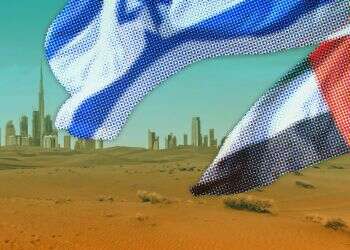
The signing of the memorandum of understanding between Washington and Tehran marks the beginning of a new regional order. While the Gulf states are returning to dialogue with Iran and focusing on economic stability, Israel is still talking about continuing the struggle. Riyadh, Abu Dhabi and Doha have internalized that Tehran remains a major player in the region, and that it is better to learn to live alongside it than to try to subdue it.

The senior American official distorted the truth in a briefing to reporters: The centrifuges will remain, the enriched uranium will not be removed, and Trump himself contradicted him the next day. Iran won on the money issue: Lifting sanctions on oil exports will channel tens of billions of dollars to the Revolutionary Guards, more than they earned by bypassing sanctions. Senior US official to Israel: “You will not be a signatory to the agreement, but every action you take will have to be coordinated with the US.”

President Trump threatened an unusual attack and the seizure of Tehran’s fuel terminals, but behind the scenes, a memorandum of understandings has already been drafted. Diplomats in the Gulf are worried and are calling on Netanyahu to intervene: “Trump is going back to his old conduct. This will be a missed opportunity for real change.”
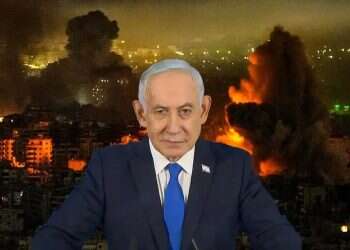
A year after Operation Rising Lion and the subsequent Operation Roaring Lion, it is becoming clear that the impressive operational achievements in Iran created a strategic situation more challenging and complex than ever.

The capture of the Beaufort ridge is not expected to bring immediate quiet to northern Israel, but it contributes to encircling the enemy, destroying infrastructure and strengthening deterrence. The true significance of the move is far broader than a narrow tactical achievement.
For years, Netanyahu built his political identity around the image of “Mr. Iran,” the leader who argued that only pressure, deterrence and force could stop the regime in Tehran. But, a long series of impressive tactical achievements ultimately led to a resounding strategic failure.