The negotiations with Lebanon are the backdrop enabling the Israel Defense Forces' important operations in the area south of the Litani River, at least that is how senior Israeli officials I have spoken with recently see it.
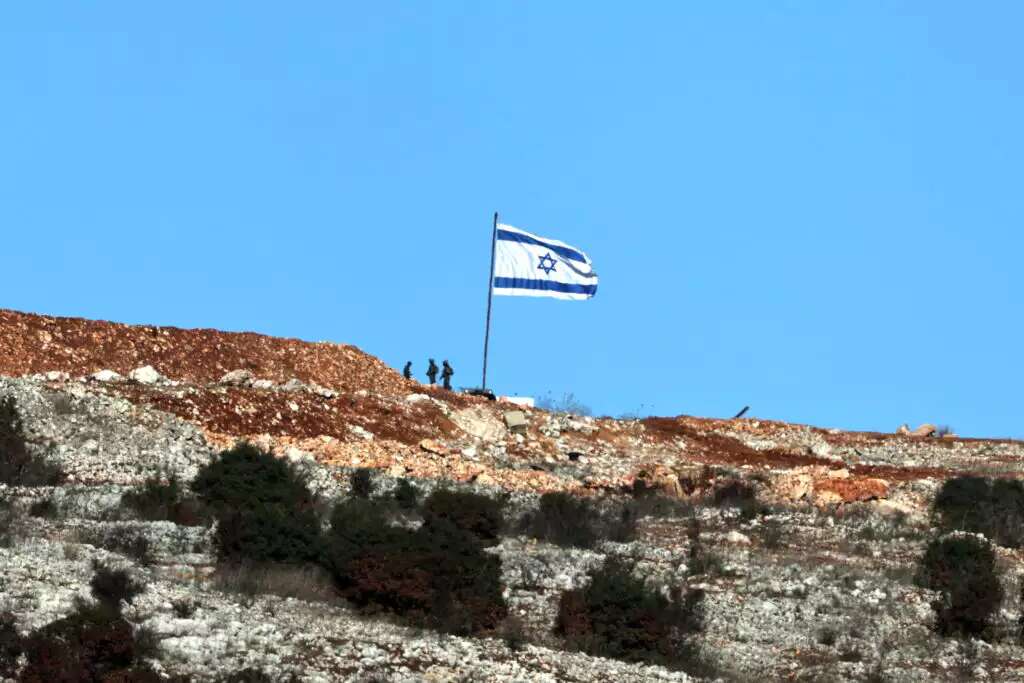
Clearing the area between Israel and Hezbollah terrorists is the first of the lessons the political leadership has drawn since Oct. 7, not only in Gaza with the buffer zone there, but also against Hezbollah. The directive given to the military is based on the need to push anti-tank fire away from the first line of homes and to remove the threat of infiltration. But there is a gap between those who see the military presence in the captured territory as a temporary stage on the way to further damaging Hezbollah and those demanding a permanent security presence along the line abandoned in 2000.
Defense Minister Israel Katz outlined the operation regarding the security zone as including, in his words, "the destruction of homes in the contact-line villages, the defensive positions line inside Lebanon, which was expanded from five to 15 points, the anti-tank line whose seizure was completed through the ground maneuver and is now being expanded at additional points, and the Litani line, where the IDF will maintain control as part of its control of the Litani sector, and will prevent additional terrorist infiltrations and the return of residents to the south."
For residents in northern Israel, who could have shared the fate of the residents of Be'eri, this is a security necessity rooted in the understanding that the IDF must separate civilians from their enemies. But former Prime Minister Ehud Barak, who led the withdrawal from Lebanon, has argued over the years that he would do it again and again.

'A bluff and a lie'
Brig. Gen. (res.) Effi Eitam, who was the last commander of the 91st Division in the security zone in Lebanon, is one of the most prominent voices arguing for the security need for such a zone.
"Israel had an efficient, effective security zone for many years. It was not a Lebanese mire. It was exactly what a country needs to do to protect its line of civilian communities," he said. "The only mire in Lebanon was the confusion and abandonment that gripped our leaders and Prime Minister Barak together with the Four Mothers movement and other forces in Israeli society. Since we fled from there and announced that the war was over, we have been inside Lebanon twice. During the years of supposed quiet, Hezbollah was built up into a monstrous military force. I strongly opposed that, and because of it I also left the army. But it is completely clear that all this talk about the Lebanese mire is a bluff and a lie, the rotten fruits of which we are eating now."
According to Eitam, "To protect Metula, Misgav Am, Rosh Hanikra and Avivim, we need to be inside Lebanon up to the Litani line in order to prevent what Hezbollah's Radwan Force planned, and what Sinwar and Hamas, the terrorist organization, carried out in the Gaza border communities, and to stop the capability for direct fire."

Not stopping the war
Meir Ben-Shabbat, head of the Misgav Institute and former head of the National Security Council, also addressed holding territory.
"Before the withdrawal from Lebanon, the public discourse focused on the price of our presence there. Today the public understands what people spoke less about back then: the price of our absence."
Asked about the risk to forces remaining on the ground, Ben-Shabbat replied, "Control of a security zone is by no means a recipe for a static presence, nor is it a stand-alone component. Alongside it there must be sustained offensive interdiction activity that does not allow the enemy to entrench itself and forces it to direct its efforts toward survival rather than attacking us."
The main concern is that the war will be halted as a condition for talks with Lebanon, and both Ben-Shabbat and Eitam warn against that.
"The most important thing in my view is not to pay any price for the diplomatic negotiations or as part of them, for example by thinning out our security activity, because the Lebanese government is incapable of providing the thing we most need from it: the removal of the security threat posed by Hezbollah," Ben-Shabbat said.
Eitam, for his part, made clear that the territory should not be evacuated as part of the negotiations and that Israel should remain there, in his assessment, for years.
'A foolish debate'
At the end, I ask Eitam whether he remembers who coined the term "the Lebanese mire," but he does not credit any one person with it. According to him, many were responsible for that discourse.
"The term was floating around even before we arrived and shaped the security zone. Even during the period when we were in Beirut there was an argument over that war. It is a foolish debate, whether there is a choice or no choice. You would think we fight these wars as if there were no enemy at all."