Israel Hayom is a media organization founded on the belief that the Israeli public deserves better journalism—more balanced, more accurate, and more reliable. Journalism that speaks rather than shouts. Journalism that is trustworthy, objective, and matter-of-fact. A different kind of journalism, offered free of charge.
The first print edition was published on July 30, 2007, and in 2010 Israel Hayom became the Israeli newspaper with the highest weekday readership. The newspaper’s publisher is Dr. Miriam Adelson. Its Editor-in-Chief is Omar Lachmanovitch, and its founding editor is Amos Regev.
Israel Hayom’s Hebrew and English websites, as well as its Android and iOS applications, provide around-the-clock news coverage, exclusive content, breaking news and updates, analysis and commentary, video, podcasts, and live broadcasts.
The digital platforms of Israel Hayom include news and opinion channels covering culture and entertainment, lifestyle, technology, sports, business and consumer affairs, health, military affairs, food, Judaism, tourism, and automobiles.
In 2021, a new Hebrew-language website and mobile application were launched to provide users with a fast, up-to-date, secure, and convenient experience.
The content of the newspaper’s print edition is also available online through a daily digital edition and can be received via newsletter.
“The Israel Hayom Clique,” the publication’s exclusive benefits club, offers website users discounts and special promotions on products and services.
Israel Hayom welcomes feedback, criticism, and suggestions for improvement from its readers. You can contact the organization by email at hayom@israelhayom.co.il
On national existence without a land and the national crises that refined the people's consciousness of freedom. In the month of Iyar, the first Hebrew army began to take shape on the road to the return to Zion and the conquest of the land.
Israel must move quickly to translate its military and territorial achievements into explicit, long-term American commitments. The atrocities committed by Hamas on October 7, the refusal of Hamas and Hezbollah to disarm, and Iran’s continued insistence on advancing its nuclear program provide Israel with strong justification for its strategic demands.
Antizionism has recast old anti-Jewish tropes in new language, but mistaking the fight against it for Zionism itself obscures Zionism’s original purpose: freeing Jews from catastrophe and symbolic blame.
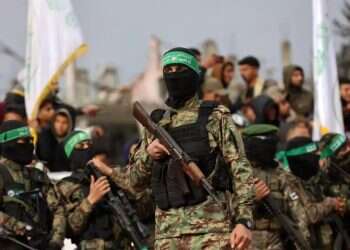
The destruction of a weapons production site in northern Gaza exposes the pace of Hamas and Islamic Jihad's military reconstruction. Israel warns that the terrorist organizations are exploiting the ceasefire and the diversion of attention to other fronts to rebuild.
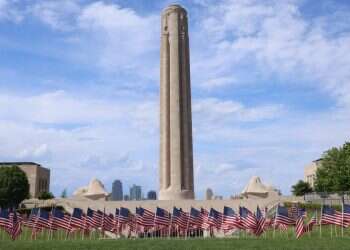
An American war hero killed in the final battle of World War I in the Meuse–Argonne Offensive was buried under an incorrect religious marker for more than a century. Now, as the United States moves toward this milestone, his identity, along with those of other fallen American Jewish servicemen, is being restored in a quiet but significant correction of the historical record.
Against the backdrop of the war in the Middle East, Trump will land in Beijing this week for his first visit to China since 2017. China was indeed affected by the closure of the Strait of Hormuz, but it had been preparing for this scenario for years. As the presidents arrange their cards ahead of the meeting, there are concerns that the interests of partner countries, such as Taiwan, Japan and South Korea, will be sacrificed in exchange for economic understandings.
Iran’s announcement that it will take part in the World Cup in the US is about far more than sports. It reflects the countries’ desire to end the war. Israel is warning against a partial deal that would weaken the levers of pressure and strengthen the regime in Tehran. Meanwhile, fighting in the north continues without significant gains, and instead of focusing on addressing the crisis there, the government is dealing with contentious issues.
As the world prepares for the opening whistle of the World Cup, a race against time is underway in Washington and Tehran, between a strike and a deal, and between rational calculation and extremist ideology. History shows that sporting events are not just games. At times, they blur judgment and accelerate dramatic decisions.
If you are looking for a political solution to the social rift in American and Israeli democracy, you are solving the wrong problem. The rift is not political. It is civilizational. And it will not be resolved until it is properly understood.