Israel Hayom is a media organization founded on the belief that the Israeli public deserves better journalism—more balanced, more accurate, and more reliable. Journalism that speaks rather than shouts. Journalism that is trustworthy, objective, and matter-of-fact. A different kind of journalism, offered free of charge.
The first print edition was published on July 30, 2007, and in 2010 Israel Hayom became the Israeli newspaper with the highest weekday readership. The newspaper’s publisher is Dr. Miriam Adelson. Its Editor-in-Chief is Omar Lachmanovitch, and its founding editor is Amos Regev.
Israel Hayom’s Hebrew and English websites, as well as its Android and iOS applications, provide around-the-clock news coverage, exclusive content, breaking news and updates, analysis and commentary, video, podcasts, and live broadcasts.
The digital platforms of Israel Hayom include news and opinion channels covering culture and entertainment, lifestyle, technology, sports, business and consumer affairs, health, military affairs, food, Judaism, tourism, and automobiles.
In 2021, a new Hebrew-language website and mobile application were launched to provide users with a fast, up-to-date, secure, and convenient experience.
The content of the newspaper’s print edition is also available online through a daily digital edition and can be received via newsletter.
“The Israel Hayom Clique,” the publication’s exclusive benefits club, offers website users discounts and special promotions on products and services.
Israel Hayom welcomes feedback, criticism, and suggestions for improvement from its readers. You can contact the organization by email at hayom@israelhayom.co.il
Concealing the scale of its losses is not merely a media tactic, but a central strategic mechanism that allows Hezbollah to preserve its narrative of "victory" and prevent internal erosion. The concealment is an attempt to preserve an artificial image of victory in the face of a reality of attrition and destruction, with the terrorist organization knowing that exposing the truth could lead to its unraveling.
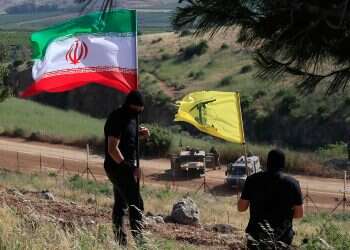
The security reality in Lebanon and along Israel's northern border is anything but a ceasefire, and it is unclear whom the current situation serves. Will renewed fighting in Iran change the restrictions imposed on Israel?
Iran, as is its way, wants to drag things out, hoping something will happen along the way. It is willing to give up Hormuz now, and it is demanding sanctions relief now, but it wants to give up the nuclear issue only at the end, in measured doses.
Tehran is gradually covering its retreat from its excessive demands and makes a new proposal, one that is easier for the Americans to swallow, presenting a certain compromise on the nuclear issue. Trump’s response indicates that he, too, sees Tehran backing down.
Reality proves that antisemitism is a strategic arm of our enemies. Israel must move from weak public diplomacy to firm diplomatic measures: recalling ambassadors and issuing uncompromising security demands.
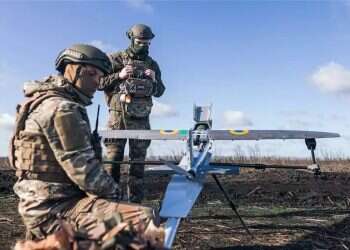
The clash with Kyiv over grain was entirely avoidable, but it exposes a deeper problem: Israel appears to be completely missing Ukraine's new status as a global power, and particularly as a power in the Middle East, thanks to its advanced military-technological capabilities. That could hurt in the future.
Israel must make clear to our American allies that this situation, in which we are exposed to attacks from Lebanon, cannot continue for long. The negotiations with Iran, which are freezing the situation in Lebanon, must end within days.
The campaign against Iran is becoming clearer with each passing day as one that is not only failing to topple the regime, but in many respects is even strengthening it. Iran has recorded numerous successes while preventing any significant signs of internal destabilization, from protests to defections.
Under pressure from the US president, the IDF has stopped strikes on Hezbollah’s power centers. The terrorist organization, for its part, continues to violate the ceasefire. Israel must stop playing by Hezbollah’s rules in order to disrupt its operations. In Gaza, too, greater sophistication is needed in the face of Hamas’ military buildup, which could begin targeting IDF forces at any moment.