Israel Hayom is a media organization founded on the belief that the Israeli public deserves better journalism—more balanced, more accurate, and more reliable. Journalism that speaks rather than shouts. Journalism that is trustworthy, objective, and matter-of-fact. A different kind of journalism, offered free of charge.
The first print edition was published on July 30, 2007, and in 2010 Israel Hayom became the Israeli newspaper with the highest weekday readership. The newspaper’s publisher is Dr. Miriam Adelson. Its Editor-in-Chief is Omar Lachmanovitch, and its founding editor is Amos Regev.
Israel Hayom’s Hebrew and English websites, as well as its Android and iOS applications, provide around-the-clock news coverage, exclusive content, breaking news and updates, analysis and commentary, video, podcasts, and live broadcasts.
The digital platforms of Israel Hayom include news and opinion channels covering culture and entertainment, lifestyle, technology, sports, business and consumer affairs, health, military affairs, food, Judaism, tourism, and automobiles.
In 2021, a new Hebrew-language website and mobile application were launched to provide users with a fast, up-to-date, secure, and convenient experience.
The content of the newspaper’s print edition is also available online through a daily digital edition and can be received via newsletter.
“The Israel Hayom Clique,” the publication’s exclusive benefits club, offers website users discounts and special promotions on products and services.
Israel Hayom welcomes feedback, criticism, and suggestions for improvement from its readers. You can contact the organization by email at hayom@israelhayom.co.il
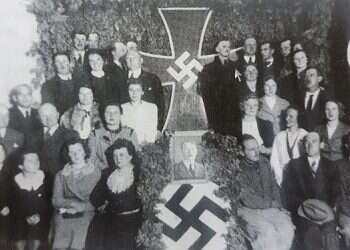
In March 1961, the body of a woman was found in a forest near the picturesque town of Bariloche in Argentina. Her name was Nurit Eldad, a 59-year-old Israeli who had joined a group of young Jewish hikers on a trip. Was it an accident, as the authorities claimed, or was she on a covert mission to track down the Nazi war criminal Josef Mengele? New information has recently transpired.
It can be assumed that towards the end of the ceasefire in Gaza, Hamas will try to have the cessation of hostilities become permanent through a semi-official arrangement with Qatar and Egypt. It will likely set a whole host of conditions for the release of the rest of the captives it holds, including: the release of top terrorists from Israeli prisons, the IDF's withdrawal from Gaza border areas to the October 6 lines, an Israeli pledge to refrain from “ground invasions” and targeted killings, and international guarantees to launch a Gaza reconstruction program.
Instead of destroying the terrorist threat faced by over nine million Israeli citizens, and freeing the hostages, Israel’s strategy now is to fight a limited war until Washington, Doha, Cairo, and Hamas iron out a final ceasefire agreement that will end the latest round of violence and prevent it from spreading across the region.
Italy's prime minister is once again beholden to the two-state paradigm • Ernst Cassirer teaches us how to cope with the gloom and doom of the tv studios • And what is the relationship between "Thou shalt not kill!” and “Thou shalt not murder.”
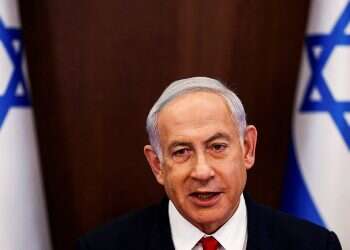
The poll, conducted by Maagar Mochot Institute, examined how many Knesset seats Likud would get if it were to run under a different leadership. It shows that if Nir Barkat were to become chairman the party would likely get 19 seats – the same as what Netanyahu would bring under that poll. If former Mossad chief Yossi Cohen becomes Likud leader, the party will strengthen and get 22 seats.