Israel Hayom is a media organization founded on the belief that the Israeli public deserves better journalism—more balanced, more accurate, and more reliable. Journalism that speaks rather than shouts. Journalism that is trustworthy, objective, and matter-of-fact. A different kind of journalism, offered free of charge.
The first print edition was published on July 30, 2007, and in 2010 Israel Hayom became the Israeli newspaper with the highest weekday readership. The newspaper’s publisher is Dr. Miriam Adelson. Its Editor-in-Chief is Omar Lachmanovitch, and its founding editor is Amos Regev.
Israel Hayom’s Hebrew and English websites, as well as its Android and iOS applications, provide around-the-clock news coverage, exclusive content, breaking news and updates, analysis and commentary, video, podcasts, and live broadcasts.
The digital platforms of Israel Hayom include news and opinion channels covering culture and entertainment, lifestyle, technology, sports, business and consumer affairs, health, military affairs, food, Judaism, tourism, and automobiles.
In 2021, a new Hebrew-language website and mobile application were launched to provide users with a fast, up-to-date, secure, and convenient experience.
The content of the newspaper’s print edition is also available online through a daily digital edition and can be received via newsletter.
“The Israel Hayom Clique,” the publication’s exclusive benefits club, offers website users discounts and special promotions on products and services.
Israel Hayom welcomes feedback, criticism, and suggestions for improvement from its readers. You can contact the organization by email at hayom@israelhayom.co.il
Over the past week, US President Donald Trump has made three dramatic reversals. They may indicate that the president is beginning to grasp the complexity of the Middle East and the difficulty of resolving its conflicts. One thing is certain: The emerging reality is untenable for Israel.
From nuclear concessions in Riyadh to unprecedented signals of peace from Beirut, Israel faces a rapidly shifting landscape where hesitation could prove costly.
Israel prepared for the possibility that the US would resume strikes on Iran, and Netanyahu is expected to coordinate the next stage of the campaign with Trump. Security officials oppose another attack without a clear objective, as the terrorist attack in Samaria and growing friction on the ground divert attention and forces. Escalation in the Palestinian front could complicate matters for Israel both operationally and internationally.
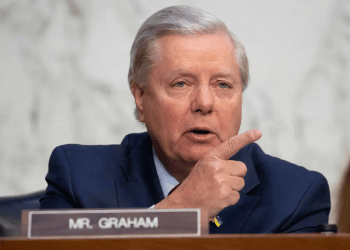
The Republican senator’s death marks more than the loss of a personal friend: Israel has lost a key ally who supported it for years, at a time when backing in Congress can no longer be taken for granted.
The path chosen by Lebanon’s president could transform the country, but it is littered with dangers, from the challenge of strengthening the Lebanese Armed Forces to threats against his life.
For now, the IDF is watching the “Hormuz War” from the sidelines, while remaining on high alert. Both President Trump and Iran’s Revolutionary Guard Corps have so far stayed below the threshold of a broader confrontation, but that could change within a very short time.
The Mossad fantasy of installing a puppet in Tehran and partnering with Kurdish militias collapsed under geopolitical realities, leaving Israel to face a far more dangerous and empowered Iranian regime.
Western observers tend to dismiss the new supreme leader’s threats as mere rhetoric. In reality, revenge is an ideological imperative that Iran has sought to put into practice by recruiting operatives and activating proxies inside the US.