Israel Hayom is a media organization founded on the belief that the Israeli public deserves better journalism—more balanced, more accurate, and more reliable. Journalism that speaks rather than shouts. Journalism that is trustworthy, objective, and matter-of-fact. A different kind of journalism, offered free of charge.
The first print edition was published on July 30, 2007, and in 2010 Israel Hayom became the Israeli newspaper with the highest weekday readership. The newspaper’s publisher is Dr. Miriam Adelson. Its Editor-in-Chief is Omar Lachmanovitch, and its founding editor is Amos Regev.
Israel Hayom’s Hebrew and English websites, as well as its Android and iOS applications, provide around-the-clock news coverage, exclusive content, breaking news and updates, analysis and commentary, video, podcasts, and live broadcasts.
The digital platforms of Israel Hayom include news and opinion channels covering culture and entertainment, lifestyle, technology, sports, business and consumer affairs, health, military affairs, food, Judaism, tourism, and automobiles.
In 2021, a new Hebrew-language website and mobile application were launched to provide users with a fast, up-to-date, secure, and convenient experience.
The content of the newspaper’s print edition is also available online through a daily digital edition and can be received via newsletter.
“The Israel Hayom Clique,” the publication’s exclusive benefits club, offers website users discounts and special promotions on products and services.
Israel Hayom welcomes feedback, criticism, and suggestions for improvement from its readers. You can contact the organization by email at hayom@israelhayom.co.il
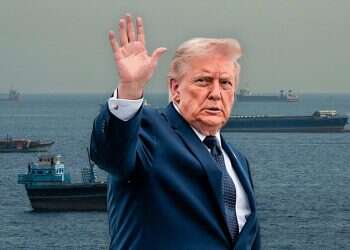
The only real news in the emerging deal at this stage is the mutual reopening of the Strait of Hormuz to maritime traffic. All the other disputed issues are being deferred to negotiations that are supposed to begin between the sides at an unknown date. The Iranian regime achieved the goal it set for itself and survived. By contrast, the US administration has not achieved any of its declared objectives.
The details of the emerging deal have not yet been published, and the world is focused mainly on the future of shipping through the Strait of Hormuz. In Israel, however, the main concern is the nuclear issue. Israel is still maintaining readiness for the possibility that the talks will collapse and the fighting will resume, but the prevailing assessment is that the chances of that happening, which looked highly significant in the middle of last week, have diminished considerably.
It is no longer a question of if, but when: All signs indicate that the war with Iran will resume. Trump will try to turn frustration into an image of victory, and Netanyahu is longing for an achievement that will change the trend in the polls.
A shift in Tehran's tone toward Israel during the recent days of calm, with fewer verbal attacks on Jerusalem. Israel is seen as a more central and determined enemy, and in Tehran's eyes, this could affect the regime's calculations in a future confrontation.
The arrest of a senior Iranian operative shows that Tehran directed nearly 20 attacks on European and US soil in just three months. Despite the direct threat to synagogues and Jewish institutions, major European capitals still refuse to designate the Revolutionary Guards as a terrorist organization. While Washington is working to deal with the head of the snake, France and Spain are choosing a line of panicked appeasement.
Israel must make Hezbollah question whether using this weapon is worth it. It can achieve this only by bringing down buildings in Beirut. A change in approach is also necessary given Hezbollah's efforts to establish an equation that takes us back to the days before November 2024.
The truth must be said: There is no ceasefire, only a dangerous illusion. While the US talks about extending the agreement, northern Israel continues to live under threat, and what is most troubling is the silence. A real ceasefire is not measured by statements from Washington or celebratory headlines.
It is unpleasant to admit, but Israel has no military ace left to play against Hezbollah. In the current reality, it would be better to move ahead diplomatically. A single photograph of Netanyahu, Aoun and Trump on the White House lawn would deal Iran a diplomatic and public-image blow and strengthen Israel's standing. This is an opportunity that should be seized.
Trump’s renewed focus on Tehran, stalled diplomacy and fears of a new military campaign could spill over into Gaza, where Israel is preparing for the possibility of renewed fighting after the elimination of Izz al-Din Haddad.
The elimination of Izz al-Din al-Haddad reveals Israel's new policy: The ceasefire does not provide protection for the organizers of the Oct. 7 massacre. It is a clear signal to Khalil al-Hayya and Khaled Mashaal: Completing the Trump plan is your only way out.